Vehicle recall checklist: Safeguard your used car purchase
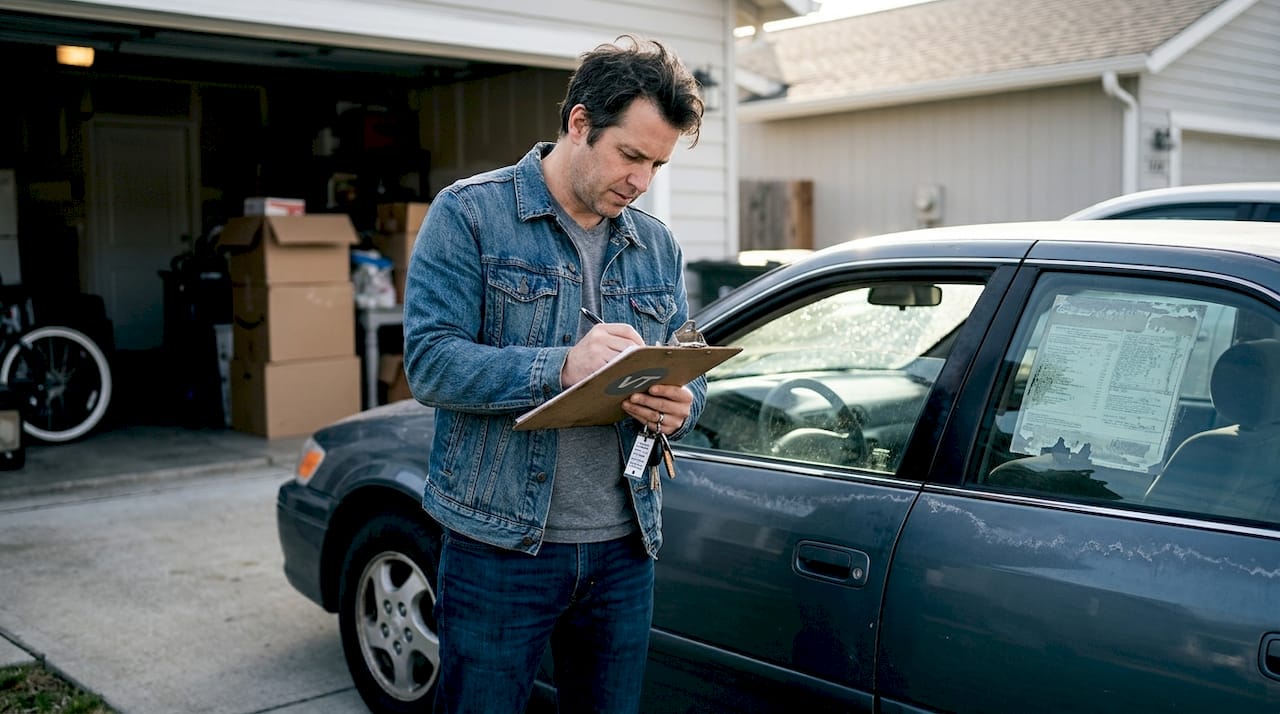
Check a vehicle before you buy
Enter a VIN for a free instant preview — accidents, title brands, mileage, liens & open recalls.
Buying a used car is exciting, but hidden safety issues can turn that excitement into a costly headache fast. Over 35 million vehicles were affected by safety recalls in 2024 alone, meaning the odds that any given used car has an open recall are higher than most buyers realize. A recall does not mean a car is junk, but it does mean you need to know about it before you sign anything. This checklist walks you through every step to verify recall status, cross-check repair history, and make a confident, informed purchase.
Table of Contents
Key Takeaways
| Point | Details |
|---|---|
| NHTSA VIN check | Always start your recall screening with the official NHTSA tool for the most reliable safety recall info. |
| History report cross-check | Combine recall results with a vehicle history report and manufacturer verification for complete confidence. |
| Free recall repairs | All safety recall repairs are legally free at dealership service centers regardless of warranty status. |
| Professional inspection | A mechanic’s pre-purchase inspection can prevent major costs, especially for vehicles with past recall history. |
| Negotiation leverage | Unrepaired recalls or suspicious maintenance records give you power to negotiate or walk away. |
Understand recall risks and criteria
A safety recall happens when a manufacturer or the National Highway Traffic Safety Administration (NHTSA) determines that a vehicle has a defect that poses an unreasonable risk to safety. These are not minor inconveniences. Recalls can cover faulty airbags, brake failures, fuel leaks, and steering defects. They are different from service campaigns, which are voluntary manufacturer fixes for non-safety issues.
Here is something that surprises many buyers: dealers are legally allowed to sell used cars with open safety recalls. That means a car on a lot today could have an unresolved airbag defect and still be offered for sale. The good news is that recall repairs are free at authorized manufacturer dealerships, regardless of the car’s age or warranty status. You just need to know the recall exists so you can demand the fix.
Before you start your recall check, here is what your checklist will cover:
-
Checking the NHTSA recall database by VIN (Vehicle Identification Number, the 17-digit code unique to every car)
-
Cross-referencing manufacturer portals and vehicle history reports
-
Getting a professional pre-purchase inspection (PPI)
-
Using safety ratings from NHTSA, IIHS, and Consumer Reports
-
Knowing your negotiation options based on what you find
Key insight: A recall is not automatically a dealbreaker. An open recall you can get fixed for free is very different from a recall that was never repaired and has been ignored for years. Context matters.
For a broader look at what to evaluate before buying, review these used car inspection steps and the questions to ask at purchase to build your full pre-purchase strategy.
Step 1: Use the NHTSA recall lookup tool
The most reliable starting point is the official recall lookup at NHTSA.gov/Recalls. This tool is free, takes about two minutes, and gives you direct access to federal recall data. Here is how to use it:
-
Locate the VIN. Find the 17-digit VIN on the driver’s side dashboard (visible through the windshield), the driver’s door jamb sticker, or the vehicle title.
-
Enter the VIN at NHTSA.gov/Recalls. The NHTSA lookup covers safety recalls for the past 15 years tied to that specific vehicle.
-
Review the results. The tool shows open (unrepaired) recalls. If a recall was already fixed, it may not appear here, which is why cross-checking matters.
-
Screen by make/model/year. If you do not have the VIN yet, you can search by make, model, and year for an initial screening before visiting the seller.
-
Set up alerts. Sign up for email notifications so you are informed if a new recall is issued after your check.
| Lookup method | What it shows | Best for |
|---|---|---|
| VIN search | Open recalls for that specific car | Final check before purchase |
| Make/model/year search | All recalls for that vehicle type | Early screening |
| SaferCar app | Real-time recall alerts | Ongoing monitoring |
| Vehicle history report | Past recalls, repairs, and more | Full context |
Pro Tip: Download the NHTSA SaferCar app on your phone before you go car shopping. You can scan a VIN barcode on the spot and get instant recall results. It also lets you register your vehicle for automatic recall alerts going forward.
For a deeper look at what VIN-based data can reveal, check out this guide on VIN-based checks and how getting vehicle history reports adds another layer of protection.
Step 2: Check manufacturer and history report sources
The NHTSA tool is your first stop, not your only stop. Once you have the NHTSA results, expand your check using manufacturer portals and vehicle history reports for full context.
Most major automakers have their own recall lookup pages. Nissan, Ford, Toyota, and others let you enter a VIN directly on their websites to see recall status and whether repairs were completed. This is especially useful because manufacturer sites and history reports like Carfax or AutoCheck can show past recalls that were already repaired, giving you a clearer picture of the car’s maintenance history.
Here is what to look for when reviewing these sources:
-
Open vs. closed recalls. An open recall means the fix has not been done. A closed recall means it was repaired at some point.
-
Repair documentation. Ask the seller for service records that confirm recall work was completed. A stamped dealership receipt is the gold standard.
-
Customer service campaigns. These are not official safety recalls, so they will not show on NHTSA’s tool. Manufacturer sites sometimes list them separately.
-
Investigations and complaints. NHTSA’s tool does not show ongoing investigations. Check the NHTSA complaints database separately for patterns of reported issues.
For older vehicles, imported cars, or brands that no longer exist, the NHTSA tool has limits. It does not cover international vehicles or customer service recalls, and defunct manufacturers require a different approach. In those cases, call the NHTSA hotline at 888-327-4236 for assistance.
Pro Tip: If you are buying a vehicle from a brand with a known recall history (like certain Takata airbag-affected models), check professional safety checks from Consumer Reports for model-specific guidance before you even visit the lot.
For a thorough review of what vehicle history reports include, see our guide on reviewing vehicle history and finding history reports that fit your needs.
Step 3: Combine recall check with expert inspection
A recall check tells you what the manufacturer flagged. A professional pre-purchase inspection (PPI) tells you what is actually happening with the car right now. These two steps work together, and skipping either one leaves you exposed.
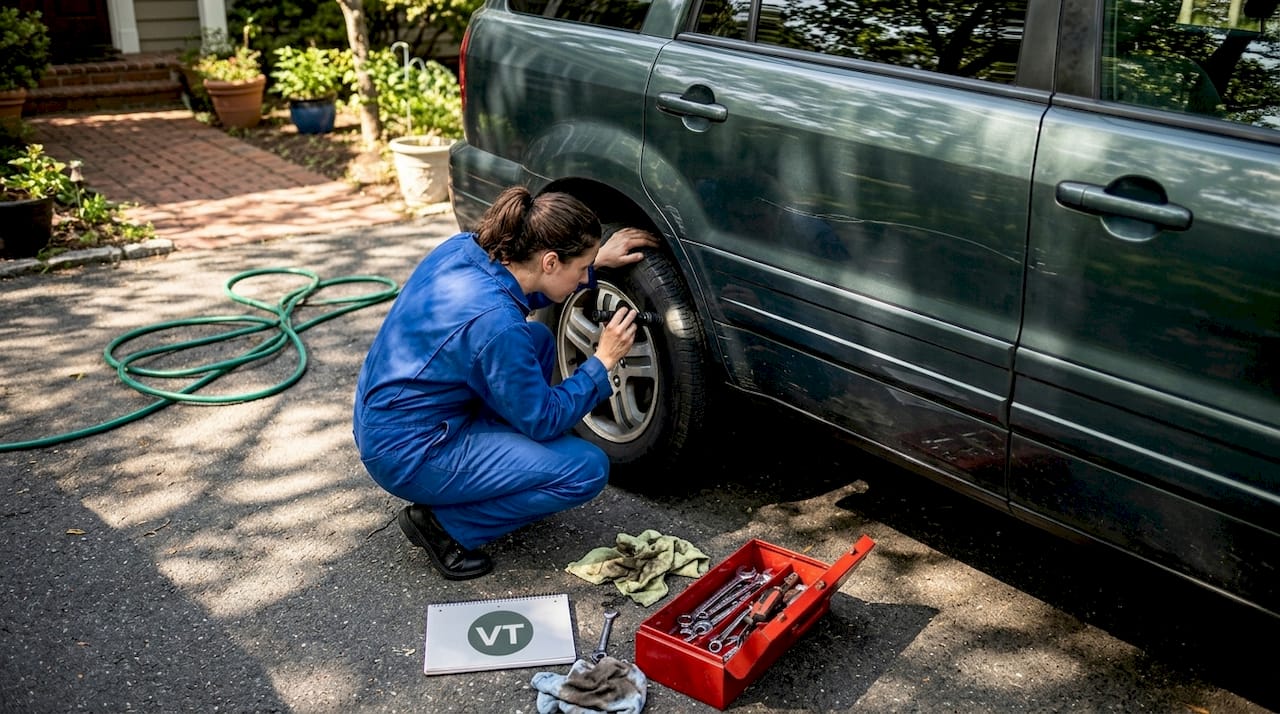
A PPI typically costs between $100 and $200 at an independent mechanic. That investment can prevent $3,000 or more in surprise repairs after purchase. Recalls involving airbags or brakes are especially high-risk because the car may drive fine while the defect remains dangerous.
Here is what to ask your mechanic to check during the inspection:
-
Recall-related components. If you found open recalls, ask the mechanic to specifically inspect those systems.
-
Brake condition and airbag system. These are common recall areas and critical safety items.
-
Frame and structural integrity. Accident damage can affect how safety systems perform in a future crash.
-
Fluid leaks and engine condition. These reveal maintenance habits and potential hidden costs.
-
Tire wear patterns. Uneven wear can signal alignment or suspension problems.
| Check type | Cost | What it reveals |
|---|---|---|
| NHTSA recall lookup | Free | Open federal safety recalls |
| Vehicle history report | $19.99 and up | Accidents, title, past recalls, mileage |
| Pre-purchase inspection | $100 to $200 | Current mechanical condition |
| Safety ratings check | Free | Crash test performance by model |
Remember: Combining a VIN check with a history report, a PPI, and safety ratings from NHTSA or IIHS gives you the most complete picture of any used car’s safety profile.
After the inspection, verify repair records for any past recalls noted in the history report. If the seller cannot produce documentation, that is a red flag worth negotiating over. See our full pre-purchase checklist for a complete walkthrough of every item to verify before you buy.
Summary: Complete vehicle recall checklist
With all the steps laid out, here is your consolidated recall checklist to use on every used car you consider. Print it, save it to your phone, or bookmark this page.
-
[ ] Locate the 17-digit VIN before or during your visit
-
] Run the VIN through the [NHTSA recall tool at NHTSA.gov/Recalls
-
[ ] Search by make/model/year for early screening if VIN is not yet available
-
[ ] Check the manufacturer’s recall portal for repair confirmation
-
[ ] Review a vehicle history report for past recalls, accidents, and title status
-
[ ] Request service records from the seller to verify completed recall repairs
-
[ ] Schedule a pre-purchase inspection with an independent mechanic
-
[ ] Check NHTSA and IIHS safety ratings for the model year
-
[ ] Call 888-327-4236 for older, imported, or hard-to-find vehicle data
-
[ ] Use recall findings as negotiation leverage or a reason to walk away
Statistically, the scale of this issue is staggering. NHTSA processed over 1,073 recalls in a single year, affecting tens of millions of vehicles. The odds are real. An open recall does not kill the deal, but a history of unrepaired recalls signals poor maintenance and gives you solid grounds to negotiate the price down or walk away entirely.
Use this pre-buy checklist alongside your recall research, and consider pulling a report for negotiation to back up your position at the table.
See your complete vehicle history with Vektracer
Now that you have your recall checklist, the smartest next step is pulling a full vehicle history report before you commit to any purchase. Vektracer makes that easy.
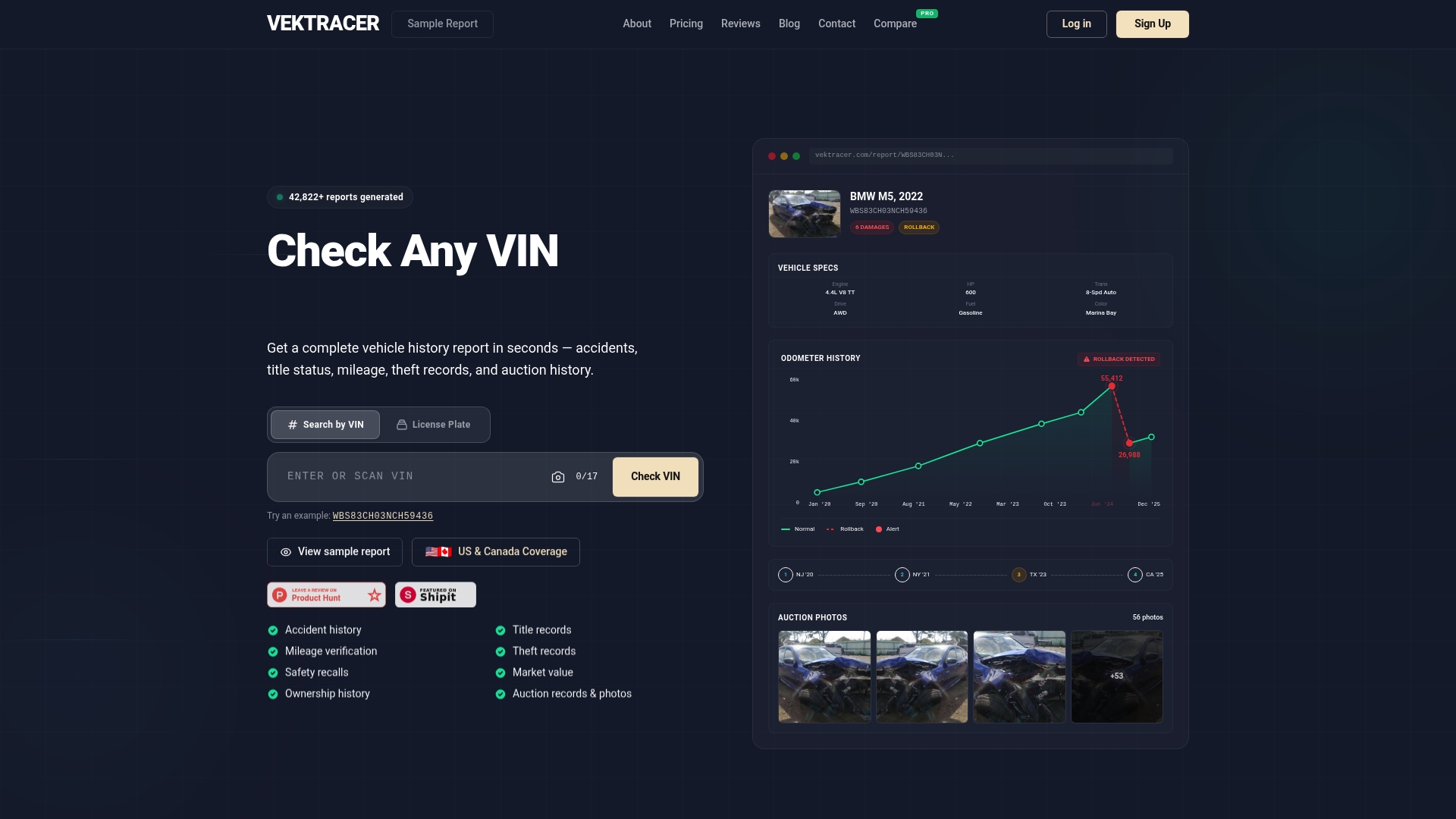
Our VIN-based reports include safety recall status, accident history, title records, mileage verification, theft checks, and market value data, all in one place. Vektracer reports start at just $19.99, compared to $44.99 for Carfax and $24.99 for AutoCheck, with the same core data you need to buy with confidence. You can see exactly how our recall check works, preview a sample vehicle report before you buy, and review report pricing with no surprises. Run your VIN check today and know exactly what you are buying.
Frequently asked questions
Why should I check for recalls before buying a used car?
Open recalls can involve serious safety defects like faulty airbags or brake failures, and dealers can legally sell cars with unresolved issues. Checking first protects your safety and gives you leverage to demand free repairs or negotiate the price.
How do I use the NHTSA recall lookup tool?
Go to NHTSA.gov/Recalls and enter the 17-digit VIN to see all open recalls for that specific vehicle. The NHTSA tool covers the past 15 years of safety recalls and also allows searching by make, model, and year if you do not have the VIN yet.
Are recall repairs always free for used car buyers?
Yes. Recall repairs are free at authorized dealerships for all vehicles, used or new, regardless of age or warranty status. You simply need to know the recall exists and schedule the repair.
How do I verify past recall repairs or maintenance?
Ask the seller for stamped dealership service records, check the manufacturer’s recall portal for repair confirmation, and review a vehicle history report. Manufacturer sites and reports like Carfax or AutoCheck often show whether past recalls were addressed.
What should I do if the NHTSA tool cannot find information for my vehicle?
Call the NHTSA hotline at 888-327-4236 for help with older, imported, or defunct manufacturer vehicles. The NHTSA tool does not cover international vehicles or customer service recalls, so the hotline and manufacturer contact are your best alternatives.
Recommended
Ready to check a vehicle?
Enter any 17-character VIN for a free instant preview — no account needed.