Most Reliable BMW SUV: 2026 Buyer's Guide
Check a vehicle before you buy
Enter a VIN for a free instant preview — accidents, title brands, mileage, liens & open recalls.
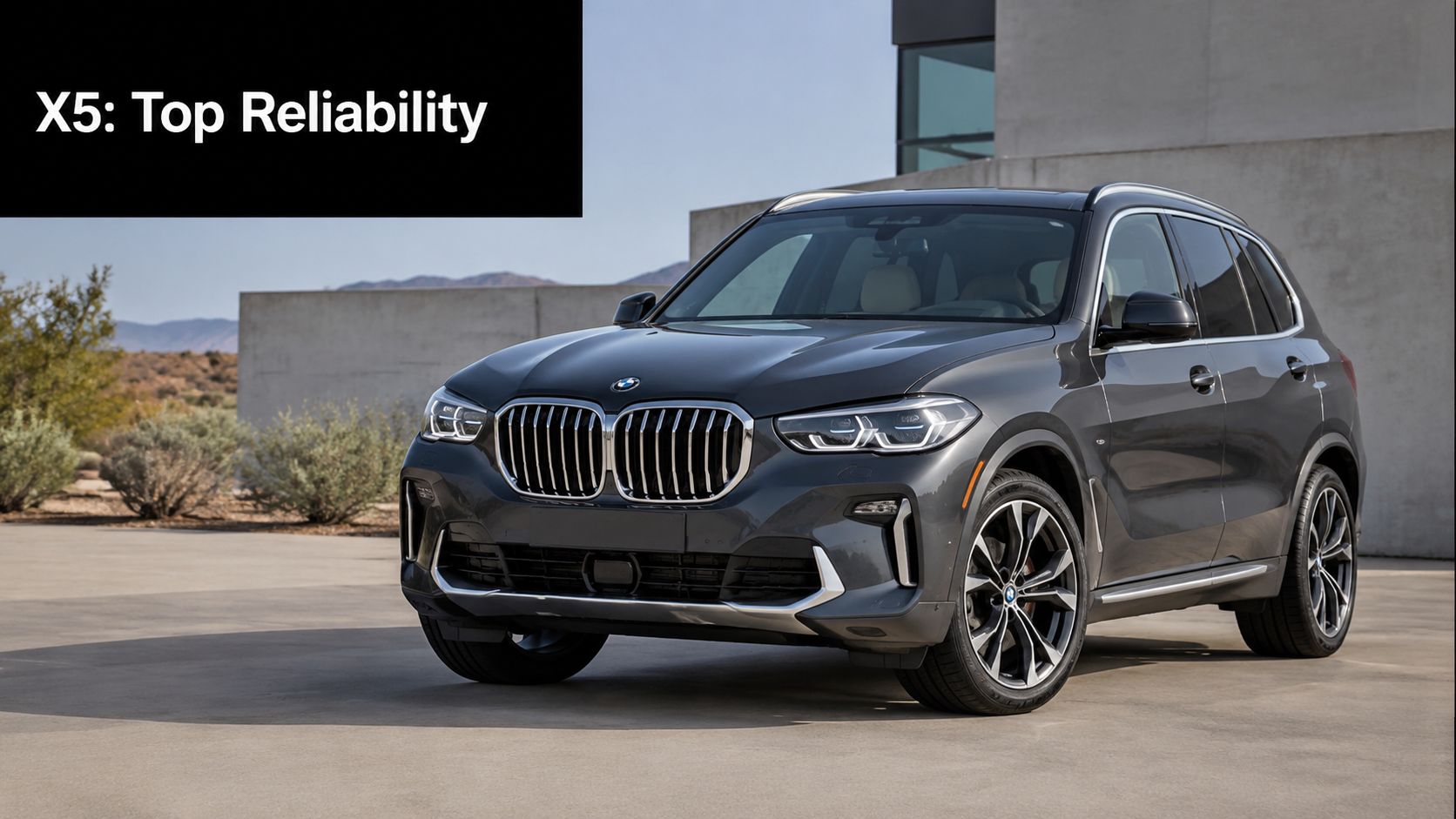
The most reliable BMW SUV is the BMW X5, especially the G05 generation (2019 to 2026) with the B58 engine. The strongest data points put the X5 at 86/100 from J.D. Power and 92/100 from Consumer Reports, which is the highest reliability result cited for any BMW SUV in the verified data.
That sounds straightforward, but the actual buying decision isn't. The BMW SUV with the best reliability scores isn't automatically the BMW SUV with the lowest ownership cost, and that's where most rankings stop too early. If you're shopping used, especially outside warranty, the right answer is usually an X5 xDrive40i with the B58, but only if the individual vehicle's history, service pattern, and condition support the headline score.
The Most Reliable BMW SUV Is the X5 Heres Why
The X5 wins because it shows up at the top of more than one reliability framework, not because of brand mythology. In the verified data, J.D. Power places the BMW X5 G05 at 86/100, the highest reliability score among BMW SUVs, while Consumer Reports gives the X5 a 92/100 reliability rating, also the highest recorded for a BMW SUV model in that dataset. Those aren't close-enough numbers. That's a pattern.
Early in your search, it helps to separate model reliability from vehicle-specific risk. A strong-generation X5 can still be a bad buy if it has collision history, poor maintenance records, or evidence of deferred repairs. That's why a BMW X5 search should always end with a VIN-level review, not just a model-level conclusion. If you're checking a candidate vehicle, start with a dedicated BMW X5 VIN check.
Why the X5 stands out
The key advantage isn't only the badge or the price point. It's the combination of a proven platform, a better recent reliability record than BMW's other SUVs, and strong owner-reported outcomes tied to the B58 engine.
Three things push the X5 ahead:
- Cross-source consistency: It doesn't just lead in one ranking. It leads across the major reliability claims in the verified data.
- Generation clarity: The strongest recommendation centers on the G05 generation, which narrows the search.
- Powertrain focus: The B58-equipped models keep showing up as the versions buyers trust most for long-term ownership.
Bottom line: The X5 is the best answer to "most reliable BMW SUV," but the best buying strategy is narrower than that. Look for a G05 X5, prioritize the B58, and verify the specific vehicle before money changes hands.
How BMW SUV Reliability Is Measured
Reliability rankings look simple until you ask what they measure. That's where buyers get tripped up. A score can reflect reported problems, ownership surveys, or broad quality impressions, and those aren't interchangeable.
What the scores actually tell you
In this topic, the two recurring names are J.D. Power and Consumer Reports. You don't need to treat them as identical. You need to read them as different ways of answering the same practical question: how likely is this SUV to create trouble after you buy it?
For a shopper, the distinction matters:
- J.D. Power is useful when you want a broad benchmark for dependability and comparative problem rates across brands and models.
- Consumer Reports is useful when you're trying to understand how owners experience reliability in real use.
- Repair cost data matters separately, because a vehicle can have relatively few failures and still be expensive when something does go wrong.
That last point is where many rankings fall apart. They identify what breaks less often, but they don't always tell you what ownership feels like when maintenance and repairs arrive.
How to read reliability without getting fooled
A sensible buyer should combine the model score with the ownership context. If one SUV scores well for reliability but carries more complexity, more weight, or more expensive systems, the ownership experience can still be costly.
A broader market view helps here. If you want extra context on how reliability and sales trends are discussed across brands, the carBoost piece on dane o sprzedaży i niezawodności aut is useful as a supplementary reference.
Reliability score first. Ownership context second. Vehicle history third. Skip any one of those and you're guessing.
What this means for BMW shoppers
For BMW SUVs, don't read a single number as a universal answer. Read it as a screening tool.
A high score tells you where to start looking. It doesn't tell you which listing to buy, how much deferred maintenance is hiding in the records, or whether the previous owner treated the vehicle like a lease return or a long-term keeper. That's why the X5's lead matters, but only as the opening filter.
BMW SUV Reliability Comparison X1 vs X3 vs X5 vs X7
If you're comparing the lineup instead of shopping one specific listing, the practical question isn't just which SUV is best. It's which BMW SUV is most reliable for the kind of ownership you want.
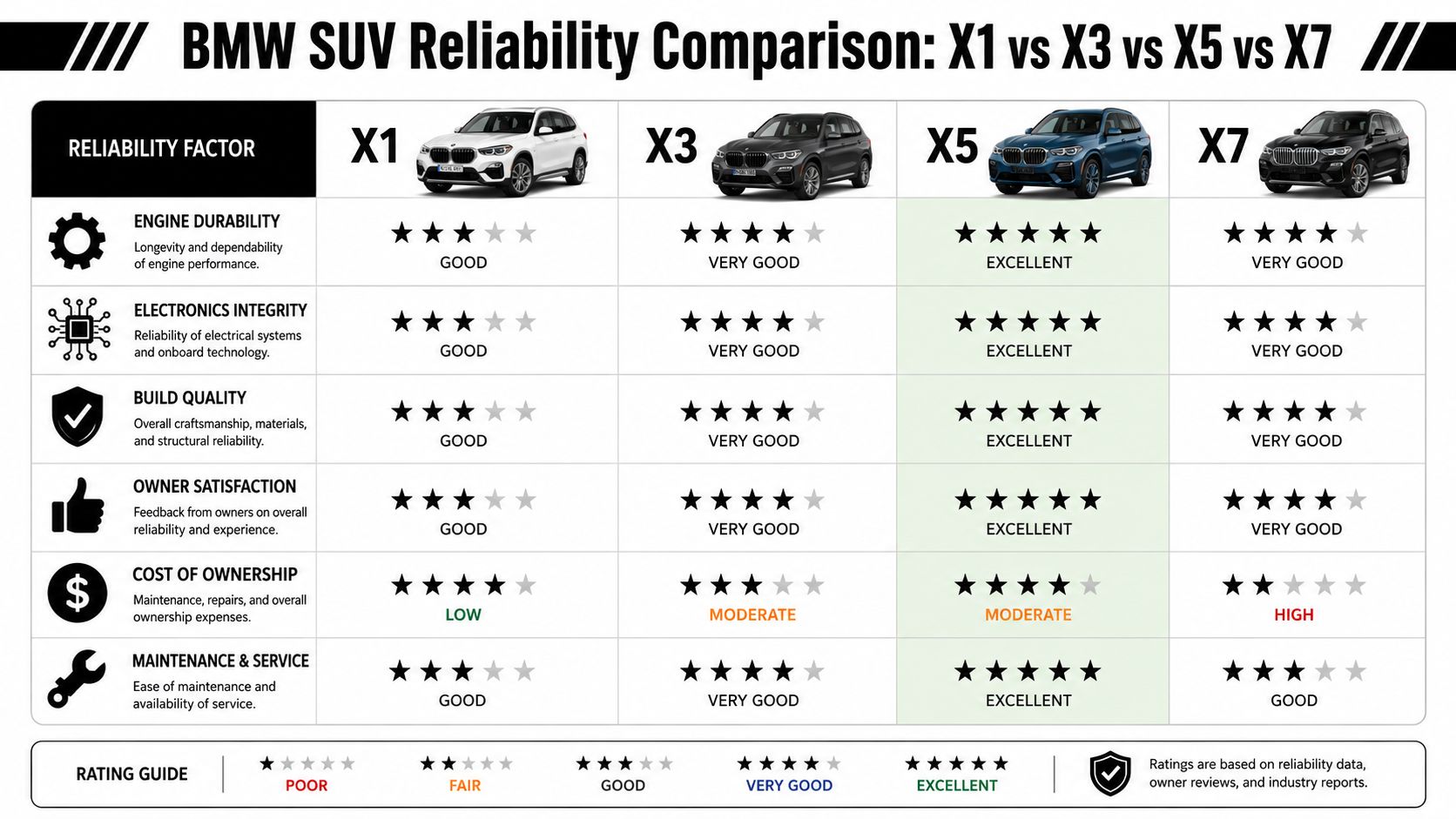
Here's the clearest side-by-side view based only on verified data.
| Model | Generation | J.D. Power Score (/100) | Consumer Reports Score (/100) | Key Takeaway |
|---|---|---|---|---|
| X1 | Not established in verified data | Not established in verified data | Not established in verified data | No verified reliability score in the provided data, so any ranking would be speculation. |
| X3 | G01 introduced in 2017 | BMW lineup scored 82/100 for quality and reliability | Not established in verified data for X3 in this source set | Strong compact choice, especially the B58-powered M40i, but the verified data doesn't beat the X5's model-specific case. |
| X5 | G05 | 86/100 | 92/100 | Best-supported answer for buyers prioritizing reliability. |
| X7 | Current generation in verified references | 76/100 in one verified reference, 85/100 for the 2021 X7 in another verified reference | Not established in verified data | Spacious and appealing, but ownership complexity and maintenance cost make it a less conservative buy. |
X1 has the least evidence here
The X1 may be a sensible urban choice, but in this dataset there's no verified score that lets it compete on equal footing with the X3, X5, or X7. That matters. A lot of online comparisons fill gaps with assumptions. A careful ranking doesn't.
If you need the smallest BMW SUV, judge the X1 more by service history, inspection results, and ownership records than by borrowed reputation.
X3 is the strongest alternative
The X3 has a real argument, especially if you want a smaller vehicle without giving up pace. In the verified data, the BMW X3 is described as the most reliable BMW SUV among compact luxury SUVs, with the G01 generation introduced in 2017 and the B58 3.0L turbocharged inline-six in the M40i highlighted for durability and performance. That version is listed at 382 hp, 365 lb-ft of torque, 0 to 60 mph in 4.4 seconds, and 25 mpg combined, while J.D. Power awarded the overall BMW lineup 82/100, placing BMW 8th out of 31 manufacturers according to CarBuzz's reliability feature on BMW.
That doesn't overturn the X5's case. It sharpens it. The X3 looks like the best alternative if your priorities are compact packaging and strong engine pedigree, not maximum evidence of class-leading reliability inside BMW's SUV range. If you're comparing listings, a focused BMW X3 VIN check helps sort clean examples from risky ones.
X5 is the safest recommendation
The X5 sits in the sweet spot. It avoids some of the packaging and mission compromises of smaller SUVs while stopping short of the added bulk and complexity of the X7. For many buyers, that's the ideal zone for a used luxury SUV: enough room, enough refinement, and enough market volume that strong examples are still findable.
X7 makes sense only with eyes open
The X7 isn't automatically unreliable. But it is harder to recommend as the default answer for a buyer who says reliability is the top priority. It carries more systems, more size, and more financial exposure when age catches up with luxury hardware.
If your first criterion is dependability, start with the X5. If your first criterion is three-row comfort, then consider the X7 and budget accordingly.
Deep Dive The Most Reliable Model Is The BMW X5
The X5's lead becomes more convincing when you stop treating it as a generic nameplate and narrow the analysis to the G05 generation. That's where the evidence is strongest and where the most defensible recommendation lives.
The J.D. Power case for the X5
According to BMW of Peoria's summary of J.D. Power's 2024 Vehicle Reliability Study, the BMW X5 G05 scored 86 out of 100, which is the highest reliability rating among BMW SUVs. The same verified claim says it ranks 8th out of 31 luxury manufacturers overall, beats the industry average score of 75 by 11 points, and indicates a 23% lower probability of reported mechanical issues than the average luxury SUV in its class.
That's the kind of result that changes the recommendation from "good for a BMW" to "strong by luxury-SUV standards."
Why the B58 version is the one to hunt for
The best X5 isn't every X5. The strongest case centers on the B58-powered variants, especially the xDrive40i. In the verified data, the B58 repeatedly appears as the engine associated with the X5's strongest ownership reputation.
That matters because used BMW buying is rarely about the badge alone. It's about avoiding the combinations of engine, generation, and production timing that subtly shift a vehicle from sound buy to expensive project.
The hidden advantage of consistency
A lot of used luxury SUVs have a single good year or one favorable ranking. The X5's real strength is that it doesn't look like a one-off result. It looks like a model that settled into a better engineering rhythm than many BMW buyers expect.
That gives the X5 a rare kind of recommendation. You're not buying into a romantic forum narrative. You're buying into a model that has stronger support from the available reliability claims than the rest of BMW's SUV line.
Practical rule: If you're buying for long-term ownership rather than a short lease-style cycle, choose the X5 version with the clearest powertrain reputation, not the flashiest trim.
What buyers should conclude
If your goal is the most reliable BMW SUV, the X5 is the answer. If your goal is the most reliable BMW SUV to own past warranty, the answer becomes even narrower: prioritize the G05 generation and focus on the B58-powered configuration.
That isn't the same as saying every G05 X5 is safe. A neglected example can still punish you. But if you're choosing where to aim your search, the X5 gives you the strongest evidence-based starting point in BMW's SUV lineup.
The Hidden Cost of BMW Ownership
Reliability and affordability aren't the same thing. That's the trap. Buyers see a strong score and assume the ownership math will be painless. On a modern BMW SUV, that assumption can go wrong fast.
Reliable doesn't mean cheap
The most important correction to the usual "most reliable BMW SUV" discussion is this: a vehicle can be relatively dependable and still expensive to own.
The verified data points directly to that issue. According to Consumer Reports coverage of BMW, reliability content often misses the emerging maintenance cost penalty for 2020 and newer BMW SUVs, even as average annual repair costs for 2024 were reported 22% higher than 2023. The same verified claim says a 2021 BMW X7 with an 85/100 J.D. Power score can cost $1,850 per year to maintain versus $1,200 for Lexus equivalents, and that 40% of users were unaware of that cost gap until after purchase.
That's the key insight many rankings miss. A strong reliability score can reduce the odds of certain headaches. It doesn't cap the price of the headaches that do happen.
Where ownership costs usually bite
Even reliable BMW SUVs can become expensive when wear items, cooling-system parts, oil leaks, suspension components, or electronic modules need attention. You don't need invented failure-rate numbers to understand the risk. Luxury engineering brings denser packaging, more sensors, and pricier parts.
For buyers, that changes the definition of a good deal:
- Lower purchase price isn't enough: An attractively priced SUV with patchy service records can become the expensive choice.
- Complexity matters: Larger, more feature-heavy BMWs usually carry more financial exposure once they age.
- Preventive maintenance matters more than the headline score: A disciplined owner can make a "good" model feel excellent. A careless owner can make the same model feel disastrous.
Why the X5 still wins, despite this
The X5 still leads because it offers the best balance in the verified data between reliability and manageable ownership risk. That's different from saying it's cheap to run. It isn't a budget car. It's a luxury SUV with a better-than-average case for dependability.
What you should reject is the lazy shortcut: "most reliable" equals "lowest cost." It doesn't. For BMW shoppers, the smarter standard is this:
Buy the model with the strongest reliability evidence, then budget like it's still a premium vehicle.
That mindset is what keeps a good X5 from turning into a bad financial surprise.
Your Used BMW SUV Pre-Purchase Checklist
A reliable model can still hide a bad history. At this point, buyers either protect themselves or donate money to the next repair bill.
The verified data specifically identifies the BMW X5 xDrive40i (G05, 2019 to 2026) as the most reliable BMW SUV for long-term ownership past warranty, with a J.D. Power score of 81/100, and recommends mid to late 2020 production builds to avoid known issues, according to the cited video source discussing long-term X5 ownership. That's a useful filter. It isn't permission to skip due diligence.
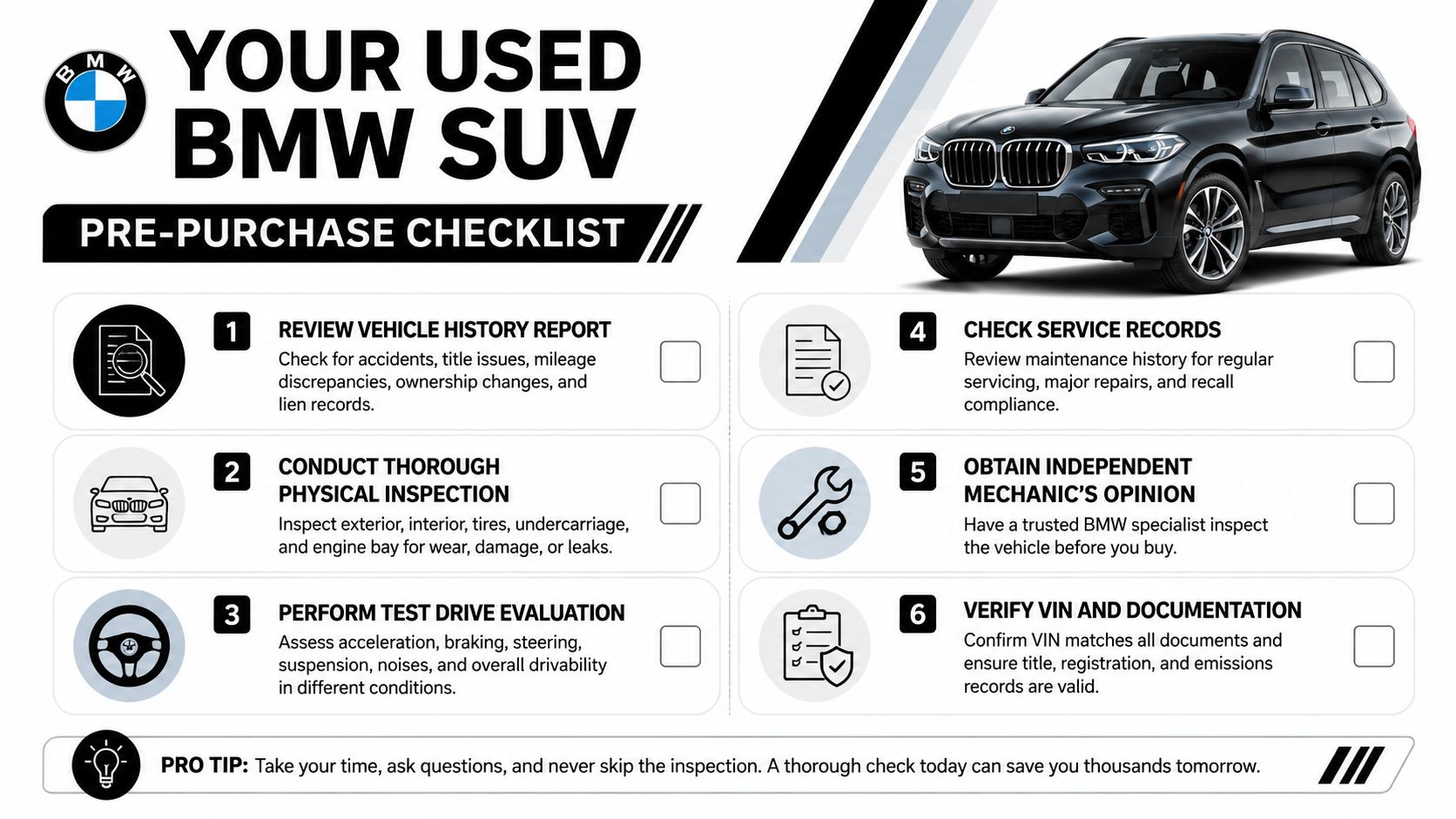
The checklist that actually matters
Run the vehicle history report first: Before you book a flight or arrange financing, pull a proper vehicle history report. You're looking for title issues, accident entries, mileage consistency, theft records, and service-related clues.
Use the right VIN route for your market: If you're buying across borders, your search should reflect that. Check both a VIN check USA resource workflow and the equivalent vin check Canada process when a vehicle has moved between markets or was imported.
Inspect the body for repair clues: Look at panel alignment, paint consistency, glass dates, bumper fitment, and fasteners. If the report mentions structure or impact history, understand the impact of frame damage on vehicle value before treating a discounted price as a bargain.
Read the service records like a mechanic would: Consistent maintenance tells you more than a polished listing description. Long gaps, vague invoices, or repeated visits for similar issues deserve scrutiny.
Drive it cold, not just warm: A seller who pre-warms the vehicle may be hiding startup behavior, noises, smoke, or roughness that only appears on a cold start.
Check every electronic feature: Seats, cameras, parking sensors, screens, HVAC controls, driver-assistance functions, and tailgate operation all matter on a modern BMW SUV. Luxury features are part of the ownership risk profile.
One mistake buyers keep making
They assume a clean-looking car with a decent reliability reputation must be a safe buy. It isn't. A used BMW should pass three tests: paperwork, physical inspection, and driving behavior. Miss one and you're trusting cosmetics.
Verify Before You Buy with a VekTracer Report
By the time you've narrowed the field to an X5, the question changes from "which model?" to "which exact SUV?" That's where raw reliability rankings stop helping and VIN-level analysis starts doing the real work.
The verified data says BMWBlog's cited Consumer Reports summary placed BMW's SUV category 5th among luxury brands, with the BMW X5 at 92/100, the highest reliability score recorded for any BMW SUV in that database. It also states that this rating correlates to a 31% lower likelihood of unexpected breakdowns compared with the 2024 luxury-SUV average of 71/100. That's a strong reason to target the X5. It's not enough reason to trust an unknown listing without verification.
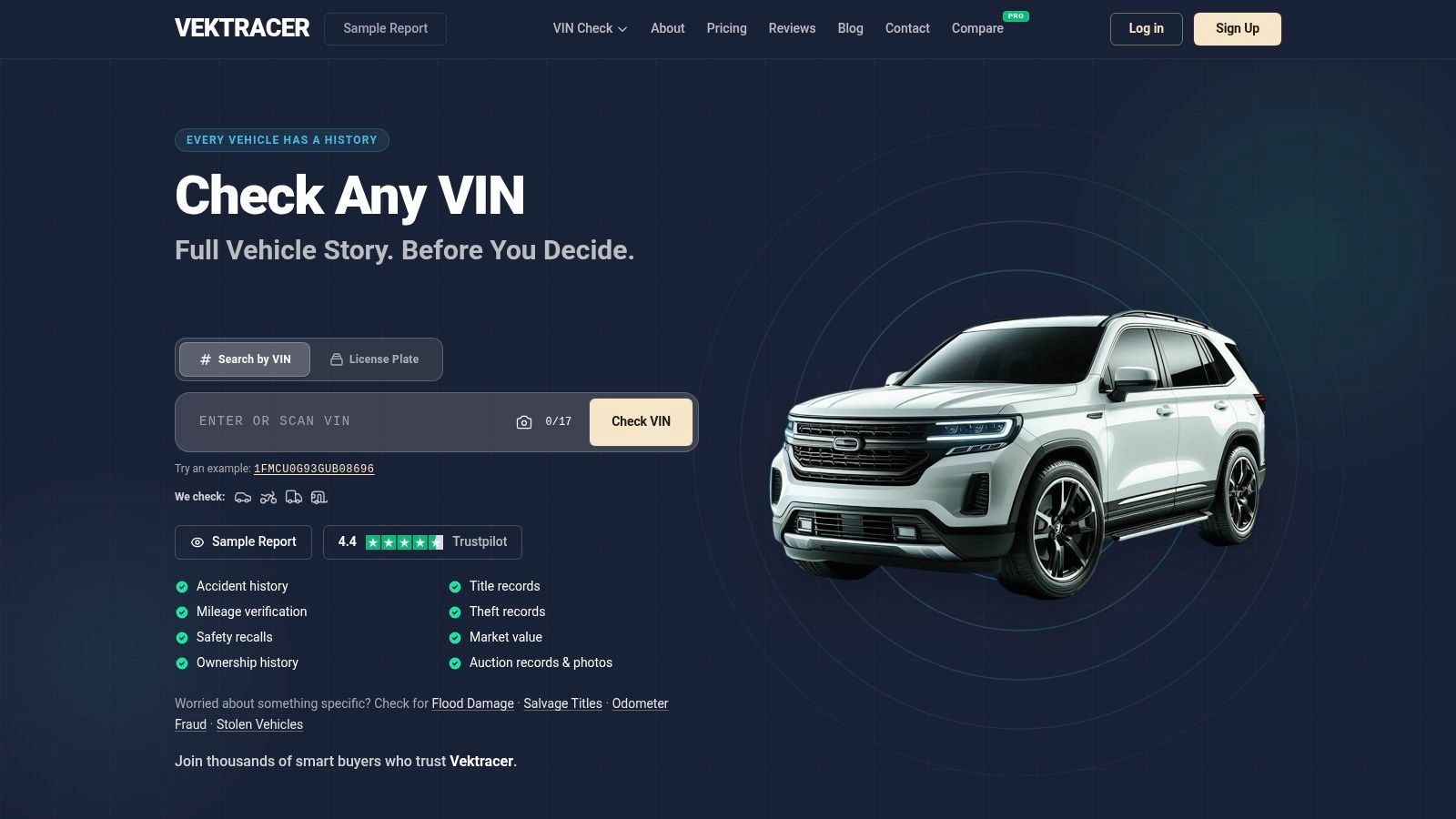
A good report helps you answer the questions sellers tend to soften or skip. Has the mileage history stayed coherent? Are there accident or damage flags? Is there a title issue that affects resale or insurability? Those answers matter more than the seller saying "it's been great for me."
If you're comparing what one report includes versus legacy history tools, a practical reference is DreamBid's breakdown of Carfax and auction records analysis. It's a useful reminder that no single listing description tells the whole story.
FAQ
Which BMW SUV is the most reliable?
Based on the verified data, the BMW X5 is the strongest answer, especially the G05 generation and particularly B58-powered versions.
Is the BMW X3 more reliable than the X5?
The verified data gives the X3 a strong reputation in the compact luxury SUV space, especially in G01 M40i form, but the X5 has the stronger model-specific reliability case overall.
Is the most reliable BMW SUV also the cheapest to own?
No. The data supports the opposite conclusion. A BMW can rate well for reliability and still cost meaningfully more to maintain than a rival luxury SUV.
What used BMW X5 should I target?
The narrowest evidence-based answer is a G05 X5 xDrive40i with the B58 engine, with extra attention paid to service history and production timing.
Should I get a vehicle history report before buying?
Yes. For any used BMW SUV, a vehicle history report is part of basic due diligence, not an optional extra.
If you're down to a few BMW X5 listings and want to separate the clean example from the risky one, run a report with VekTracer. It gives you VIN-level history, a simple risk view, and a faster way to compare candidates before you commit.
Ready to check a vehicle?
Enter any 17-character VIN for a free instant preview — no account needed.