Copart Sales History: A Buyer's How-To Guide for 2026

Check a vehicle before you buy
Enter a VIN for a free instant preview — accidents, title brands, mileage, liens & open recalls.
You've got a Copart lot open, the price looks low, the photos look decent, and your first thought is simple. What happened to this car before it got here? That's exactly where copart sales history matters.
The short answer is this. You check copart sales history in three places: Copart's own member tools, outside auction-history databases, and a full VIN-based vehicle history report. The price alone doesn't tell you whether a lot is a value buy, a stalled relist, or a future headache.
Why Every Copart Bidder Needs to Be a Historian
Checking a specific vehicle?
Run its VIN for a free preview of accidents, title brands, mileage and open recalls.
Most buyers make the same early mistake. They treat auction history like a receipt instead of a timeline.
A prior sale price is useful, but it's only one clue. Significant value comes from reading the sequence. Did the vehicle appear more than once? Did the damage notes change? Did the auction location move? Did the title branding stay consistent? Those details tell you how other buyers, sellers, and rebuilders judged the car before you ever saw it.

Copart is big enough that small mistakes get repeated at scale. From fiscal year 2021 through the trailing twelve months ending in early 2026, annual vehicle sales volume reached approximately 3 million units, with an inventory backlog of around 265,000 vehicles awaiting auction at any given time, according to this Copart scale analysis. That volume gives buyers a lot of history to study, but it also means bad assumptions are easy to make if you only skim the listing.
The three ways serious buyers check history
Start with the direct source:
- Copart member tools let you search by VIN or lot number and review available sales data.
- Third-party auction databases can help when Copart's visible history is thin, expired, or fragmented.
- A full VIN check adds context the auction listing often doesn't show, such as title issues, theft records, or mileage concerns.
Practical rule: If you only know what the current listing says, you don't know enough to bid with confidence.
What sales history actually tells you
Good buyers don't ask only, “What did it sell for?” They ask better questions.
- Market confidence: Repeated failed sales can signal reserve issues, hidden damage, or weak demand.
- Condition drift: A car can look similar in photos while its paperwork or notes tell a different story.
- Profit ceiling: Past sale prices help you judge whether your repair, transport, and resale math still works.
- Risk level: The story behind the lot often matters more than the current bid.
The mindset is similar to mastering B2B competitor analysis. You're not gathering data just to collect it. You're looking for patterns, changes, and blind spots that shift your decision.
Finding Sales History on Copart's Platform
A car shows up with decent photos, a title that looks workable, and bidding stays lower than it should. New buyers see an opportunity. Experienced buyers check whether the unit already failed to move, changed yards, or came back with different notes. That history affects risk more than the current bid does.
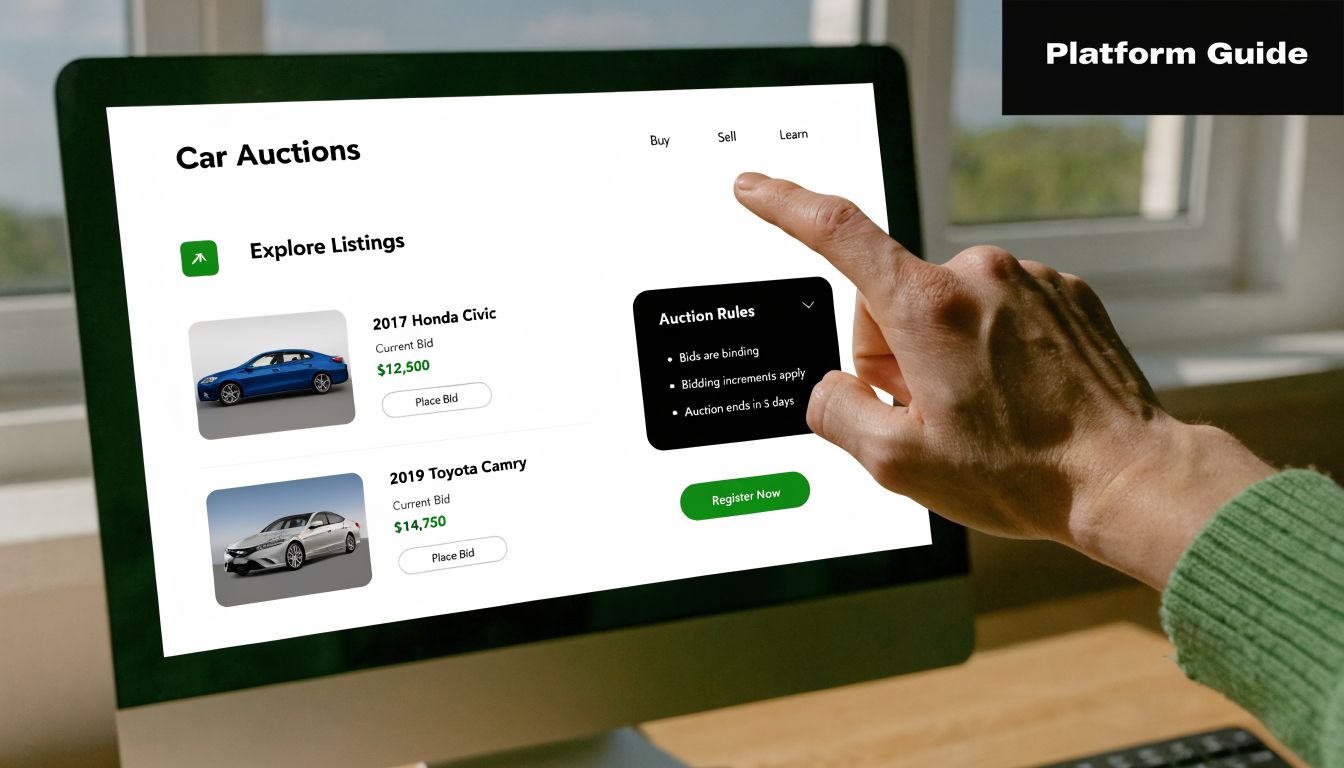
Search by VIN first, lot number second
Start with the VIN whenever you can get it. A lot number belongs to one listing. The VIN follows the vehicle across relists, yard moves, and sale attempts, which is what helps you judge whether you are looking at fresh opportunity or recycled trouble.
My standard check is simple:
- Log into Copart and open the lot.
- Copy the VIN from the listing.
- Search Copart records by VIN.
- Compare that with the current lot number.
- Note changes in sale date, location, title wording, odometer entry, and damage description.
Buyers who are still building their process should review this guide on how to check vehicle history before treating a Copart listing as complete.
What Copart can show you quickly
Copart is useful for screening. It helps answer the first question fast. Has this car moved through the auction cleanly, or has it been hanging around for reasons the current listing does not explain?
On-platform history usually gives you:
- Auction timing: whether the unit appeared once or kept returning
- Yard location: whether it stayed put or moved between facilities
- Sale outcome or high bid reference: a price signal, not a finished valuation
- Lot-level facts: damage label, odometer reading, title brand, and listing photos
- Current market snapshots: data exports exist for active sales activity, as noted earlier
That last point matters if you track patterns in volume or compare similar units in a segment. Buyers building their own tools also need to understand the legal side of collecting public data. A good starting point is navigating web scraping law with Scrappey.
What the history means in practice
The mistake is treating Copart history like a receipt. It is closer to a pattern check.
A single prior sale price does not tell you much by itself. Two or three auction appearances with weak bidding can point to a bad title combination, inflated seller expectations, damage that looks worse in person, or a car that no longer leaves room for transport and repair profit. A yard change can be routine, or it can signal a failed transaction and a second trip through the lane. Small differences in title wording or damage notes also matter because buyers price uncertainty aggressively.
That is where profit gets protected. The point is not only to find old numbers. The point is to see whether the vehicle's history supports your current bid thesis.
Where Copart's native history stops helping
Copart is strongest at showing the current event and the lot attached to it. It is weaker when you need to reconstruct the full sequence behind the car.
| What Copart helps with | Where it may fall short |
|---|---|
| Current listing facts | Older auction cycles may be harder to piece together |
| Bid references tied to a visible event | Relists are not always obvious from one screen |
| Photos for the active lot | Prior image sets may be missing or harder to compare |
| Sale-day details | Broader title, theft, lien, and mileage context may sit outside the listing |
If the record is consistent, the damage is straightforward, and the paperwork matches the ask, Copart may give you enough to make a pass-or-pursue decision. If the timeline looks messy, stop guessing and widen the search before you bid.
Using Third-Party Databases for a Complete Picture
A bidder pulls a lot on Copart, sees decent photos, and spots an old sale reference that looks cheap enough to leave margin. Then an outside database shows the same VIN ran months earlier with different visible damage and weaker bidding. That changes the deal. The question is no longer "What did it sell for?" It becomes "Why did buyers back away, and does that risk still exist today?"
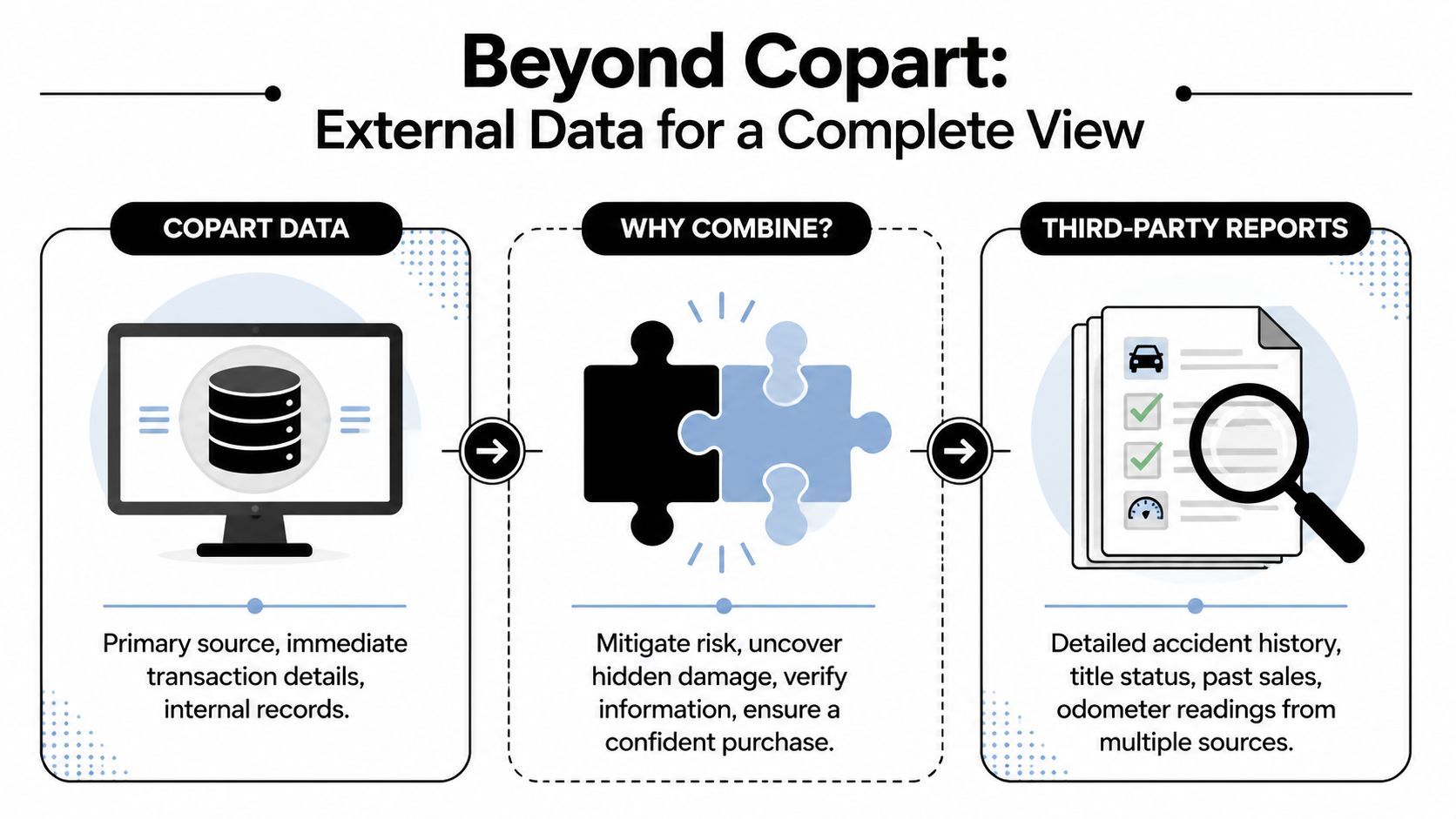
Third-party databases matter when you need the meaning behind the history, not another number on the screen. Copart gives you the active listing well enough. Outside sources help you reconstruct the parts that affect profit, such as prior relists, older image sets, title movement, mileage inconsistencies, and whether the market has already rejected the car at a price close to your target.
What each source is good at
Each source answers a different buying question. Mixing them up leads to bad reads and expensive confidence.
| Tool type | What it helps with | What it often misses |
|---|---|---|
| Copart platform | Active lot details, current auction event, visible sale information | Earlier auction cycles and off-platform context |
| Auction-history databases | Prior runs, older photos, sequence of relists, sale timing | Title depth and record quality can vary by source |
| VIN-based vehicle history report | Title records, theft records, mileage flags, lien context, registration use | It does not replace reviewing auction photos and sale progression lot by lot |
When outside databases earn their keep
Use outside databases when a lot has loose ends that affect your bid ceiling.
- The damage in older photos looks different from the current listing
- The vehicle appeared at another auction or yard
- Title wording changed between appearances
- The sale trail suggests repeated no-sales, weak bidding, or buyer hesitation
- The last strong price came from a hotter market that no longer exists
Those details shape risk. A car that failed to sell twice is not automatically bad inventory. I have bought plenty of relists. But repeated exposure usually means one of three things: the seller wants yesterday's money, the paperwork is limiting the buyer pool, or the vehicle looks worse in person than it does online. Sales history only helps if you read it that way.
A clean current listing can still be overpriced if the older auction trail shows that informed buyers passed on it more than once.
Where a full report fits
Auction-history tools show how the car behaved in the lane. A VIN report helps confirm whether that auction behavior matches the paper trail.
One option in that category is VekTracer, which combines VIN reports with auction-related context, including title checks, mileage checks, theft records, and side-by-side comparison tools. That makes it useful when you need to test a bid thesis, not just collect a past price. If the title history is messy or the mileage story drifts across records, the old sale number loses value fast.
If you are comparing providers before you buy reports in bulk, this list of vehicle history report sites is a practical starting point.
One caution. Some buyers try to build their own auction data pipeline by scraping multiple sites. Before doing that, read up on the legal side. This guide to navigating web scraping law with Scrappey is worth reviewing.
How to Interpret Copart Auction Results
Most bad bids don't come from missing data. They come from misreading data.
A final sale price only means something when you place it beside title type, damage pattern, prior sale activity, and market timing. Dealers who stay disciplined don't just memorize old prices. They track changes in pricing behavior and adjust their bidding range.
Sale price means less than context
In FY2021, Copart's Average Selling Price surged +36% year over year to about $5,500 per unit, according to this analysis of Copart pricing and methodology. That kind of swing is exactly why using stale comps gets buyers in trouble. What looked cheap in one period can be overpriced in another.
When I review auction results, I don't ask whether the current lot is below some old number. I ask whether the result makes sense for this exact mix of title, damage, and repair path.
A practical reading of sale results usually looks like this:
- Higher than expected result: Buyers may see straightforward repairs, easy parts sourcing, or strong resale demand.
- Lower than expected result: There may be hidden structural, electrical, title, or export-related issues.
- Repeated similar sale attempts: Seller expectations may be fighting the market.
- Sharp inconsistency across appearances: Something changed, or earlier buyers spotted risk.
Read title branding like a dealer, not a browser
A lot of newer buyers focus on photos and skip the title language. That's backwards.
A title brand changes what the vehicle is worth, how hard it is to register, who your end buyer can be, and how much documentation you'll need later. If you need a refresher on one of the most common brands, this guide on what a rebuilt title means is worth reading before you bid.
Here's the practical lens:
| Title label | What it usually means to a buyer |
|---|---|
| Salvage | Repairability may exist, but resale and registration take more work |
| Rebuilt or reconstructed | A prior repair path exists, so inspect workmanship and paperwork closely |
| Clear | Better on paper, but still not a substitute for history checks |
| Parts only or non-repairable | Valuable for dismantling or parts strategy, not road-use planning |
Damage notes need translation
Copart damage descriptions are helpful, but they're shorthand. “Front end” can mean anything from bolt-on parts to deeper structural work. “Water/flood” needs far more caution because visible cosmetics don't tell you what happened to electronics, modules, connectors, or interior systems.
If the damage code sounds simple but the sale history looks hesitant, trust the history first and the label second.
The question that matters most
Don't ask whether the lot sold cheap. Ask whether the reason it sold cheap is something you can manage.
That's the difference between buying margin and buying trouble.
Red Flags and Common Mistakes to Avoid
Some lots don't need more optimism. They need more suspicion.
The easiest way to lose money on Copart is to assume every strange pattern has an innocent explanation. Sometimes it does. A lot may stall because the seller held a reserve too high. But plenty of problem cars also leave clues before the hammer falls. Smart buyers treat those clues like warnings, not puzzles to rationalize away.

The warning signs I take seriously
The data on buyer mistakes is blunt. Failing to run proper VIN checks causes 35% of post-auction losses for buyers, often due to undetected title brands or odometer issues hidden in about 20% of relisted vehicles. Top bidders who use history reports and alerts achieve 92% win rates under budget, according to this report on common auction pitfalls.
That matches what experienced buyers already know. Trouble usually shows up before payment, just not always in obvious form.
I get cautious when I see:
Relisted units with no clear explanation
If the vehicle keeps coming back, ask why prior buyers or the seller couldn't close the deal.Mismatched odometer story
If mileage looks odd for the age, or prior listing details don't line up, stop and verify before bidding.Changing presentation
New photos, different wording, or altered emphasis can make a lot look cleaner without changing the underlying risk.Title language that isn't fully explained
If the listing leaves room for interpretation, assume you need more records, not more confidence.
Buyers talk themselves into bad lots when they confuse “I can fix that” with “I understand this car.”
A practical mistakes checklist
Use this before you place a bid:
- Check the VIN, not just the lot page. The lot page is the sale event. The VIN is the vehicle identity.
- Review older appearances if you can find them. Prior photos can reveal damage that current images downplay.
- Don't build your budget around the current high bid. Your real number should come from repair logic, resale logic, and paperwork risk.
- Watch for relist behavior. Reappearing inventory deserves a second level of scrutiny.
- Account for what the listing doesn't say. Missing title context, missing history, and vague damage notes all have to be priced in.
What doesn't work
A lot of buyers still rely on auction photos alone. That's not enough. Others use one old sale price as proof of value. That's also weak.
The disciplined approach is less exciting, but it holds up better. You verify identity, compare listing cycles, and assume that any unresolved inconsistency will become your cost after the sale.
Your Next Steps After Checking the Sales History
A lot can look profitable right up to the point where the paperwork, mileage trail, or prior market behavior turns your margin into a repair bill you did not plan for. Sales history gets you part of the way there. The next step is to decide what that history means for risk, resale, and bid ceiling.
Auction records show activity. They do not always explain why a vehicle sold cheap, failed to sell, or came back through the lane. That missing context is where buyers get hurt.
Use the sales history to sort each car into one of three buckets. Bid-worthy, only worth it at a steep discount, or pass. That decision gets clearer when you check the broader record against what the auction history suggests.
A practical action plan
If a lot is still on your shortlist, work through it in this order:
Verify the vehicle identity across records
Make sure the VIN, trim, engine, and prior sale details line up. If the sales trail suggests one story and the broader record suggests another, price the uncertainty or walk away.Pull the full history report
Auction results help with market context. A full report helps you catch title issues, theft records, mileage concerns, and cross-border history that can change the deal economics.Set a bid cap based on exit value, not auction excitement
Start with realistic resale or post-repair value. Then subtract repair cost, transport, fees, title friction, and a margin for surprises. Historical sale prices help here because they show how the market treated this exact unit or similar ones before you touched it.Compare the lot against at least one similar vehicle
A cheap car is not always a better buy. A cleaner record and steadier sale history often beat a lower hammer price.Get eyes on the car when possible
Photos can support a decision, but they should not carry the whole decision. An inspection helps confirm whether the history matches the metal.Pass on stories that stay expensive to explain
Some vehicles only make sense if everything breaks your way. Experienced buyers avoid those unless the discount is large enough to absorb a bad surprise.
For buyers handling cross-border inventory, this is also the point where a proper VIN check Canada helps confirm whether the numbers still work after title and valuation issues are factored in.
The goal is not to collect more data. The goal is to turn sales history into a decision. If the history supports the car, the paperwork supports the history, and the math still leaves room for profit, bid. If any one of those fails, keep your paddle down.
Frequently Asked Questions
Can I see copart sales history for unsold vehicles
Sometimes, yes. You may find signs that the car was listed before, relisted, or passed without meeting reserve. That still matters, because repeated auction activity can signal weak buyer confidence, seller pricing problems, or damage that looked worse in person than it did in photos.
An unsold record is less valuable than a confirmed sale price, but it is not useless. I treat it as market feedback, not proof of value.
Is Copart auction history the same as a CARFAX report
No. Copart history tracks auction-side activity such as listing dates, sale attempts, lot movement, and prior hammer prices when those sales closed. A traditional vehicle history report focuses more on title records, registration events, reported damage, mileage entries, and other ownership-related details.
Used together, they answer different questions. Copart history helps you judge how the market reacted to the car. A report like CARFAX alternatives and comparisons helps clarify what ownership and title records may still be missing from the auction file.
How far back does Copart history go
It depends on the unit. Some cars have a clean trail with multiple prior listings and photos. Others show only part of the story, especially if they changed auctions, crossed borders, or sat unsold before reappearing.
The practical answer is simple. Use the visible auction record first, then fill the blind spots with VIN-based history and archived lot data from sources you trust. The goal is not just to see an older listing. The goal is to understand whether the vehicle has been getting harder to sell, picking up new issues, or getting repriced to match rising risk.
Do I need a VIN check if the auction history looks clean
Yes. A clean auction trail does not confirm a clean car. It only confirms what showed up in auction records.
I have seen units with tidy lot histories still carry title branding, mileage inconsistencies, theft exposure, or prior activity outside the auction channel. That is why experienced buyers check both. Auction history shows market behavior. VIN history helps explain whether that behavior points to profit or a problem.
If you are down to a shortlist and want to verify what the auction record does not show, VekTracer can help you pull a full VIN-based report before you bid. It is a practical next step when you need title, mileage, theft, lien, and auction-related context in one place.
Ready to check a vehicle?
Enter any 17-character VIN for a free instant preview — no account needed.