Cars for Beginners: Buy Your First Car Smartly
Check a vehicle before you buy
Enter a VIN for a free instant preview — accidents, title brands, mileage, liens & open recalls.
You’re probably doing what most first-time buyers do right now. You’ve got a few tabs open, a couple of cars saved, a parent or friend texting opinions, and no clear idea which advice matters.
Here’s the straight answer. The best cars for beginners are usually safe, reliable, boring-in-a-good-way models like a Honda Civic, Honda Accord, Toyota Corolla, Honda CR-V, or Subaru Outback. But picking the right model is only half the job. If you’re buying used, the real mistake is trusting the car before you verify its history.
Your Guide to Buying a First Car Without the Stress
A first car doesn’t need to be exciting. It needs to start every morning, keep insurance and fuel costs reasonable, and not surprise you with ugly repair bills right after you buy it.
That’s why I’d steer most beginners toward compact sedans and practical small SUVs. Honda and Toyota keep showing up for a reason. In an ArcGIS study of teen first cars, Honda topped the list, with 8 out of 38 teenagers choosing it as a first car. That tracks with real-world advice too. The Honda Accord and Civic have the kind of reputation beginners should care about: safety, reliability, and predictable ownership.
What usually trips people up isn’t choosing between a Civic and Corolla. It’s getting distracted by cosmetic stuff, then skipping the unglamorous checks that matter more. They fall for shiny paint, cheap monthly payments, or a seller saying, “It’s clean.”
Practical rule: Never buy a used car based on the listing, the test drive, or the seller’s vibe alone.
You need a process that keeps you from making a dumb expensive decision. Mine is simple:
- Set a real budget
- Choose new or used
- Filter for the right kind of car
- Inspect and test drive it
- Verify the vehicle history before paying
That last step is the one too many beginner guides barely touch. It should be held as paramount.
Setting a Realistic First Car Budget
If your budget starts and ends with the sticker price, you’re setting yourself up to struggle. A first car costs more than the number on the windshield.
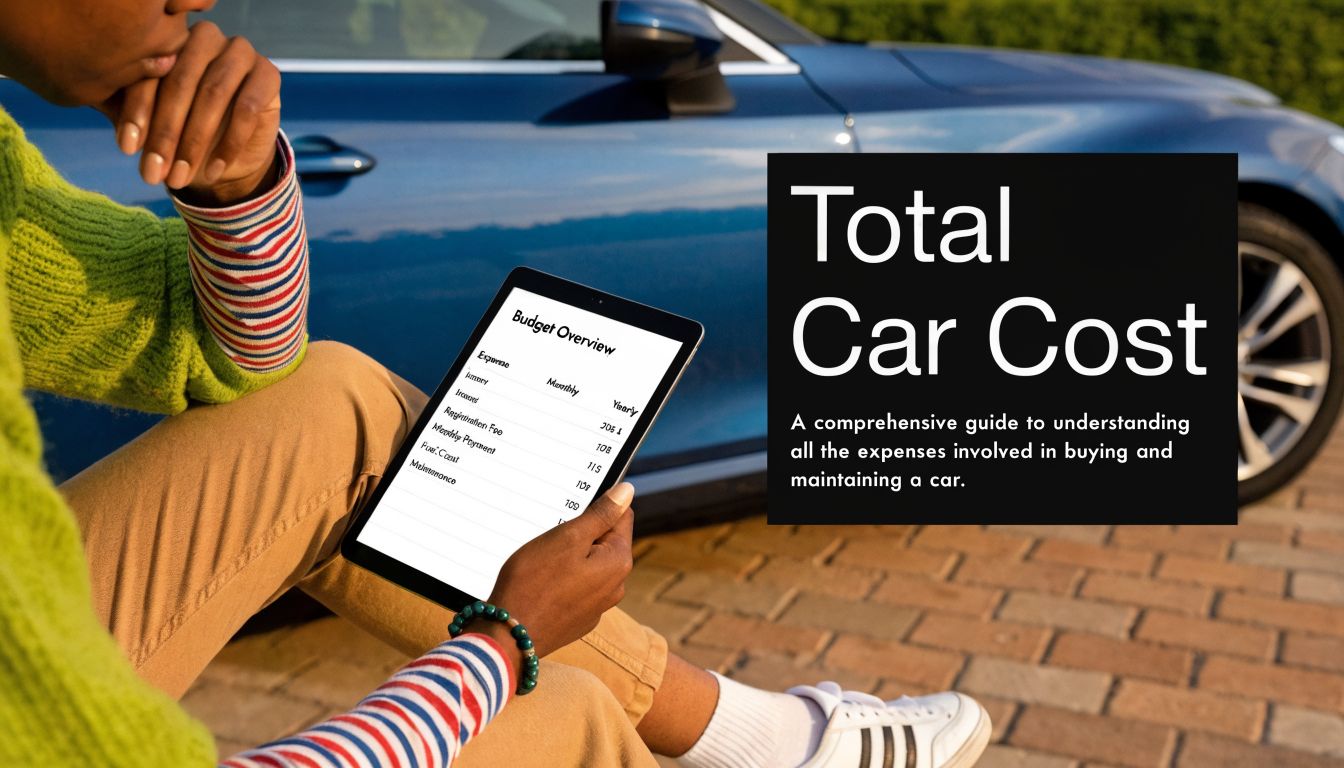
Think in total cost, not purchase price
A cheap car can be expensive to own. A more expensive car can be the smarter buy if it burns less fuel, needs fewer repairs, and doesn’t get punished on insurance.
Your real first-car budget needs to include:
- Purchase price: What you pay up front or finance
- Insurance: Often one of the biggest ongoing costs for new drivers
- Fuel: A car you drive every day will make fuel economy matter fast
- Maintenance: Oil changes, brakes, tires, batteries
- Repairs: Especially important on older used cars
- Taxes and fees: The stuff buyers forget until signing day
If you’re trying to estimate the insurance side, this guide to car insurance for new Georgia drivers is a useful reality check on how coverage decisions affect what you’ll pay.
Why certain cars stay affordable
Beginner-friendly cars tend to have a few things in common. They’re not overpowered, they’re easy to service, and they have strong reliability histories. That matters because reliability isn’t just about convenience. It directly affects what leaves your bank account.
Recharged notes that beginner vehicle selection increasingly emphasizes modest horsepower and transmission reliability, and that Mazda3 models from 2011 to 2014 are a good example of why model year matters. Those years have a better reliability pattern, while years outside that range are more likely to bring transmission and suspension issues that increase maintenance costs.
That’s exactly how beginners get burned. They buy “a Mazda3” instead of “the right Mazda3.”
Buy the specific year range with the better ownership record, not just the badge on the hood.
A budget framework that actually works
If you’re shopping for cars for beginners, use this simple filter before you fall in love with anything:
| Budget item | What to ask yourself |
|---|---|
| Upfront cost | Can I buy this without draining everything I have? |
| Monthly insurance | Can I carry coverage without regretting the car? |
| Fuel use | Will commuting in this thing annoy me at the pump? |
| Repair exposure | Does this model have a reputation for ugly surprises? |
| Resale strength | If I need to sell it later, will it still be desirable? |
A practical first-car budget leaves room for life. If the car payment or purchase wipes you out, the car owns you. Not the other way around.
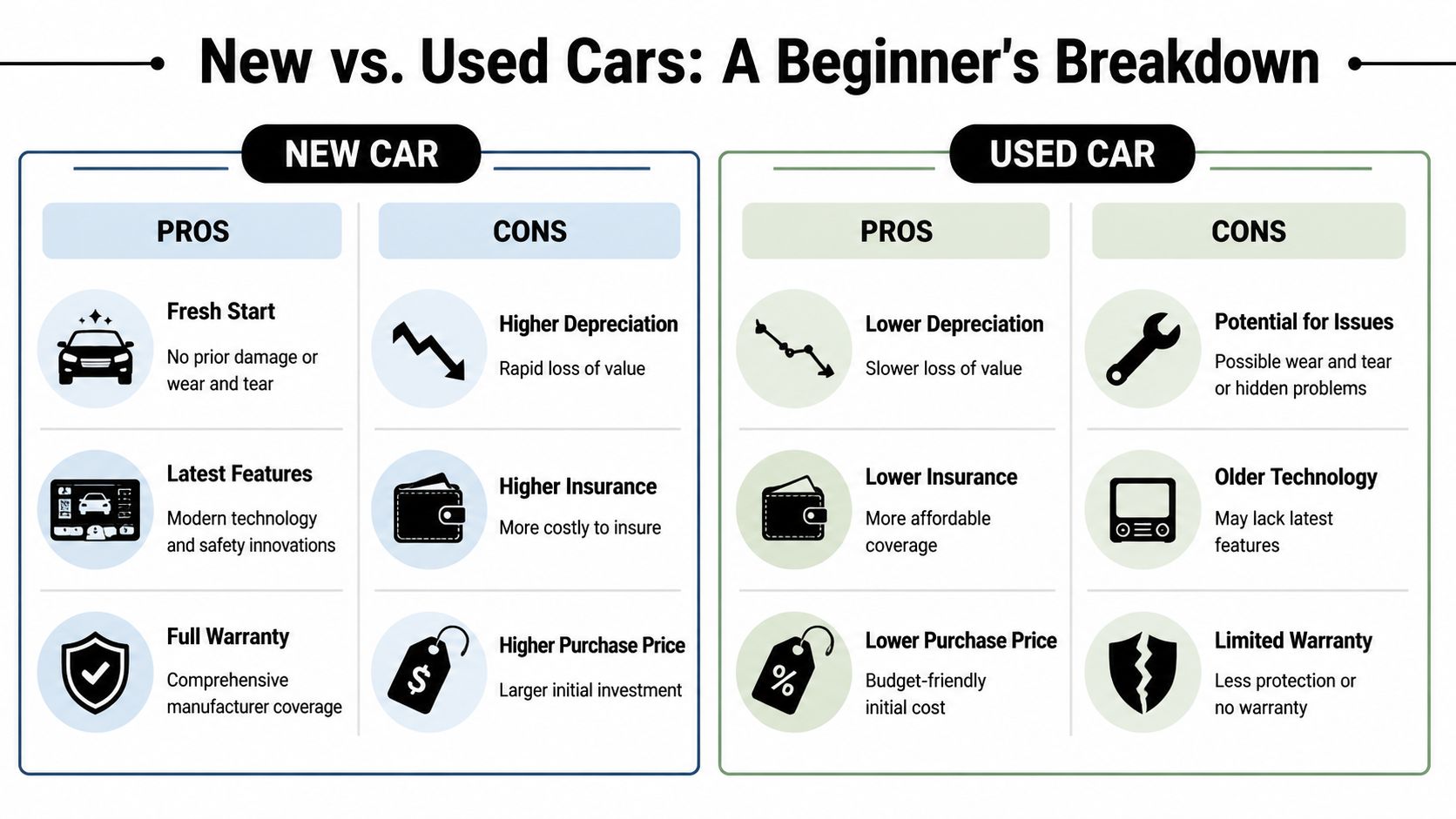
New Versus Used Cars A Beginner's Breakdown
Most beginners should at least look hard at used cars. Not because new cars are bad, but because first cars are training wheels for ownership. You’re learning what you like, what you can afford, and how much hassle you’ll tolerate.
When a new car makes sense
A new car gives you the cleanest slate. No mystery maintenance, no previous owner abuse, and newer safety tech is easier to find. If your budget allows it and you want fewer unknowns, that simplicity has real value.
A new Toyota Corolla is a strong example. Statista’s consumer insights data shows that 53% of car buyers worldwide rate safety as especially important and 53% say the same for fuel efficiency, ahead of low price and quality in that survey, according to Statista’s chart on what matters most when buying a car. That’s why cars like the Corolla keep getting recommended. The Corolla can return 35 MPG in standard form or 50 MPG as a hybrid, and newer versions earn strong safety recognition.
New is the easier choice if you want:
- Modern driver aids: Easier access to current safety tech
- Warranty coverage: Less repair anxiety in the early years
- Zero history risk: No old accidents or title baggage to uncover
Why used is often the smarter first move
Used usually wins on upfront cost. It can also mean lower insurance and less pain from depreciation. That’s a solid combo for someone buying their first car and still figuring out the rest of adulthood.
The downside is obvious. You inherit whatever the previous owner did, ignored, delayed, or hid.
That’s why I’d rather see a beginner buy a well-vetted used Honda Accord than stretch too far for a new car they can barely afford. If you want help narrowing the field to safer used options, BDISchool has a practical piece on selecting safe vehicles for new drivers.
The real comparison
| Factor | New car | Used car |
|---|---|---|
| Upfront cost | Higher | Lower |
| Warranty | Stronger | Often limited or expired |
| Tech and safety features | Newer | Depends on model year |
| History risk | Minimal | Must be verified |
| Depreciation hit | Harder | Usually slower |
| Best for | Buyers who want simplicity | Buyers who want value |
If your budget is tight, a carefully checked used car is usually the better first-car play than a new car that stretches you thin.
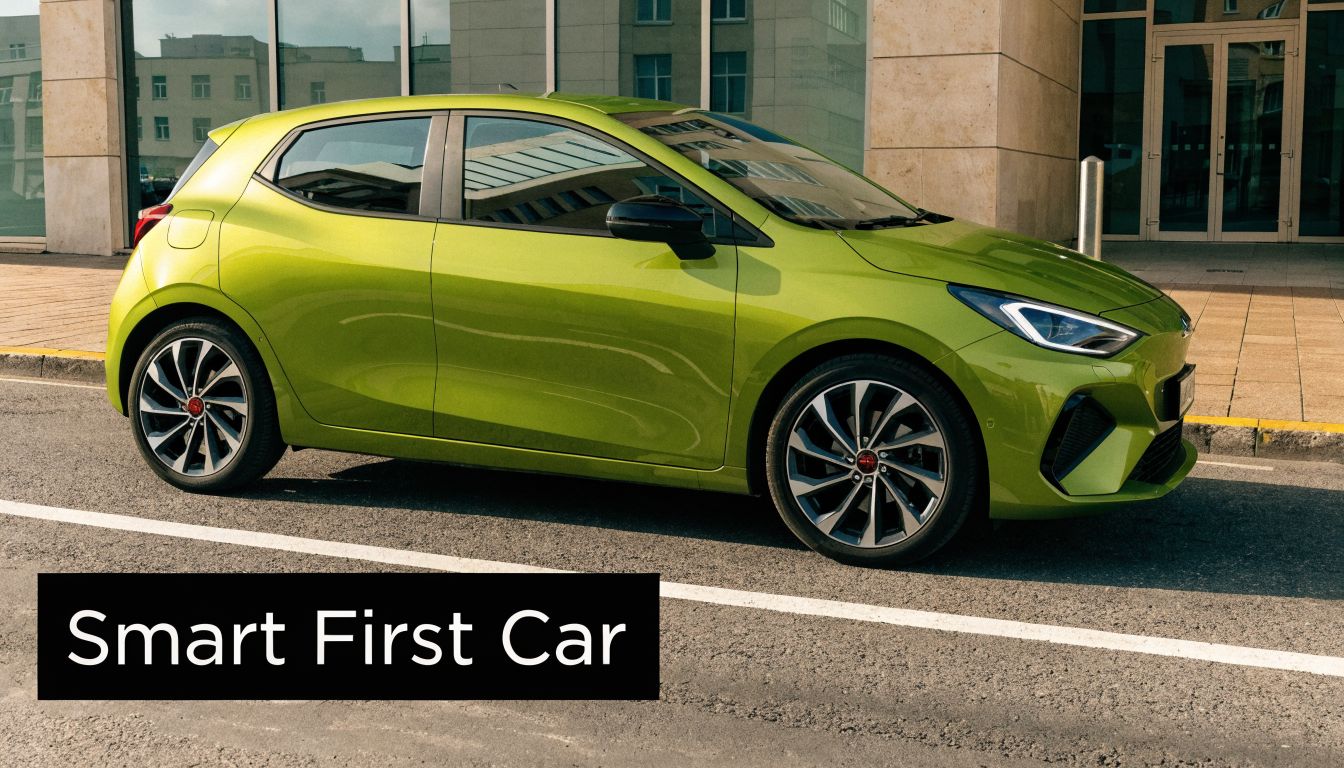
The Five Pillars of a Great Beginner Car
A great first car isn’t the one that gets compliments in a parking lot. It’s the one that keeps your stress low. That comes down to five things.
Safety comes first
For beginners, safety isn’t a bonus feature. It’s the starting point.
You want strong crash-test results and useful driver assistance, especially automatic emergency braking and lane support features when available. Reputable beginner picks often earn attention because they combine proven crash performance with straightforward driving behavior.
Honda gives a good example here. The 2014 to 2018 Honda Accord earned a 5/5 NHTSA Overall Safety Rating and is available used in the $9,000 to $22,000 range, according to the ArcGIS source that also cites MotorTrend’s recommendation. The 2010 to 2016 Honda CR-V also earned 5/5 NHTSA stars, gets 21 to 33 MPG, and falls around $6,000 to $15,000 used in that same source. For a beginner, those are the kind of safety baselines worth chasing.
Reliability matters more than style
A first car should forgive neglect better than you deserve. That’s not an insult. It’s just reality.
The safest-looking deal in the world stops being a deal when the transmission starts acting up a month later. That’s why cars like the Honda Civic, Honda Accord, and Toyota Corolla keep winning beginner recommendations. They have long-running reputations for making ownership easier, not more dramatic.
Reliability is what lets the rest of your budget work.
Cost of ownership decides whether you keep the car
Fuel, maintenance, tires, insurance, and repairs all pile onto the monthly reality of owning a car. A beginner car should be easy to live with, not just easy to buy.
This is one reason compact sedans keep beating flashier options. They’re usually easier on fuel, simpler to park, and less likely to carry the hidden costs that come with bigger or sportier vehicles.
Size should match skill
A giant SUV isn’t a beginner advantage just because it feels substantial. Bigger vehicles can be harder to park, judge, and maneuver in tight spaces.
For most new drivers, the sweet spot is:
- Compact sedan: Civic, Corolla, Mazda3
- Small SUV: CR-V, HR-V, RAV4, Outback if you need more space or weather confidence
Recharged points out that compact sedans like the Civic have excellent safety scores and strong reliability records, and it recommends a minimum vehicle weight of 2,750 lb for crash protection while steering buyers away from underweight cars in that article’s guidance on reliable first cars.
A beginner car should feel easy to place on the road. If it feels bulky in a parking lot, it’ll feel worse in traffic.
Fuel economy should be good enough that you stop thinking about it
You don’t need the absolute highest MPG number on the market. You need fuel economy that won’t punish normal use.
That’s why the Toyota Corolla stays near the top of the list for cars for beginners. The earlier Statista-backed buying-priority data lines up with what smart first-time buyers do in real life. They care about safety and fuel economy first, and the Corolla delivers both.
A few strong options:
- Toyota Corolla: Standard models can reach 35 MPG, and the hybrid can hit 50 MPG
- Honda Accord: Depending on year and setup, the ArcGIS source cites 18 to 36 MPG, with hybrids going higher
- Honda CR-V: Good balance of space and efficiency at 21 to 33 MPG
If you want one opinionated takeaway, here it is. The best beginner cars are usually compact, proven, and slightly dull. That’s a compliment.
Your Pre-Purchase Inspection and Test Drive Checklist
A clean ad means nothing. A seller saying “no issues” means nothing. The inspection and test drive are where you stop listening to sales talk and start looking for proof.
Start with the car standing still
Before the engine even starts, walk around the car slowly. Look at it like you’re trying to catch it lying.
Check these first:
- Body panels: Uneven gaps can hint at previous damage or poor repairs
- Paint match: One panel looking slightly different can mean bodywork
- Tires: Uneven wear often points to alignment or suspension problems
- Glass and lights: Look for cracks, moisture, or non-working lamps
- Leaks under the car: Fresh spots are never “probably nothing”
Open every door, the trunk, and the hood. Sit in every seat if you can.
Inside the cabin, pay attention to:
- Warning lights: They should come on briefly, then go off as expected
- Smells: Mold, coolant, or burnt oil smells are bad signs
- Electronics: Windows, locks, screen, climate control, and backup camera
- Seat wear versus mileage: A heavily worn interior can clash with the stated odometer
Use the test drive to catch what listings hide
Modern beginner cars often include automatic emergency braking, but CarGurus notes that crash-test data can be inconsistent for some newer models. For used cars, it’s smarter to favor vehicles with established NHTSA five-star ratings and IIHS Top Safety Pick recognition, such as many 2013+ Subaru models, because you can verify that safety baseline.
That matters during the test drive too. You’re not testing whether the car feels “nice.” You’re checking whether it behaves predictably and safely.
Don’t drive with the radio on. You need to hear the car.
During the drive, check:
- Startup: Does it crank cleanly or hesitate?
- Acceleration: Smooth and steady, no slipping or jerking
- Braking: Firm, straight, no pulsing
- Steering: No wandering, vibration, or clunks
- Transmission behavior: Shifts should feel normal, not delayed or harsh
- Ride quality: Listen for suspension knocks over bumps
- Parking lot behavior: Try slow turns and reverse
The First-Time Buyer's Test Drive Checklist
| Area to Check | What to Look For | Pass/Fail |
|---|---|---|
| Exterior | Dents, mismatched paint, rust, uneven panel gaps | |
| Tires | Even tread wear, matching tire condition | |
| Interior | Warning lights, odors, working electronics | |
| Engine startup | Smooth start, no smoke, no odd sounds | |
| Acceleration | No hesitation, no jerking | |
| Braking | Straight stop, no vibration or squeal | |
| Steering | Tracks straight, no pulling or looseness | |
| Transmission | Smooth shifts, no slipping | |
| Suspension | No clunks, rattles, or harsh impacts | |
| Parking maneuvers | Easy reverse, normal turning feel |
If you want a more detailed walk-through to bring with you, this guide to a pre-purchase car inspection is worth saving before you head to a dealer or private seller.
How to Decode a Vehicle History Report
This is the part too many first-time buyers skip because the car “looks good.” That’s a rookie move.
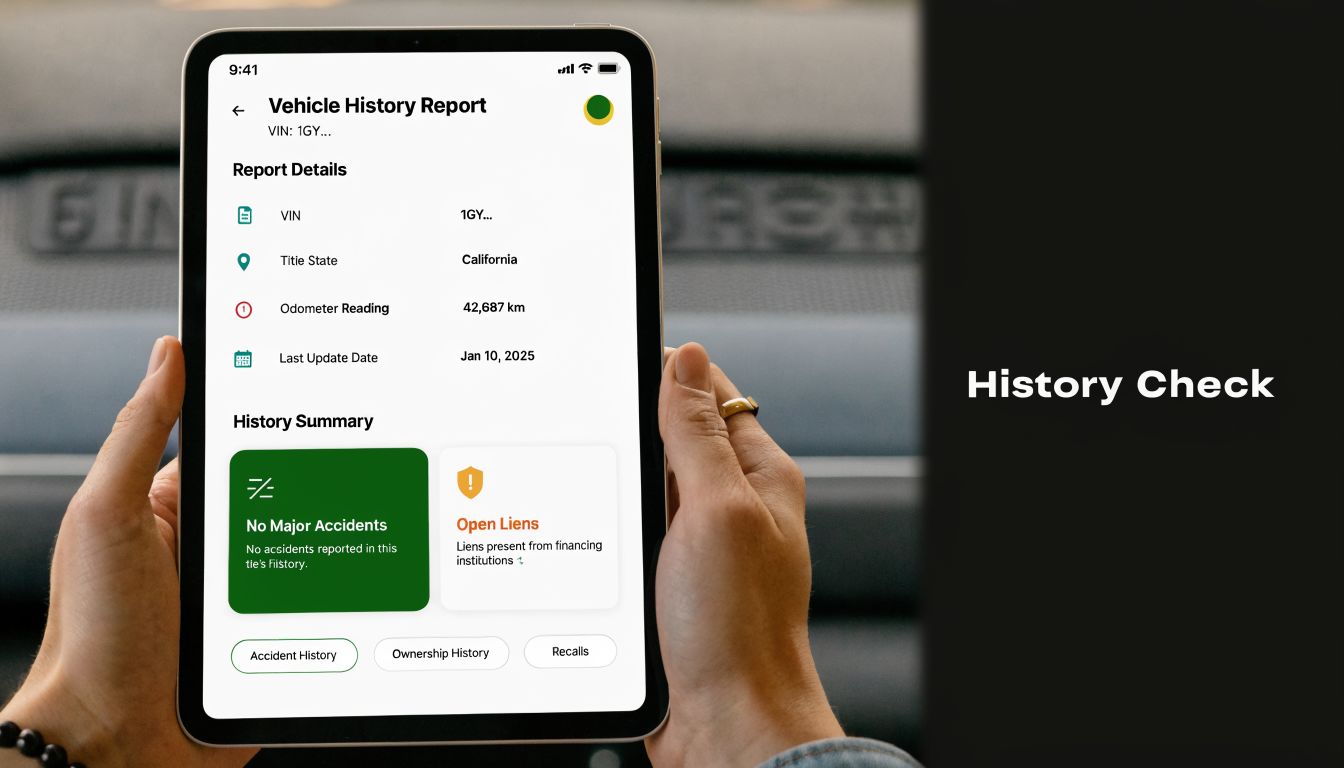
A vehicle can drive fine today and still be a bad buy. Hidden accident damage, title problems, odometer rollbacks, theft records, and unpaid liens don’t show up just because the paint is shiny and the seats are clean.
Start with the VIN
The VIN is the car’s fingerprint. You’ll usually find it at the base of the windshield on the driver’s side, on the driver’s door jamb, and in registration or title documents.
Once you have it, run a vehicle history report. If you’re shopping across borders or helping family in different markets, that might mean a vin check usa search for one car and a vin check canada search for another. The point is the same. You’re verifying the car’s paper trail before money changes hands.
What a good history report can reveal:
- Accident and damage history
- Mileage records
- Title branding
- Open recalls
- Lien status
- Theft records
The red flags that should stop you cold
MotorTrend’s beginner-car feature notes a risk that gets ignored too often. Popular beginner cars like older Honda Civics and Subaru Outbacks have a 25% higher incidence of odometer fraud due to high demand, and 10% to 15% of used cars under $15k in major markets have undisclosed liens or theft records, according to the facts provided from that source in this brief and linked here to MotorTrend’s good first cars feature.
That’s exactly why “good model” doesn’t automatically mean “good car.”
Watch for these report problems:
- Odometer mismatch: Mileage records that don’t climb normally
- Salvage or rebuilt title: The car may have had major prior damage
- Repeated title transfers: Can suggest someone is flipping a problem vehicle
- Accident entries with no seller disclosure: Walk away or demand a serious explanation
- Open lien: You don’t want to buy someone else’s debt
- Theft history: Obvious deal-breaker
A safe model with a bad history is still a bad buy.
How to read the report like a buyer, not a spectator
Don’t skim a report just to feel responsible. Read it with questions in mind.
Ask yourself:
- Does the mileage progression make sense?
- Is the title clean and consistent?
- Do accident records match the condition of the car?
- Are there recall entries that still need attention?
- Is there anything that would complicate registration or resale later?
One accident on a history report doesn’t always kill a deal. A missing explanation does. A branded title does. Mileage weirdness often should.
If you want help understanding what all those report fields mean, this guide on how to read a VIN report and buy smarter breaks it down clearly.
For beginners, this is the easiest expensive mistake to avoid. You can’t control whether a seller is honest. You can control whether you verify.
Comparing Your Top Choices to Make the Final Decision
Once you’ve narrowed it down to two or three cars, stop scrolling listings and force a real comparison. If you don’t, you’ll end up choosing based on paint color, wheel design, or whoever replied fastest.
Use a side-by-side shortlist
Put your finalists next to each other and compare the stuff that matters:
| Car | Safety confidence | Reliability reputation | Ownership cost | Inspection result | History report outcome |
|---|---|---|---|---|---|
| Car A | |||||
| Car B | |||||
| Car C |
A strong candidate usually becomes obvious. One car will have cleaner history, better condition, and fewer ownership compromises.
Honda often survives to the final round for good reason. The ArcGIS source notes that Honda vehicles, especially the Civic and Accord, are extremely common first cars, and it highlights the 2014 to 2018 Honda Accord for its 5/5 NHTSA safety rating, excellent reliability, and used pricing of $9,000 to $22,000. That’s exactly the kind of benchmark car you compare others against.
Don’t let one feature outweigh the whole picture
A beginner buyer’s worst habit is overvaluing one thing.
Examples:
- A car with nicer wheels but worse history
- A cheaper price but obvious inspection concerns
- A bigger SUV with higher running costs
- A sporty trim that’s more fun but harder to insure and maintain
If one of your finalists keeps winning on paper, trust the paper. Emotion is useful for choosing a weekend car. It’s terrible for choosing your first daily driver.
Before you commit, go through a final list of questions to ask when buying a used car. That’s also the point where checking options like VekTracer’s Carfax comparison can help if you want a more direct look at report and tool differences before your final call.
Frequently Asked Questions About Buying Your First Car
What are the best cars for beginners right now
The safest answer is still the practical answer. A Honda Civic, Honda Accord, Toyota Corolla, Honda CR-V, or Subaru Outback are all strong places to start if the specific car checks out mechanically and historically. For most beginners, compact sedans are the easiest recommendation because they balance safety, fuel economy, and low-stress driving.
Is a used car better than a new car for a first-time buyer
Usually, yes. A used car often makes more financial sense for a beginner because the upfront cost is lower and the depreciation hit is less painful. The catch is simple. You have to inspect it properly and verify the vehicle history.
How much should I spend on my first car
Spend an amount that still leaves room for insurance, maintenance, fuel, and surprise repairs. If buying the car empties your savings, the budget is too aggressive. First cars should give you mobility, not financial panic.
Is an SUV a good first car
Sometimes. A small SUV like a CR-V or similar can work well if you need extra space, higher seating, or better bad-weather confidence. But don’t assume bigger automatically means better for beginners. Compact sedans are often easier to drive, park, and own.
What safety features matter most for beginner drivers
Look for strong crash-test performance first, then useful active safety features like automatic emergency braking. Blind-spot monitoring, lane support, and adaptive cruise are nice to have, but proven crash ratings matter more than feature overload.
Should I buy from a dealership or a private seller
Either can work. A dealership may feel easier for paperwork, while a private seller can sometimes offer better value. In both cases, you still need the same discipline: inspect the car, test drive it, and verify the VIN history. A bad car doesn’t become a good car because it’s sitting on a dealer lot.
What’s the biggest mistake first-time car buyers make
They shop for the deal before they shop for the car. Cheap listings pull people in fast. Then they ignore reliability, skip inspection details, and trust whatever the seller says about accidents or mileage. That’s how beginners buy problems.
Is a vehicle history report really worth it
Yes. If you’re buying used, it’s one of the cheapest ways to avoid a much more expensive mistake. A decent first car with a dirty history can turn into a registration headache, a resale problem, or a repair nightmare.
If you’re down to a few options and want to buy with more confidence, VekTracer helps you check the details that matter before you commit. You can review accident history, mileage records, title and lien status, theft records, open recalls, and compare vehicles side by side so you’re choosing the best VIN, not just the best-looking listing.
Ready to check a vehicle?
Enter any 17-character VIN for a free instant preview — no account needed.