4WD High: When to Use It and How to Engage It Safely
Check a vehicle before you buy
Enter a VIN for a free instant preview — accidents, title brands, mileage, liens & open recalls.
4WD High: When to Use It and How to Engage It Safely
4WD High (4H) locks the front and rear axles to send power to all four wheels simultaneously, giving you extra traction at normal driving speeds. Use it on loose or slippery surfaces — snow, ice, mud, gravel, wet dirt — and disengage it the moment you return to dry pavement.
- Ideal surfaces: light-to-moderate snow, packed ice, loose gravel, wet dirt roads, shallow mud, soft sand
- Speed framing: most part-time systems allow 4H up to moderate highway speeds on slippery surfaces; always stay within your vehicle’s rated limit
- Key caveat: your owner’s manual has the exact speed thresholds and engagement procedure for your specific system — check it before you rely on 4H
Key Takeaways
Use 4WD High on loose or slippery surfaces at normal driving speeds, disengage on dry pavement, and always verify your vehicle’s exact speed limits and engagement procedure in the owner’s manual.
| Point | Details |
|---|---|
| When to use 4H | Engage on snow, ice, mud, gravel, or wet dirt when traveling at normal road speeds. |
| When to avoid 4H | Never use part-time 4H on dry pavement — torque wind-up damages the drivetrain over time. |
| How to engage safely | Drive straight, check speed (typically under 62 mph), select 4H, and confirm a steady indicator light. |
| 4H vs. 4L | Use 4H above ~15 mph for traction; switch to 4L below ~15 mph when you need torque to crawl or recover. |
| Check your manual | OEM speed thresholds and engagement steps vary by model year — the owner’s manual is the authoritative source. |
A practical closing thought
4WD High is a genuinely useful tool — but only when you treat it as a surface-specific mode, not a permanent upgrade. The drivers who get into trouble are usually the ones who engage it and forget it, or who assume it compensates for worn tires and aggressive speeds. It doesn’t. It gives you traction; you still have to supply judgment.
If you’re buying a used 4WD vehicle, one thing worth checking before you trust its 4H system: the vehicle’s history. A truck that’s been through repeated off-road abuse, unreported accidents, or odometer rollback may have a transfer case or drivetrain that’s already compromised. A Vektracer VIN report pulls accident history, title records, mileage verification, and more — so you know what you’re actually getting before you depend on that 4H button in a snowstorm. You can also run a vehicle history check to see what the records show on any used 4WD you’re considering.
Table of Contents
- What does 4WD high actually do to your drivetrain?
- When should you use 4WD high?
- When not to use 4WD high
- How to engage and disengage 4WD high
- 2H vs. 4H vs. 4L vs. 4WD Auto: a quick comparison
- Practical tips for safe 4H use and post-trip maintenance
- What manufacturers say about speed limits and system types
- Sources
- FAQ
What does 4WD high actually do to your drivetrain?
When you select 4H, the transfer case splits engine power between the front and rear driveshafts at a 1:1 (high-range) gear ratio. That ratio is the same as normal driving — you keep your full road speed — but now both axles are driven together. The result is more traction without sacrificing the ability to travel at highway-adjacent speeds.
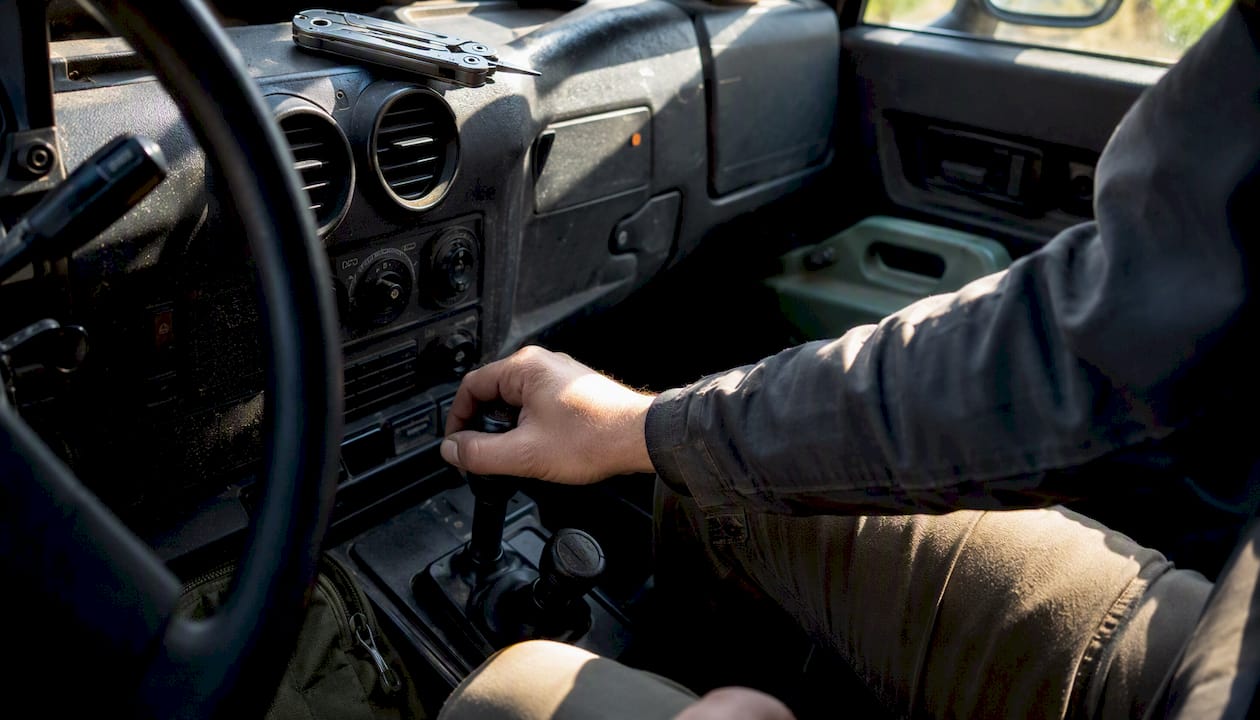
Part-time vs. full-time systems is the distinction that changes everything about safe use. Part-time 4WD (common on trucks and traditional SUVs) has no center differential, so the front and rear axles are locked together rigidly. That works perfectly on slippery surfaces where tires can slip slightly to relieve tension. On dry pavement, though, the front and rear axles need to rotate at different speeds through corners — and with no differential to allow that, you get torque wind-up, which stresses the drivetrain and can cause binding or component damage.
Full-time 4WD systems include a center differential (or electronic torque management) that lets the axles rotate at different speeds. Vehicles with full-time systems can run in 4H on any surface without binding risk.
4H vs. 4L in one sentence: 4H gives you traction at normal speeds; 4L multiplies torque dramatically (typical gear reductions run 2.7:1 to 4:1) for slow-speed crawling and recovery.
When should you use 4WD high?
These are the real-world situations where engaging 4H makes sense. Match the condition to your confidence level and always leave room to slow down.
- Light-to-moderate snow on a highway: You’re commuting on a snow-covered interstate at 40–50 mph. The road has traction but not enough for 2WD confidence. 4H keeps all four wheels pulling without forcing you to crawl.
- Packed snow or icy roads: A packed-snow county road after an overnight freeze. Engage 4H before you reach the slippery section, not after you’ve already lost grip.
- Loose gravel roads: A gravel forest road where the surface shifts under acceleration. 4H distributes power so no single axle spins out.
- Wet dirt tracks: After rain, a dirt camp road turns into a greasy surface. 4H gives you the bite to maintain momentum without digging ruts.
- Shallow mud: Mud crossings where you can maintain speed. If the mud is deep or you’re already stuck, switch to 4L for low-speed torque.
- Beach or soft-sand approaches: Driving onto a beach or through soft sand at moderate speed. 4H keeps you moving; drop tire pressure for flotation and engage before the sand gets deep.
A practical example: you’re heading to a campsite after two days of rain. The paved road ends, and a mile of wet clay-dirt track begins. Engage 4H at the pavement edge, maintain a steady 15–25 mph, and avoid sudden throttle inputs that would spin the rear wheels. That’s exactly the scenario 4H was designed for.
According to Jeep’s 4x4 guidance, 4H is the right choice for snow, ice, and rocky roads when you need to travel faster than low-range allows — a framing that applies across most truck and SUV brands, not just Jeep.
When not to use 4WD high
Dry pavement is the clearest no. On a dry road, a part-time 4H system creates torque wind-up because the locked axles fight each other through every turn. You’ll feel it as heavier steering and a push or understeer sensation in corners. Over time, that stress accelerates wear on the transfer case, front driveshaft, and CV joints.
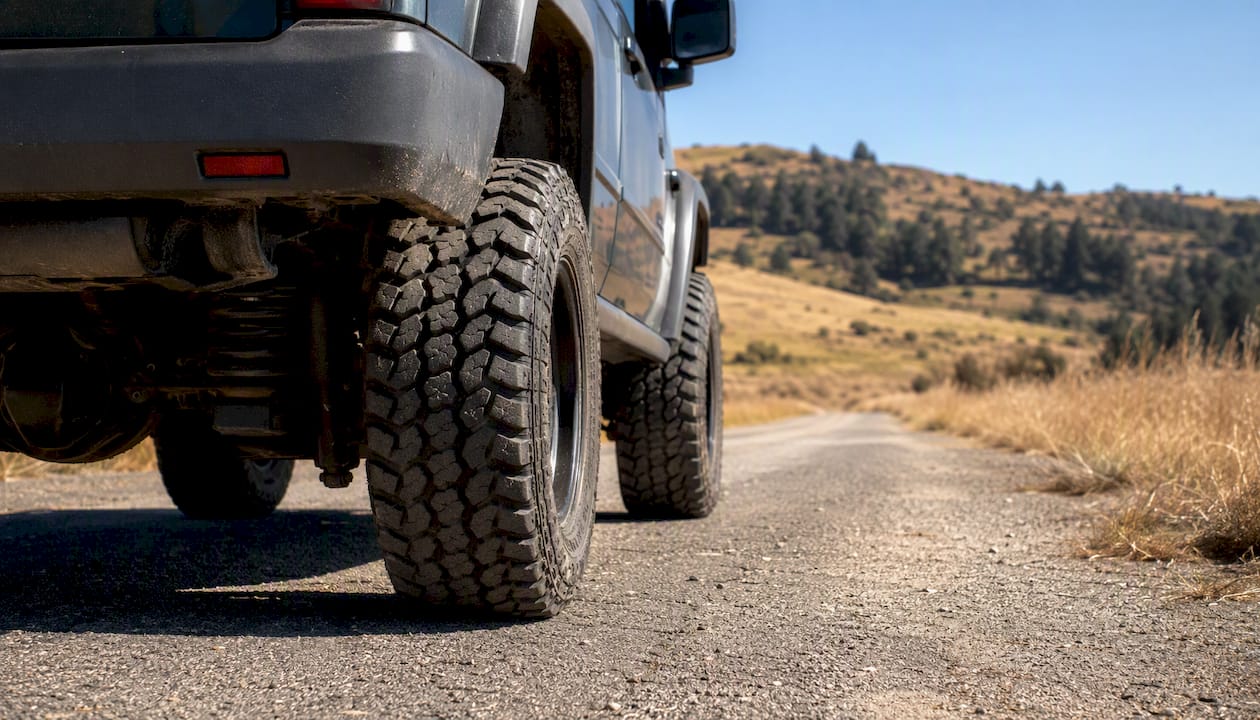
Fuel economy also drops in 4H. The added mechanical drag from driving all four wheels costs you real mpg, even on a straight road. Leaving 4H engaged on a long dry highway stretch isn’t just hard on the drivetrain — it’s an unnecessary expense at the pump.
The sneaky risk is forgetting. You engage 4H on a snowy morning, the roads clear by midday, and you drive 30 miles on dry pavement without noticing the indicator light is still on. Ford’s owner manual content explicitly warns against dry-pavement use for exactly this reason. Build a habit: when the road clears, shift back to 2H.
Mixed wet-and-dry roads are a gray area. If the surface is mostly dry with occasional wet patches, 2H or 4WD Auto is usually the better call for part-time systems.
How to engage and disengage 4WD high
Most modern trucks and SUVs with on-demand or shift-on-the-fly systems follow a similar procedure, though exact steps vary by manufacturer.
- Check your speed. Many systems allow engagement up to about 62 mph; some require slower speeds in cold weather — Toyota notes under 43 mph when temperatures drop below 5°F. Slow to a safe speed before shifting—typically under the maximum recommended threshold.
- Drive straight. Straighten the steering wheel and drive in a straight line. Mismatched propshaft speeds from a steering angle can prevent the transfer case from completing engagement.
- Select 4H. Turn the dial, press the button, or move the lever to 4H, depending on your vehicle’s system.
- Confirm the indicator light. A steady 4H light means full engagement. A flashing light means the system is still trying to lock — drive straight at a slow, steady speed and modulate the throttle slightly until it goes solid.
- To disengage: return to a straight path, ease off the throttle briefly, and shift back to 2H. On some vehicles, a brief deceleration or slight acceleration helps the transfer case unlock.
- For 4L: always stop completely (some systems require neutral), shift to 4L, then proceed. Never attempt 4L engagement while moving at speed.
Pro Tip: If 4H won’t engage after several attempts, check your steering angle first. Full or near-full steering lock prevents the front and rear propshafts from synchronizing for engagement. Straighten the wheel, drive slowly in a straight line, and try again.
2H vs. 4H vs. 4L vs. 4WD Auto: a quick comparison
| Mode | Best terrain/speed | Primary benefit | Engagement method |
|---|---|---|---|
| 2H | Dry pavement, any speed | Fuel efficiency, normal handling | Default; always available |
| 4H | Slippery/loose surfaces, 15–62 mph | Traction at normal speeds | Shift-on-the-fly (most systems) |
| 4L | Extreme off-road, under ~25 mph | Torque multiplication for crawling | Stop or near-stop required |
| 4WD Auto | Mixed or variable surfaces | Dynamic torque split, no binding risk | Button/dial; use anytime |
The rule of thumb: if you can maintain roughly 15 mph or more and the surface is slippery, 4H is your mode. If you need to creep, climb, or recover at under 15 mph, 4L is the right call. When conditions keep changing — wet patches on a mostly dry road — 4WD Auto handles the transitions without the binding risk of a locked part-time system, as Popular Mechanics explains.
Practical tips for safe 4H use and post-trip maintenance
Keep these habits in place every time you use 4H.
- Check tire pressure before off-road use. Underinflated tires reduce the traction benefit of 4H; overinflated tires reduce contact patch on loose surfaces.
- Avoid sharp turns while locked in part-time 4H. Tight turns on any firm surface — even gravel — create binding stress. Keep turns gradual.
- Disengage as soon as the surface clears. Don’t wait until you feel binding; shift back to 2H proactively when pavement returns.
- Watch the indicator light. A flashing light after engagement means the system hasn’t locked. Don’t assume you have 4H traction until the light is steady.
- If you get stuck in 4H: avoid excessive throttle, which digs you deeper. Use gentle momentum, rock the vehicle if safe, and switch to 4L if you need slow-speed torque to extract yourself.
- After extended 4H use: listen for unusual clunks or vibration when you return to 2H. Persistent noise after disengagement can signal residual binding or a transfer case issue worth having inspected.
What manufacturers say about speed limits and system types
OEM guidance on 4H isn’t uniform, but the core pattern holds across brands. Vehicle Grip’s summary of manufacturer speed guidance puts the typical part-time 4H ceiling at 55–70 mph on slippery surfaces, with a universal restriction against dry-pavement use for part-time systems.
| Manufacturer | Typical 4H speed guidance | System type note |
|---|---|---|
| Toyota | Up to ~62 mph; under 43 mph below 5°F | Part-time on most trucks; check model |
| Jeep | Higher-speed off-road/slippery; 4L under ~25 mph | Part-time and full-time variants by model |
| Ford | Off-road and winter use; not for dry pavement | Part-time on most trucks; some auto modes |
Full-time systems (found on some Jeep Grand Cherokees, Land Rovers, and similar vehicles) don’t carry the dry-pavement restriction because their center differential absorbs the rotational difference between axles. If you’re unsure which system your vehicle has, the owner’s manual will specify it in the 4WD or transfer case section — usually within the first few pages of that chapter.
The single most reliable source for your vehicle’s exact limits is always the owner’s manual. Manufacturer guidance in forums, articles, and even this piece reflects general patterns; your specific model year may have tighter or looser thresholds.
Sources
- What Are 2H, 4H, and 4L on 4x4?
- How do I operate the On-Demand 4 Wheel Drive in my vehicle?
- Jeep® 4x4 FAQ & Glossary | Off‑Road Guide | Jeep®
FAQ
What does 4WD high mean?
4WD High (4H) is a transfer case mode that locks the front and rear axles together to drive all four wheels simultaneously at normal road speeds, providing extra traction on loose or slippery surfaces without reducing your top speed the way 4L does.
Is it okay to drive in 4WD high?
Yes, on slippery or loose surfaces — snow, ice, mud, gravel, wet dirt. Avoid it on dry pavement with a part-time system, since the locked axles create torque wind-up that stresses and wears the drivetrain.
Should I use 4WD Auto or 4WD high?
4WD Auto is generally the better choice for mixed or variable conditions because it dynamically distributes torque without locking the axles, eliminating the binding risk of part-time 4H on partially dry surfaces. Use 4H when conditions are consistently slippery and you want full-time four-wheel drive at road speed.
How long can I drive in 4WD high?
On consistently slippery surfaces, you can drive in 4H for extended periods without issue. The limit is surface type, not time: the moment the road turns dry, disengage. Extended dry-pavement driving in part-time 4H causes cumulative drivetrain wear that shortens the life of your transfer case and front driveline components.
Recommended
Ready to check a vehicle?
Enter any 17-character VIN for a free instant preview — no account needed.