05 F150 for Sale: The Ultimate 2026 Buyer's Guide
Check a vehicle before you buy
Enter a VIN for a free instant preview — accidents, title brands, mileage, liens & open recalls.
A decent 2005 Ford F-150 usually sits between $4,900 and $12,850, with a current average asking price of $7,486. If you want to buy one without getting burned, use a three-part check every time: verify the 5.4L Triton engine's health, inspect the frame for rust, and run a vehicle history report to catch hidden title or mileage problems.
If you're searching for an 05 F150 for sale, you're probably staring at listings that all sound the same. “Runs great.” “Cold AC.” “Needs nothing.” On a truck this old, that wording means almost nothing. What matters is whether the seller is being specific, whether the truck's weak spots have already shown up, and whether the price matches the risk.
The 2005 F-150 can still be a useful truck. It was built with real work in mind, and that's why people still hunt them down. But this model year also has a reputation for expensive surprises. If you buy one right, you can get a solid pickup. If you buy one wrong, you can inherit engine, transmission, frame, and title headaches fast.
Initial Vetting Before You Leave Home
Start online. Don't drive across town for a truck that already failed the test in the listing.

Read the listing like a skeptic
A clean ad doesn't mean a clean truck. Older F-150 listings usually give themselves away in the photos and in what the seller avoids saying.
Look for these patterns:
- Blurry wheel-well photos. Sellers do this when they don't want you studying rust.
- No engine-bay photos. That can mean leaks, ugly wiring repairs, or obvious neglect.
- A warm engine in the video or arrival photo. On an older truck, I want to hear a cold start.
- Phrases like “just needs TLC”. That usually means the seller knows there are problems but doesn't want to list them.
- No mention of trim or engine. If the seller doesn't even identify the truck clearly, expect the rest of the details to be thin too.
A good seller usually gives you enough information to disqualify the truck or take it seriously. A weak seller hides behind generic praise.
Practical rule: If the listing won't show the rocker panels, wheel arches, frame area, and dashboard mileage, assume there's a reason.
Use price to filter out fantasy listings
Before you get emotionally attached, anchor the truck to market conditions. Across major U.S. markets, a 2005 Ford F-150 ranges from $4,900 to $12,850, with premium trims like the King Ranch averaging $6,325 to $7,300 according to current CARFAX used F-150 listings.
That price spread matters. It tells you there isn't one “normal” number for every 2005 F-150. Trim, cab style, mileage history, condition, and accident history all move the needle.
A quick way to look at it:
| Trim or situation | What the price usually suggests |
|---|---|
| Very low asking price | Either rough condition, hidden issues, title/history trouble, or a seller who wants it gone fast |
| Middle of the pack | Usually where average XLT and similar work-truck examples land if they're presentable |
| Higher asking price | Better trim, cleaner body, stronger records, or a seller pricing on hope rather than proof |
Build a shortlist, not a wish list
Pick two or three trucks worth seeing. Message the seller before you leave.
Ask for:
- Cold-start video
- Photos of frame rails and wheel wells
- Dashboard photo with mileage
- Title status
- Maintenance records
If they dodge simple requests, move on. There's always another truck.
For a basic refresher on what to pull before an in-person visit, this guide on how to check vehicle history helps you organize the paper trail before you waste a Saturday.
The Notorious 2005 F150 Problem Areas
The 2005 model isn't just “an old truck with old truck issues.” It has a specific pattern of trouble, and you need to know where the money leaks out.
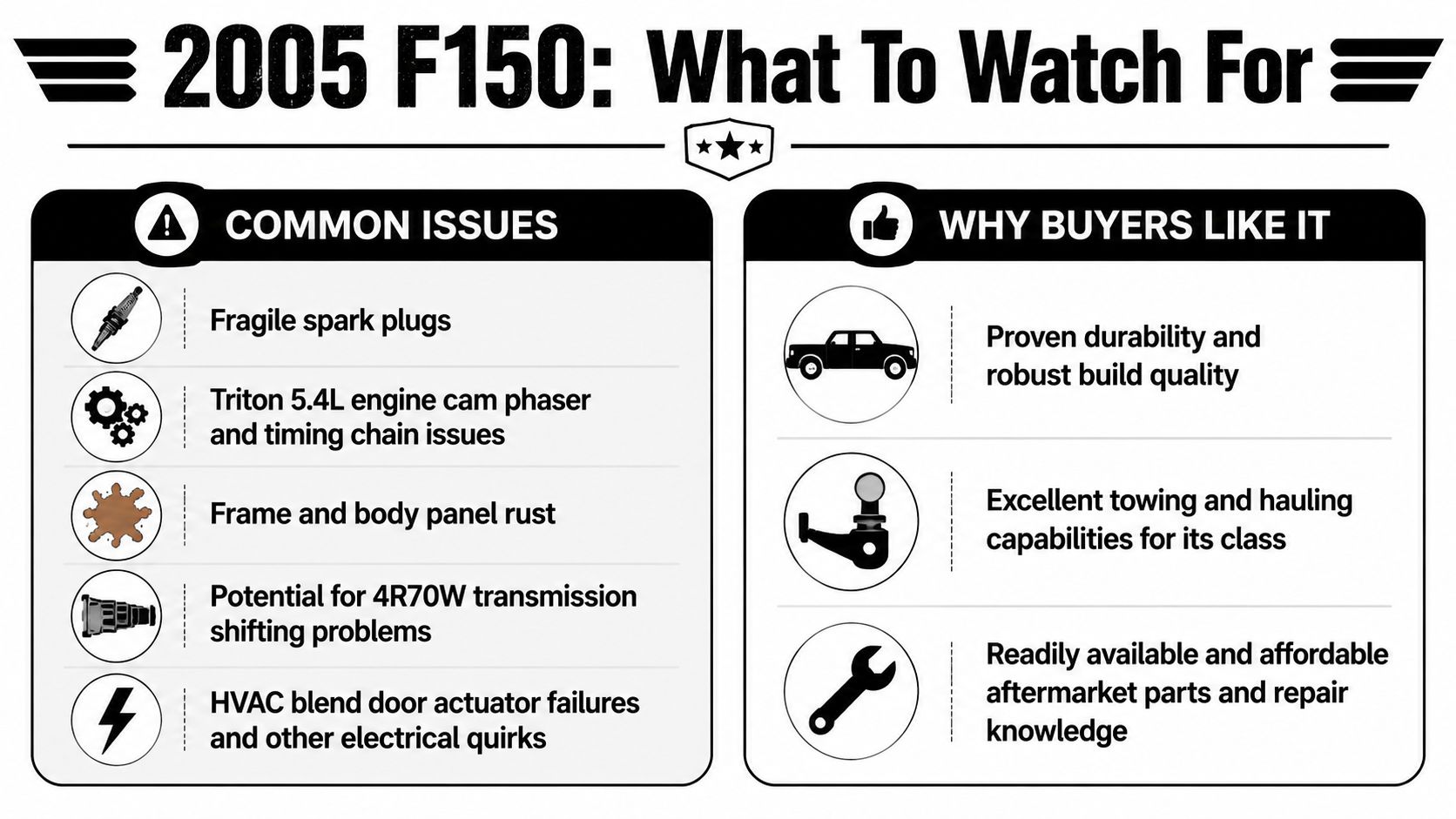
The biggest warning is simple. The 2005 Ford F-150 is often flagged as a model year to avoid because it has 14 documented recalls and known risks including catastrophic engine failures that can run $3,000 to $7,000+ in repairs, as noted in this 2005 F-150 model-year risk review.
The 5.4L Triton is the main gamble
A lot of buyers search specifically for the V8 because they want torque and towing ability. Fair enough. But the 5.4L Triton is also where many ugly deals start.
What I pay attention to first:
- Cam phaser or timing noise. If the engine rattles on startup or has a metallic chatter at idle, don't brush it off.
- Rough idle or lazy throttle response. On these trucks, that can point to deeper timing or ignition issues.
- Spark plug service history. This generation is known for fragile spark plug problems. If a seller says “it just needs plugs,” that's not reassuring.
When a seller can document proper maintenance and the engine sounds clean from cold start through warm idle, that changes the conversation. When they can't, price the truck like a risk asset, not a bargain.
Transmission and shifting behavior matter more than paint
A shiny truck with a bad transmission is still a bad truck.
Common trouble signs include:
- Harsh downshifts
- Hesitation into gear
- Clunks under light acceleration
- Delayed engagement from park into drive or reverse
These symptoms don't always mean immediate failure, but they do mean you should stop acting like you found a steal.
Rust can ruin the whole deal
On a 2005 F-150, I care more about the frame than the seat fabric. Surface rust is one thing. Deep scaling, flaking, patched metal, and soft spots are something else.
Check these areas closely:
- Rear frame sections
- Cab corners
- Rocker panels
- Bed supports
- Rear spring mounting areas
A truck can sound decent and still be structurally tired underneath. Rust is what turns a cheap buy into a truck you can't justify fixing.
What buyers still like about it
This is the part people get right. There's a reason these trucks still sell.
The 2005 F-150 came with a 231-horsepower 5.4-liter V8 making 355 lb-ft of torque and a towing capacity ranging from 7,000 to 9,900 pounds in the lineup. That's why even now, a clean one still appeals to buyers who need an older half-ton with real truck capability.
Here's the practical trade-off:
| Issue | Symptom | Estimated Repair Cost |
|---|---|---|
| Catastrophic engine failure risk | Knocking, severe timing noise, major drivability issues | $3,000 to $7,000+ |
| Transmission downshift problems | Harsh or delayed shifting | Cost varies by diagnosis |
| Frame and structural rust | Flaking metal, soft spots, visible corrosion at key points | Cost varies by severity |
If you want one because it's simple, useful, and still capable, that makes sense. If you want one because it's cheap and you think you'll sort it out later, that's where people get hurt.
The On-Site Mechanical Inspection Checklist
Seeing the truck in person is where theory ends. Now you need to slow down and inspect it in a fixed order so you don't miss obvious problems because the seller is talking.
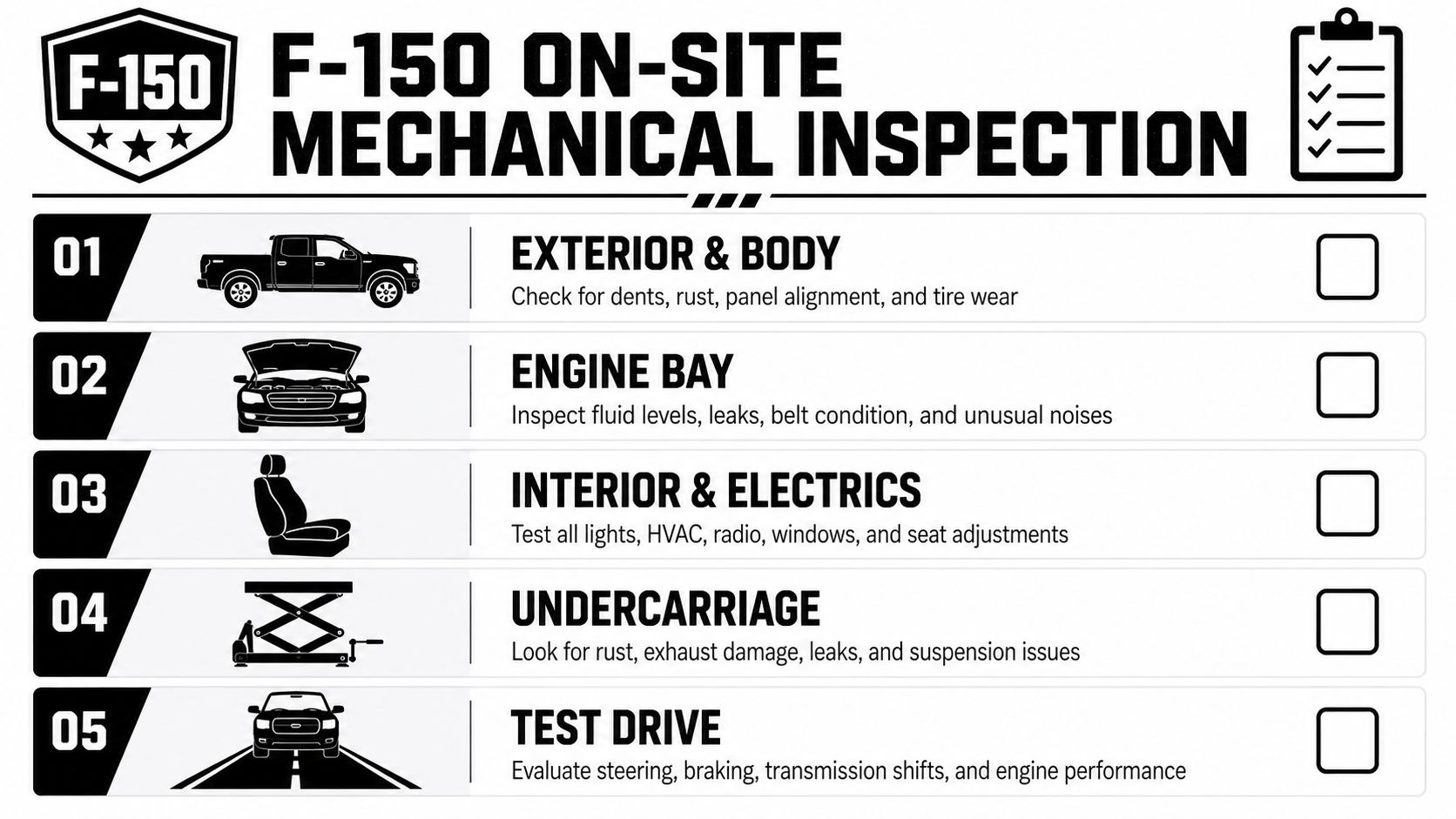
The body can fool you. A lot of older trucks look straight from ten feet away. Get close.
Walk the outside first
Start with the truck untouched and parked on level ground.
Check:
- Panel gaps. Uneven gaps can point to accident repair.
- Wheel wells and bed sides. Rust and filler hide here.
- Tire wear. Uneven wear can mean alignment, suspension, or frame trouble.
- Ride height. If one corner sits differently, look harder underneath.
The 2005 F-150 earned a 5-star frontal collision safety rating from NHTSA, but improper post-crash repairs in 15% of used cases can compromise frame integrity, which is why a structural inspection matters so much, as summarized in this eleventh-generation F-Series safety overview).
Check the cabin for clues sellers forget
The interior tells you how the truck has been treated. I'm not worried about cosmetic wear by itself. I'm looking for patterns that don't match the seller's story.
Watch for:
- Sagging seat bolsters with “low mileage” claims
- Dead window switches or HVAC weirdness
- Warning lights that don't illuminate during key-on
- A strong mildew smell that hints at leaks
A beat interior on an old work truck isn't shocking. A beat interior on a truck being sold as lightly used is a different story.
If the truck's inside condition and the seller's mileage story don't agree, trust the truck.
Open the hood with the engine cold
If the seller already warmed it up, ask why.
You want to:
- Check fluid levels and fluid color
- Look for fresh oil residue or coolant staining
- Listen at startup for rattle, tick, or chain noise
- Watch idle quality after the initial flare settles down
A clean engine bay isn't proof of health. Sometimes it's just been pressure-washed before sale. Freshly cleaned metal around old gasket areas can be a warning, not a comfort.
Spend real time under the truck
Most buyers crouch and glance. That's not enough on an ’05.
Focus on:
- Frame rails
- Crossmembers
- Brake and fuel line condition
- Shock mounts and spring areas
- Exhaust rust and leaks
Take a flashlight. Tap suspicious rust with a small tool if the seller allows it. Thick flaking scale is worse than orange surface rust.
Test drive it like a mechanic, not a tourist
Keep the radio off. Drive it cold and warm if possible.
Pay attention to what you feel:
- Steering wander
- Brake pull
- Shift harshness
- Vibration under load
- Clunks when transitioning on and off throttle
Then do one more thing. Park it after the drive and let it idle. Some problems only show once the truck is fully warm.
Verifying History and Mileage with a VIN Check
A decent test drive doesn't clear a truck. It only tells you the truck behaved for twenty minutes.
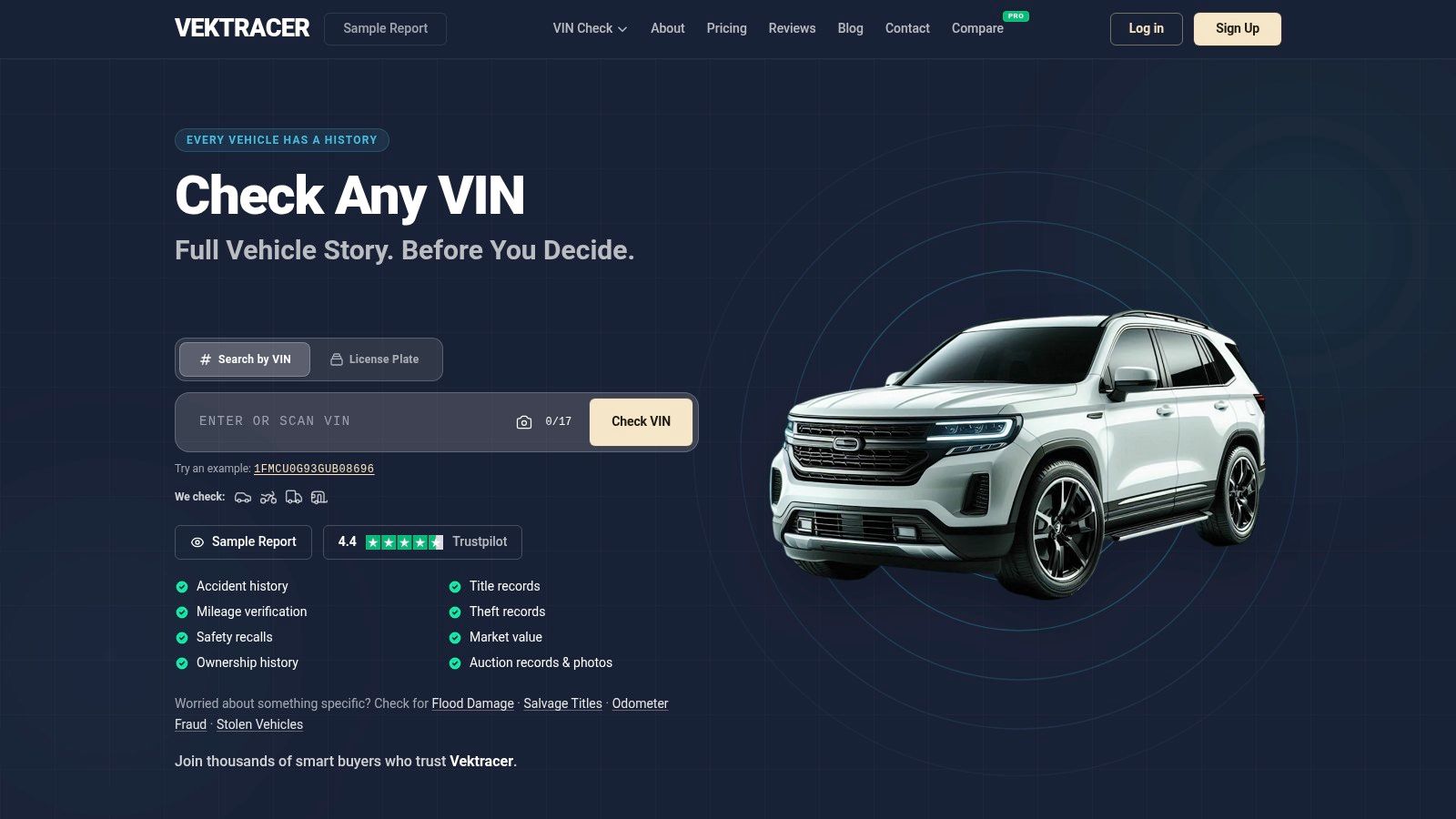
The 2005 F-150 is old enough that paperwork problems, title issues, and mileage games can matter just as much as the mechanical side. On older trucks, sellers often say, “It's all there in the odometer.” That's exactly what you should never accept at face value.
Mileage is not a trust exercise
This truck's 5.4L Triton models are known for odometer rollback concerns, and trucks with verified mileage command an 18% higher price, which is why cross-checking with a VIN-based history report is critical, according to Kelley Blue Book's 2005 F-150 reference.
That one fact tells you a lot. Verified mileage has more value because buyers know unverified mileage is a real problem.
Here's what I want a VIN history check to confirm:
- Consistent mileage progression
- Title status
- Accident records
- Theft history
- Lien records
- Open recalls
If any one of those comes back messy, the truck's value changes immediately.
Visual condition can hide a bad paper trail
Many younger buyers often get trapped. They find a truck that looks better than the others and assume that's enough. It isn't.
A seller can clean up:
- oxidized paint,
- worn tires,
- dirty seats,
- even a leaky engine bay.
What they can't clean up is a bad history. If the truck has title problems, mileage inconsistencies, or signs of prior damage that weren't disclosed, the VIN record is often the first place that story starts to crack.
The cleanest truck in the driveway can still be the dirtiest deal on paper.
Compare trucks by risk, not by excitement
If you're looking at more than one 05 F-150 for sale, run reports before you choose a favorite. That lets you compare which truck has the cleanest ownership and mileage story, instead of deciding based on whichever one has nicer wheels or fresher seat covers.
Use a proper Ford F-150 VIN check before money changes hands. That's especially important when one truck looks suspiciously cheap or when the seller's story doesn't line up with the condition.
A vehicle history report isn't optional on this model year. It's part of the inspection. Without it, you're guessing.
Negotiating a Fair Price and Finalizing the Sale
Negotiation goes better when you stop talking about what you “feel” and start talking about what the truck needs.
The cleanest benchmark available is this: as of 2026, the CARFAX History Based Value for a 2005 Ford F-150 is $7,183, versus an average asking price of $7,486. That gap gives you a usable baseline for discussion when the seller is priced like the truck is cleaner than it really is.
Use findings, not attitude
Bad negotiation sounds like this: “I'll give you five grand cash today.”
Good negotiation sounds like this:
- The truck has visible frame rust.
- The engine has startup noise.
- The tires are wearing unevenly.
- The history needs to be treated cautiously.
That kind of conversation is hard for a reasonable seller to ignore because you're pointing to facts, not trying to win a contest.
Here's the script I'd use:
I like the truck, but I'm not paying full ask with the startup noise and the rust underneath. The price needs to reflect the condition and the work it may need.
That's a lot stronger than throwing out a random low number and hoping the seller gets nervous.
Know when to walk
A seller who gets defensive about inspection findings is doing you a favor. They're telling you what ownership will feel like after the sale.
Use this quick checklist before you hand over money:
- Match the seller to the title. The ID and title name should match.
- Check for signed title fields. Sloppy title paperwork creates future headaches.
- Get a bill of sale. Keep the terms and date in writing.
- Confirm payoff or lien status. Don't assume it's clean.
- Review value one more time. If you also want a broader pricing gut check, this guide can help you determine your car's true value.
If you want a more detailed approach to keeping the conversation calm and fact-based, this write-up on how to negotiate used car price with a dealer applies well to private-party trucks too.
Frequently Asked Questions About the 2005 F150
Is a 2005 F-150 worth buying at all
Yes, but only if you buy the right example.
The truck still appeals to people because it offers real utility, familiar parts support, and old-school truck simplicity in the right areas. The problem isn't that every 2005 F-150 is bad. The problem is that too many buyers shop them like they're all interchangeable. They aren't.
A clean truck with documented maintenance, a solid frame, and a believable history can still make sense. A rough one with vague history and engine noise usually doesn't.
Which trim gives the best value
For most buyers, the best value is usually somewhere in the middle of the lineup, not the bare-bones base truck and not the trim sold mostly on cosmetics.
An XL can be fine if you want a simple work truck and the condition is strong. A mid-grade truck often gives a better balance of features and resale appeal. Premium trims can be worth it if the condition supports the ask, but don't pay extra just because the badge sounds nicer.
What matters more than trim on this truck is:
- frame condition,
- engine behavior,
- transmission behavior,
- and history quality.
Is the 5.4 Triton always a bad idea
No. It's a risk, not an automatic rejection.
The mistake is treating seller confidence as proof. If the cold start is clean, the idle is stable, maintenance is documented, and the truck drives properly, that's different from a truck with startup rattle and a seller saying “they all do that.” They do not all do that in the same way.
If you hear clear timing-related noise or see signs of neglect, assume the truck is trying to tell you something expensive.
What should I worry about most on a Canadian truck
Cross-border history gaps. That's the big one.
When considering a Canadian-market 2005 F-150, it's important to use a VIN check that covers both countries because 8% of these trucks in Canada have open recalls and 15% of buyers struggle to verify title or lien status across the border, according to Edmunds coverage of the 2005 F-150.
If the truck came from Canada, verify:
- recall status
- title and lien status
- mileage consistency across borders
- rust exposure history
If you're specifically shopping cross-border records, that's where a proper VIN check Canada workflow matters just as much as a standard VIN check USA search.
Is a vehicle history report really worth it on a cheap old truck
Yes. This is exactly the kind of truck where it's worth it.
On a newer truck, buyers usually expect history checks. On an older one, people get lazy because the price is lower. That's backwards. Older trucks have had more time to accumulate title issues, accident damage, mileage inconsistencies, and sloppy ownership records.
That's why the carfax worth it question usually has an easy answer on this model year. If you're shopping using carfax pricing 2026 as a benchmark, you also need a real vehicle history report to understand whether the truck deserves to be near that number.
What if I lose the key or only get one key
That's not a deal-breaker, but deal with it early. Older trucks often change hands with one worn key and no backup.
If you end up buying one and need replacement help afterward, a local specialist for transponder key programming in Kansas City is a practical example of the kind of service to line up before a bad key leaves you stranded.
If you're comparing an 05 F-150 for sale and want a cleaner way to screen mileage, title, accident, lien, theft, recall, and cross-border history before you buy, VekTracer is a smart place to start. Run the VIN before you negotiate, not after you regret it.
Ready to check a vehicle?
Enter any 17-character VIN for a free instant preview — no account needed.