Lien Check: Avoid Hidden Debt on Used Cars in 2026
Check a vehicle before you buy
Enter a VIN for a free instant preview — accidents, title brands, mileage, liens & open recalls.
A lien check is a search to verify whether a lender has a legal claim against a vehicle for unpaid debt. If you skip it, you can end up buying a car with debt still attached to it and face a title problem, a sale delay, or in the worst case, repossession trouble after money changes hands.
That's the part many used-car buyers don't hear clearly enough. They're told to inspect the paint, test the transmission, scan for codes, and maybe pull a vehicle history report. All good. But if the title side is messy, a clean test drive won't save you.
The bigger mistake is assuming every lien means the deal is dead. It doesn't. Some liens are routine financing artifacts that can be cleared properly at sale. Others are exactly the kind of mess that should make you walk away. Knowing the difference is where buyers protect themselves.
What Is a Lien Check and Why It Is Non-Negotiable
You find a used car that looks right. Price is fair. Seller sounds normal. Photos are clean. This is the point where buyers get impatient and start treating paperwork like a formality.
It isn't a formality. A lien check is a registry search used to confirm whether a lender or secured party has a legal claim against a vehicle or other personal property, commonly tied to a serial number such as the VIN. That's standard practice, not edge-case legal paranoia. Newfoundland and Labrador's government has offered an online Lien Check service since July 14, 2004, and it costs $10 per search for items including cars, boats, trailers, mobile homes, aircraft, and outboard motors. The province explicitly describes it as a way for buyers to check for outstanding loans before buying a previously owned item, which you can see on the Newfoundland and Labrador lien check service page.
What the search is actually trying to protect you from
A lien means someone other than the seller may still have a legal interest in the vehicle. In plain English, that usually means the seller financed it and the debt may not be fully resolved.
If that's not handled correctly, you can pay the seller and still inherit a problem you didn't create.
Practical rule: Never treat “I already paid it off” as proof. Treat it as a claim that still needs verification.
In larger North American markets, this kind of due diligence is built into the system. New York's DMV title and lien status service shows the number of liens and the name and address of each lienholder, which tells you exactly how seriously title agencies treat lien verification. If you want a plain-English refresher on the basics before you go deeper, VekTracer's article on what a lien on a vehicle means is a useful starting point.
Why private-party buyers get burned more often
Private sellers usually don't have a title desk, office process, or lender payoff workflow. Some are honest but disorganized. Some don't understand their own paperwork. Some know there's an issue and hope you won't ask enough questions.
That's also why motor-trade guidance around financing risk matters even if you're buying one car for personal use. The guide on outstanding finance for traders does a good job showing how hidden finance issues create downstream problems when title and ownership aren't properly cleared.
A used car can be mechanically solid and still be the wrong car to buy. A lien check is how you catch that before your money is gone.
Gathering Your Tools for the Search
Before you run anything, get your details straight. Most bad lien searches start with sloppy inputs, not bad luck.
What you need in hand
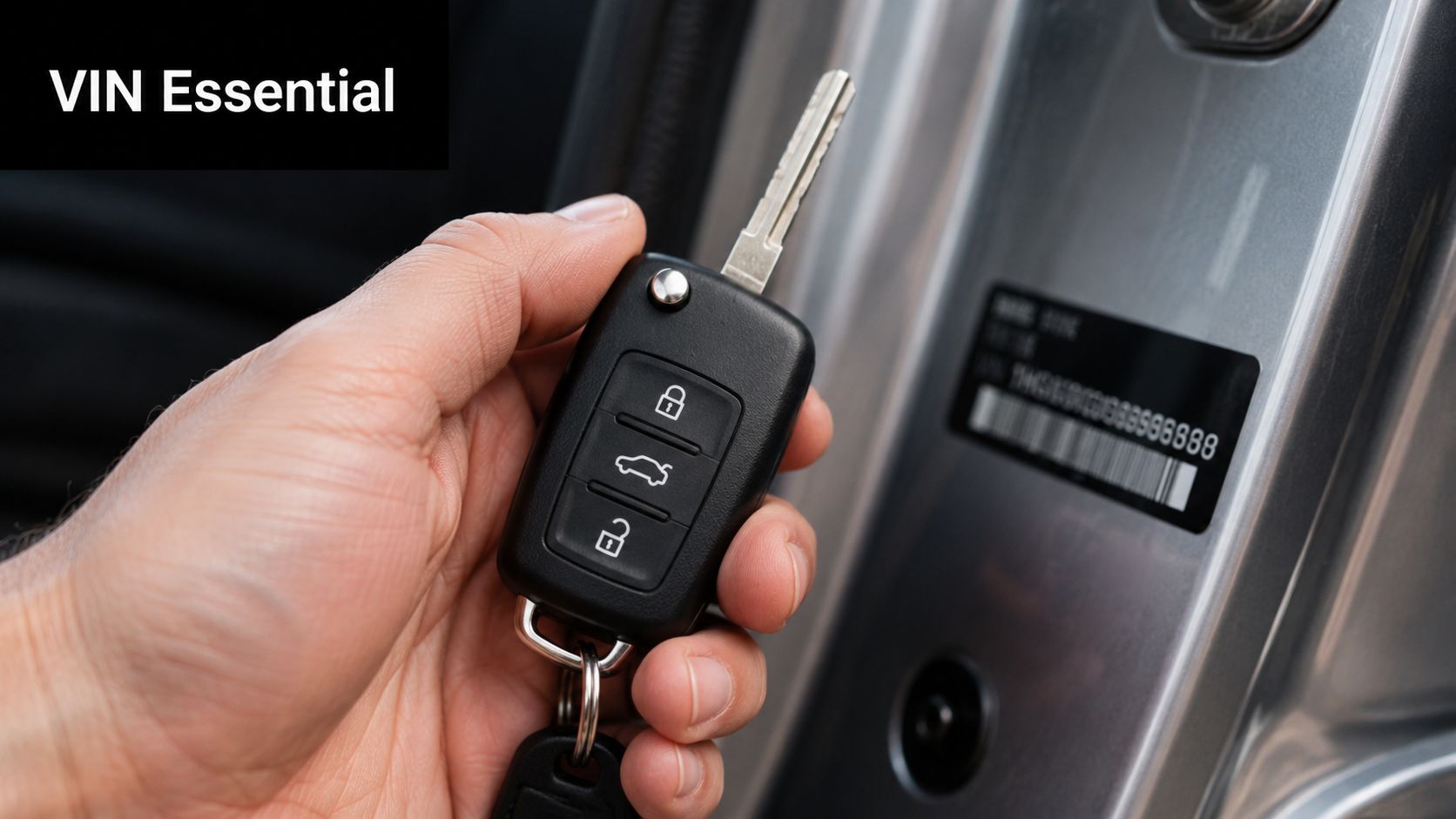
The VIN is the main one. That's the vehicle's unique identifier, and it's the cleanest way to search a specific car instead of relying on a seller's name or story.
Use this short checklist before you start:
- VIN from the car itself. Check the dashboard at the base of the windshield and the driver-side door jamb sticker.
- VIN from documents. Match it against the title, registration, and any financing paperwork the seller shows you.
- Seller's exact legal name. This matters when records are indexed by owner or debtor name in some registry systems.
- Vehicle basics. Year, make, and model help confirm you're looking at the right record, especially where a title or DMV lookup asks for them.
- A photo of the title. Not for convenience. For checking whether names, branding, and lienholder information line up with what you're being told.
Why accuracy matters more than speed
One wrong character in the VIN can point you to the wrong vehicle or no record at all. The same goes for seller names. In real registry work, name formatting problems are a known source of missed records, especially when abbreviations, initials, or entity names vary.
A clean result is only useful if the input was clean.
That's why I tell buyers to slow down here. Verify the VIN in multiple places. If the dashboard VIN, door sticker, and title don't match, stop right there and sort that out before you do anything else.
How to Perform a Lien Check Free vs Paid Methods
Most buyers have two paths. You can piece the search together yourself through government systems, or you can use a paid report that bundles lien status into a broader vehicle history report.
Neither path is automatically wrong. The right one depends on how much time you want to spend, how comfortable you are with record systems, and whether the car has any cross-border or title-history complexity.
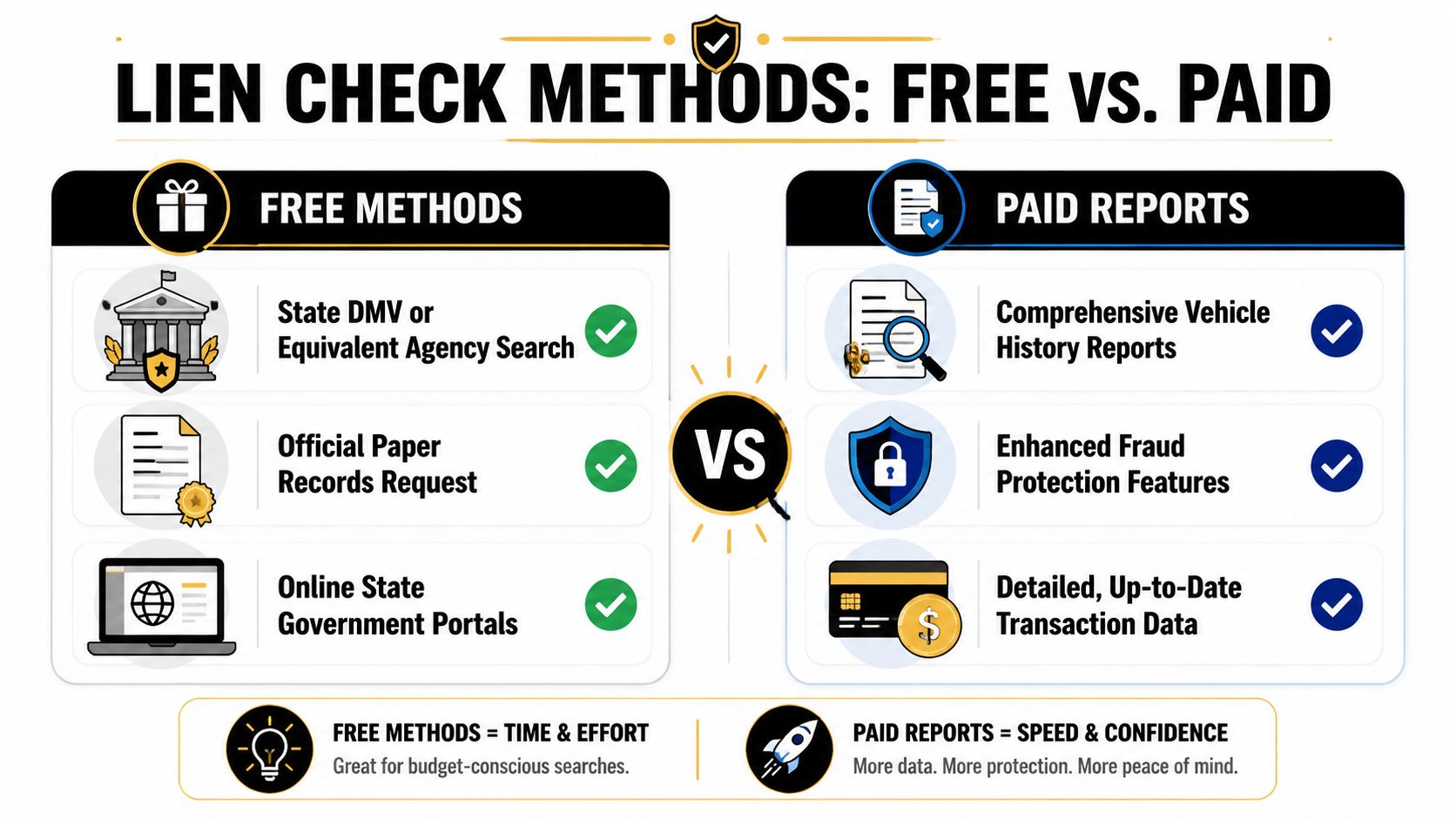
Free methods work, but they put more burden on you
Government and registry searches can be useful if you know where the vehicle has been titled and where to search. For example, New York's DMV title and lien status service requires identifiers such as VIN, model year, and make, and it returns lien-related information including the number of liens and each lienholder's details. Saskatchewan's Personal Property Registry process also uses VIN-based criteria and can return exact or similar matches. Those examples are discussed in Wolters Kluwer's due-diligence guidance on developing a lien search strategy.
The catch is that solid lien work often goes beyond one portal. A reliable search process uses multiple sources, including county or clerk records, tax databases, and UCC filings, because less-obvious liens can be missed if you only check one place. That broader workflow is outlined in this guide to comprehensive lien search steps.
Paid reports trade money for convenience and coverage
A paid vehicle history report is often the practical route for ordinary buyers because it reduces the number of systems you have to touch. Instead of chasing title clues across separate agencies, you get a more consolidated view.
That doesn't mean you should trust any report blindly. It means the report can help you spot whether there's enough risk to justify deeper verification. If you're comparing tools, VekTracer is one option that includes title and lien status within a broader VIN report, which can be useful when you also want accident history, theft checks, mileage context, and recall information in the same workflow.
Side-by-side trade-offs
| Method | Best for | What you do | Main downside |
|---|---|---|---|
| State or provincial registry search | Buyers who know the vehicle's jurisdiction history | Search the relevant DMV, PPSA, or registry using VIN and matching details | Narrow scope, more manual work |
| Paper or office records request | Older vehicles or edge cases with incomplete online records | Request official title or record information from the agency | Slow and inconvenient |
| Paid vehicle history report | Buyers who want a faster screening tool | Enter the VIN once and review the compiled report | May still require follow-up with a lienholder or title office |
Paid tools are screening tools. They save time. They do not replace common sense or final title verification.
What works and what doesn't
What works is using a report or registry search to identify a possible issue early, then confirming the details before payment.
What doesn't work is treating one quick search as the final word on a complicated car. If the vehicle has moved across states or provinces, has had multiple owners, or has any title irregularity, expect to verify more than once.
For related research before you buy, it also helps to compare broader report options such as CARFAX alternatives and comparisons and review a dedicated VIN check page if you want the lien search to sit inside a full pre-purchase screening process.
Interpreting the Results and Spotting Red Flags
At this stage, buyers either panic too early or relax too early.
A report that shows no lien is encouraging, but it doesn't mean you can stop thinking. A report that shows a lien doesn't automatically mean the car is toxic. The job is figuring out whether the lien is routine, unresolved, badly documented, or part of a larger title problem.
A lien hit is not the same as a deal killer
Due-diligence guidance is clear on this point. The mere existence of a lien is not always the problem. The real questions are whether the lien is active, whether it was terminated or released after payoff, and whether there are multiple secured parties competing for priority. That distinction is explained in Baselayer's lien searching best practices.
For a used-car buyer, that means this:
- Routine auto loan lien. Often manageable if the seller can show a payoff path and the lender can confirm release conditions.
- Released but still showing in records. Not ideal, but often fixable if proper release paperwork exists.
- Multiple active liens. Much riskier. It raises questions about debt priority, unresolved obligations, and whether the seller controls a clean transfer.
- Vague or inconsistent title information. A major warning sign. If names, VIN records, or ownership chain don't line up, the problem may be larger than one unpaid loan.
What a clean result should still make you think about
A clean search is good news. It is not the same thing as proof that every possible filing variant has been exhausted.
One practical issue in lien work is identity matching. Searches can miss records when names are entered in the wrong format, initials vary, or older filing systems index things differently. For buyers, that matters most when the seller is evasive, the title history is messy, or the vehicle has crossed jurisdictions.
If the paperwork feels off, treat a clean search as incomplete until the title story makes sense.
If you're trying to read title clues more carefully, this guide on how to check vehicle title status helps connect lien findings to the bigger title picture.
Red flags that should change your decision fast
Not every issue deserves the same reaction. These deserve a harder stop:
- Seller refuses lender contact. That usually means you can't independently verify payoff status.
- The lienholder information doesn't match the seller's story. If the names or dates drift, don't smooth it over in your head.
- No release path is clear. If nobody can explain how title becomes clean at sale, you don't have a transaction. You have a gamble.
- Pressure to pay first and “sort papers later”. Walk.
A Lien Is Found What Are Your Next Steps
Finding a lien doesn't mean the deal is over. It means the deal has to be controlled properly.
The safest buyers get methodical here. They stop talking in generalities and start collecting specifics.
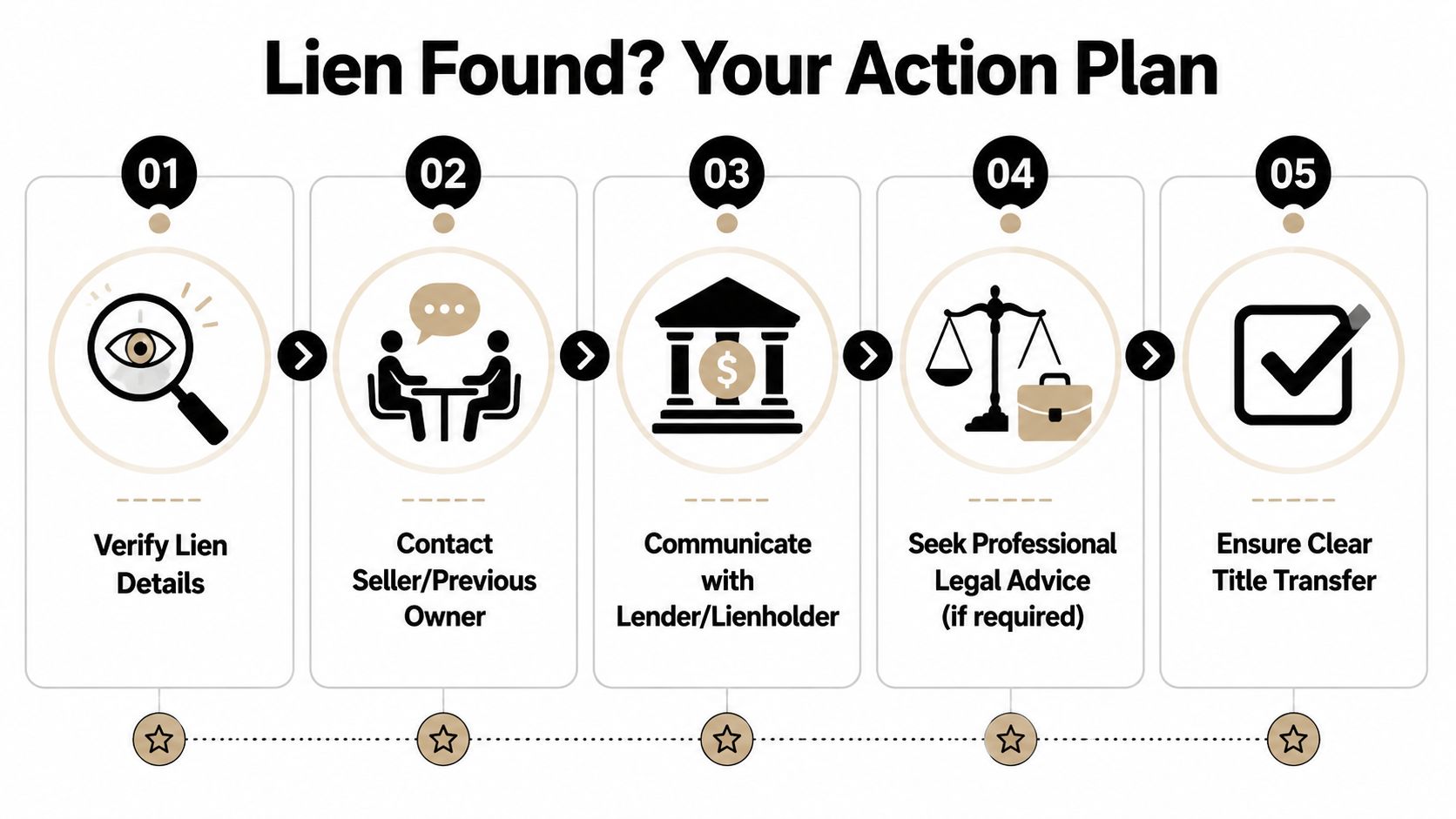
The practical checklist
Get the lienholder details from the seller
You need the lender's exact name and the account context tied to the vehicle. If the seller gets defensive here, that tells you something.Confirm status directly with the lender when possible
Don't rely only on screenshots, old emails, or verbal assurances. You want to know whether the debt is still active and what's required for release.Structure payment so the lien gets cleared, not ignored
In many real-world sales, the cleanest path is handling payoff in a way that ensures the lender is satisfied as part of the transaction. If the seller wants all funds first and promises to clear the lien later, that's weak protection for you.Insist on release evidence
You want formal documentation showing the lien was released or terminated, plus whatever title documents your local agency requires to complete transfer.Delay closing if the paper trail is still muddy
A delayed purchase is annoying. A bad title is expensive.
When you should walk away
Sometimes the right move is simple. Leave.
Walk if the seller won't cooperate, the lender can't confirm a clear path, or ownership records look inconsistent. Once title defects and competing interests enter the picture, you may be dealing with a broader legal mess than a normal used-car transaction. If you want a legal primer on that side of the issue, this article on defects of title and quiet title actions gives useful context.
The car is never the only car. If the paperwork is wrong, another vehicle will come along.
Lien Check Differences in Canada and the USA
Cross-border vehicles deserve extra caution because the systems aren't unified.
In Canada, buyers often deal with provincial personal property registry systems tied to PPSA-style processes. In the United States, the picture is more fragmented. You may need to look at a state DMV title record, and in some cases the broader secured-transactions trail can involve UCC-style filings or local record systems depending on the asset and context.
That matters because a car can move while its paperwork history remains scattered. A buyer looking at an imported or relocated vehicle should assume that one local search may not tell the full story.
If you shop in both markets, a combined history review is often more practical than trying to reconstruct the vehicle's path manually. For buyers focused on cross-border records, this guide to a vehicle history report in Canada is a helpful companion to a lien-focused search.
Frequently Asked Questions About Lien Checks
Can a dealership legally sell a car that has a lien on it?
It can happen, but what matters is whether the dealership can deliver clear title properly. Dealers usually have more formal payoff and title-handling processes than private sellers. Even so, don't assume process equals safety. Ask how the lien will be cleared and when title transfer becomes clean.
How long does a lien stay on a vehicle record after it's paid off?
There isn't one universal answer because title and registry handling varies by jurisdiction and by lender process. The safe approach is not to guess. Ask for the release documentation and verify that the relevant title or registry record reflects the lien's terminated status before you treat the matter as closed.
Is a lien check the same as a full vehicle history report?
No. A lien check focuses on whether a lender or secured party may still have a legal claim tied to the vehicle. A full vehicle history report looks wider, usually including title events, accident history, theft records, mileage-related information, and more. For buying decisions, that broader context matters because a vehicle can be lien-free and still be a poor purchase.
What's the biggest mistake buyers make with lien checks?
They either skip the check entirely or overreact to the word “lien” without understanding status. The smarter move is to ask a narrower question: is this an active unresolved claim that blocks clean ownership, or is it a routine financing record with a clear payoff and release path?
If you want one place to review lien status alongside title history, theft records, recalls, and other pre-purchase risk signals, VekTracer is a practical option to check before you hand over money.
Ready to check a vehicle?
Enter any 17-character VIN for a free instant preview — no account needed.