Why Canadian car buyers need vehicle history reports

Check a vehicle before you buy
Enter a VIN for a free instant preview — accidents, title brands, mileage, liens & open recalls.
TL;DR:
- Vehicle history reports provide verified data to identify hidden car issues and protect buyers.
- They reveal critical information like accident, flood, lien, theft, and recall history often undisclosed by sellers.
- Using a trusted report before purchase saves money, ensures safety, and helps achieve fair market value.
Buying a used car in Canada can feel like a guessing game. You see a clean exterior, hear a smooth engine, and want to believe the seller’s story. But 68% of Canadians distrust the traditional used car buying process precisely because hidden issues are far too common. A vehicle history report changes that entirely. It replaces guesswork with verified data, giving you a clear picture of what a car has been through before you hand over a single dollar. This guide walks you through everything you need to know to make your next purchase a confident one.
Table of Contents
Checking a specific vehicle?
Run its VIN for a free preview of accidents, title brands, mileage and open recalls.
- The real risks Canadian car buyers face
- What vehicle history reports reveal that sellers don’t
- How reliable reports save you money and headaches
- Choosing a quality, affordable vehicle report
- Why trusting your gut isn’t enough: A hard-won lesson from the front lines
- Next steps: Take the guesswork out of your next car purchase
- Frequently asked questions
Key Takeaways
| Point | Details |
|---|---|
| Hidden risks are widespread | Most buyers face real dangers from undisclosed damage and fraud when skipping a vehicle history report. |
| Reports give unbiased facts | History reports offer vital information beyond what sellers usually share. |
| Save with smart choices | A reliable report can prevent costly mistakes and legal troubles. |
| Pick trustworthy sources | Choose reports with complete, up-to-date info to maximize protection. |
The real risks Canadian car buyers face
The used car market in Canada is large and competitive, which is great for choice but risky for buyers who aren’t armed with information. Understanding why vehicle history matters before you shop is the first step toward protecting yourself.
“68% of Canadians distrust traditional used car buying due to hidden issues like undisclosed damage, with 75% wanting transparent history reports.” — New Study Finds
That level of distrust isn’t irrational. It reflects real, repeated experiences with sellers who either didn’t know their car’s full history or chose not to share it. The consequences can be severe, ranging from costly mechanical repairs to dangerous safety failures on the road. In some cases, buyers have even unknowingly purchased stolen vehicles and faced the legal nightmare of having the car seized.
Here are the most common hidden issues that surface after a purchase:
- Undisclosed collision damage: Repaired bodywork that looks fine cosmetically can hide frame damage that compromises safety in future accidents.
- Flood damage: Water-damaged vehicles often suffer from long-term electrical and mechanical issues that are nearly impossible to detect without a history report.
- Odometer rollback (fraud): A vehicle showing 80,000 km may have actually traveled 200,000 km. Rolled-back odometers are still a real problem in the Canadian market.
- Salvage or rebuilt titles: Some cars have been written off by insurers and then repaired and resold without the buyer knowing the vehicle was ever declared a total loss.
- Unpaid liens: If the previous owner borrowed money against the car and never paid it back, that debt can follow the vehicle to you as the new owner.
- Outstanding safety recalls: Manufacturers issue recalls for serious safety defects. A report will show you whether those recalls were completed or still open.
- Theft records: A car with a theft record can create legal complications and may be difficult to insure.
Relying on a seller’s word simply isn’t enough. Even private sellers who seem honest may not have full knowledge of a car’s past. A dealer who bought the vehicle at auction may know even less. The only way to get an objective answer is through a vehicle history report Canada buyers can actually trust, one that pulls directly from insurance, police, and provincial registry records.
What vehicle history reports reveal that sellers don’t
Think about what a seller actually gives you. You get a VIN (vehicle identification number, the unique 17-digit code assigned to every vehicle), a verbal summary of ownership, maybe some service records, and a test drive. That’s it. A vehicle history report goes far deeper.
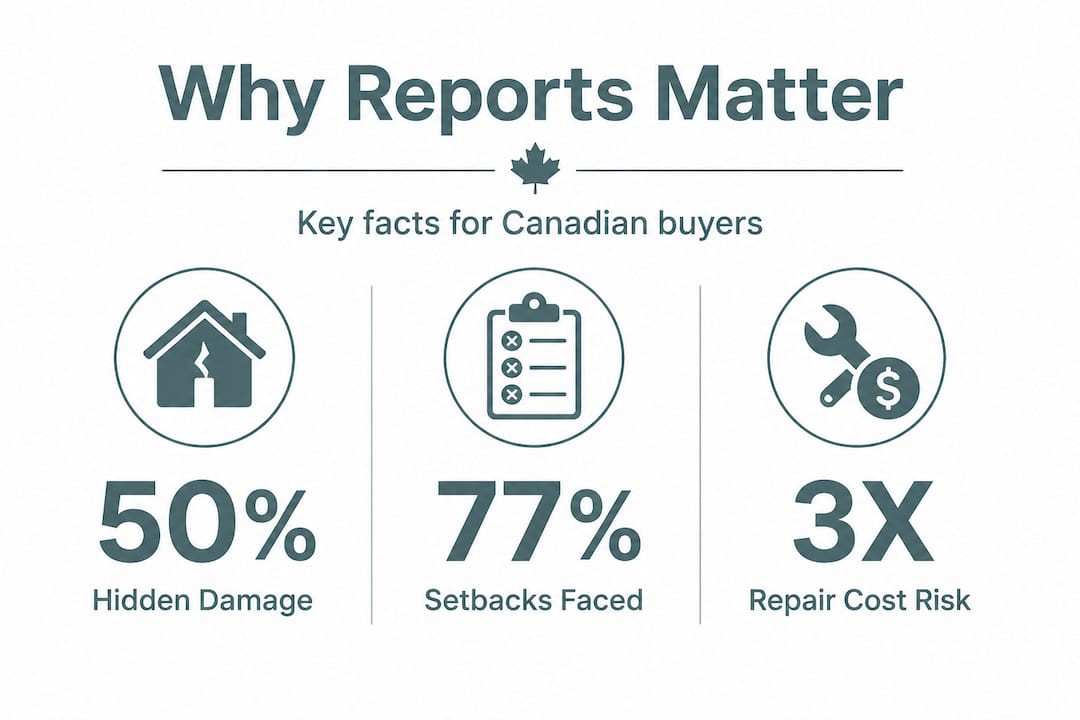
50% of buyers encountered undisclosed damage when buying used. That means a coin flip isn’t much better odds than trusting a seller alone. The table below illustrates exactly what separates a seller’s typical disclosure from what a history report uncovers.
| Category | What sellers typically share | What a history report reveals |
|---|---|---|
| Accident history | “Minor fender bender, fully repaired” | Number of claims, severity, repair quality |
| Title status | “Clean title” | Salvage, rebuilt, flood, or lemon status |
| Odometer | Current reading on dash | Verified mileage at every ownership change |
| Liens | “No loans on the car” | Any registered liens tied to the VIN |
| Theft records | Usually not mentioned | Police-reported theft or recovery status |
| Safety recalls | Often unknown to seller | Open and completed recall history |
| Ownership count | “One or two owners” | Exact ownership timeline and duration |
| Market value | Asking price only | Independent fair market value data |
A history report draws from sources the average seller has no access to: insurance company databases, law enforcement records, provincial motor vehicle registries, and NMVTIS-connected (National Motor Vehicle Title Information System) data. These aren’t opinions or memories. They are formal, verified records.
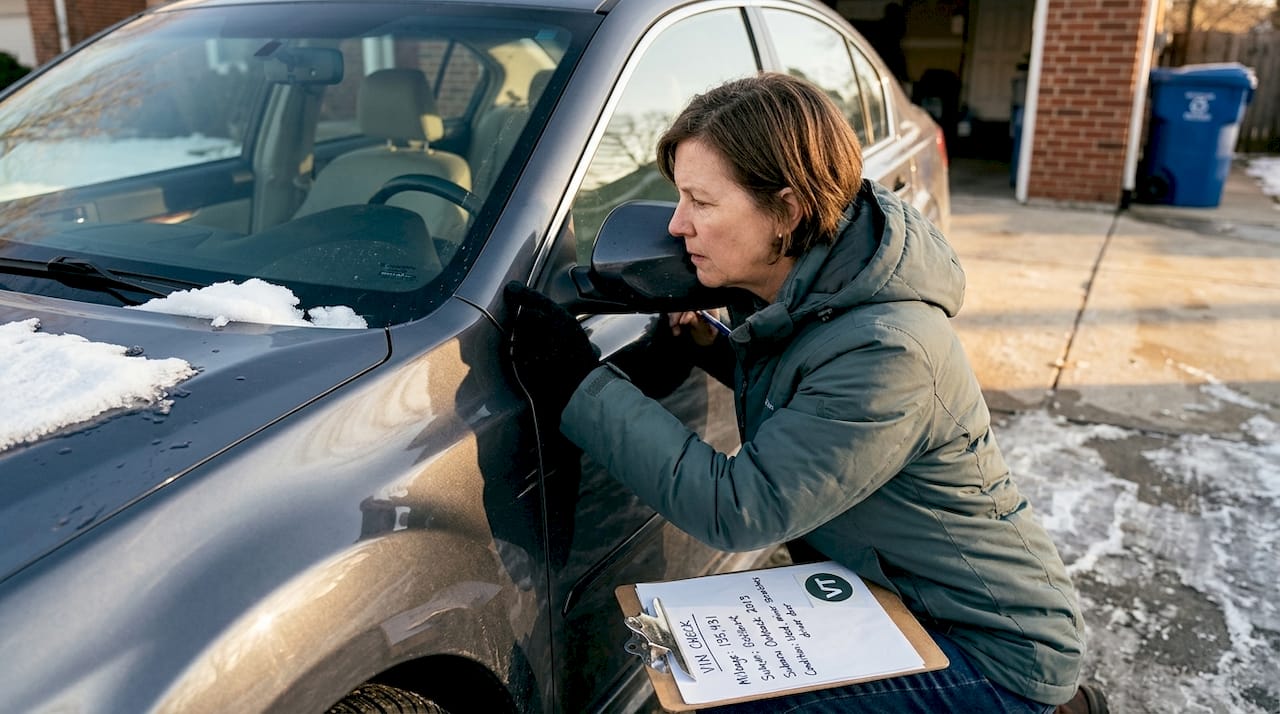
Using a VIN check Canada guide helps you understand how to locate the VIN on any vehicle and enter it correctly when running your report. Always cross-reference the VIN stamped on the dashboard, the door jamb, and the report itself before you pay for anything.
Pro Tip: Never take the seller’s word on the VIN. Physically locate the VIN on the vehicle and verify it matches the number on the registration and the report. Mismatched VINs can indicate tampering or fraud. Independent history reports make this verification simple and fast.
How reliable reports save you money and headaches
The financial argument for running a history report is straightforward. The report costs a fraction of what hidden problems cost you after purchase. Consider this data on common issues detected and the average repair or legal costs they carry.
| Issue detected by report | Typical cost if discovered after purchase |
|---|---|
| Frame damage from prior accident | $2,500 to $8,000 in repairs or total loss |
| Flood damage (electrical systems) | $1,000 to $5,000 in repairs |
| Odometer rollback | Overpayment of $3,000 to $10,000+ |
| Unpaid lien | Loss of vehicle and full purchase price |
| Open safety recall (unrepaired) | Liability for accidents caused by known defect |
| Salvage title not disclosed | Resale value drop of 20% to 40% |
77% of buyers faced setbacks tied to a lack of transparency in car history. That number is striking. It means the majority of used car buyers in Canada have experienced some kind of negative outcome that more information could have prevented. A report at $19.99 is a very small price to pay compared to losing thousands of dollars on a vehicle with hidden problems.
Beyond direct savings, reports also protect your resale value. When you eventually sell the car, having documented proof of a clean title and verified mileage makes your listing more credible and competitive. Buyers are willing to pay more for a car they can verify.
Here is a clear, numbered process you can follow before finalizing any used car purchase. The full used car due diligence checklist walks you through each stage in more detail.
- Locate the VIN. Find it on the dashboard near the windshield, the driver-side door jamb, and the vehicle registration. Confirm all three match.
- Run the history report. Enter the VIN into a reliable service before you negotiate price or commit to buying.
- Review the accident section. Look at severity, not just the number of incidents. A single major collision matters more than two minor ones.
- Check title and lien status. Make sure the title is clean and there are no outstanding loans registered against the vehicle.
- Verify odometer readings. Compare the reported mileage history against what the dash currently shows.
- Check safety recall status. If recalls are open, confirm with the manufacturer that repairs are still available and covered under warranty.
- Compare market value. Use the report’s market value data to confirm you’re paying a fair price, not a premium for a problem vehicle.
- Walk away if anything is unclear. A clean report should answer every major question. If it doesn’t, that’s your cue to keep looking.
The vehicle history reports guide covers each of these steps with added detail for buyers who want to go even further in their research.
Choosing a quality, affordable vehicle report
Not all vehicle history reports are created equal. 75% of Canadians want transparent history reports, and that demand has led to a mix of quality services and inadequate ones flooding the market. Knowing what separates a good report from a mediocre one protects you from wasting money on incomplete information.
Here’s what a quality vehicle history report must include:
- Data from verified sources: Insurance records, law enforcement databases, provincial registries, and NMVTIS-connected data should all feed into the report.
- Recent and regularly updated records: A report is only as useful as its most recent data entry. Stale databases can miss recent accidents or title changes.
- Comprehensive coverage areas: Accidents, title status, odometer verification, liens, theft, safety recalls, and market value should all be covered in a single report.
- Readable, organized layout: Dense raw data helps no one. The report should present information in a clear format you can actually interpret and act on.
- Affordable pricing: Quality doesn’t require an inflated price. Look for services that offer full reports without charging $40 or more per check.
When it comes to price, there is a wide range out there. A cheap car history report doesn’t have to mean a low-quality one. The key is verifying that affordable options still draw from credible, multi-source databases and cover all the major risk categories.
Be cautious with free reports. Free tools often provide only basic VIN decoding (year, make, model) without any accident, title, lien, or theft information. They feel useful but can give you a false sense of security. The real risk categories you need to screen for simply aren’t covered without a paid, full report.
Pro Tip: Budget for one complete report for every car you are seriously considering purchasing. If you’re comparing three vehicles, run three reports. The cost is trivial compared to the risk of missing a serious issue on your final choice.
Overpriced reports are also a real concern. Some services charge $40 to $50 per report, creating the impression that higher cost equals better data. That’s not always true. Before paying premium prices, check what data sources the service uses and compare the report’s coverage categories against lower-priced alternatives. You can get vehicle history report access at fair prices without sacrificing the data depth that actually matters.
Why trusting your gut isn’t enough: A hard-won lesson from the front lines
Here’s a scenario that plays out across Canada more often than most buyers would like to admit. An experienced buyer, someone who has purchased several used vehicles over the years and knows what to look for, finds a clean, well-priced sedan listed by a private seller. The seller is articulate, the car looks immaculate, the service records seem thorough, and the test drive feels smooth. The buyer skips the history report because, honestly, everything just feels right.
Six weeks later, after a rainy highway drive, the floorboards start showing signs of moisture. Then the electrical system starts acting up. A shop eventually traces it back to significant flood damage from a previous province. The car had been professionally detailed and resold across provincial lines, where flood records from one registry hadn’t yet synced with another.
The lesson isn’t that experienced buyers are careless. It’s that human perception has real limits when dealing with deliberate concealment. A well-detailed flood vehicle can fool even a seasoned mechanic on a visual inspection. A rolled-back odometer looks identical to an honest one. A salvage title isn’t stamped on the windshield.
We tend to believe that enough experience makes us immune to these situations. But pattern recognition works best when patterns are visible. Hidden vehicle histories are designed to be invisible. That’s the whole point.
The only thing that consistently beats a convincing seller and a clean appearance is a formal, data-driven process. A vehicle title check guide is a useful starting point for understanding exactly what title records reveal and why they’re among the most important sections in any report.
Put your process above your instincts. Every time.
Next steps: Take the guesswork out of your next car purchase
You now have a clear understanding of why vehicle history reports matter and how to use them effectively. The next step is putting that knowledge into action before you commit to any vehicle.
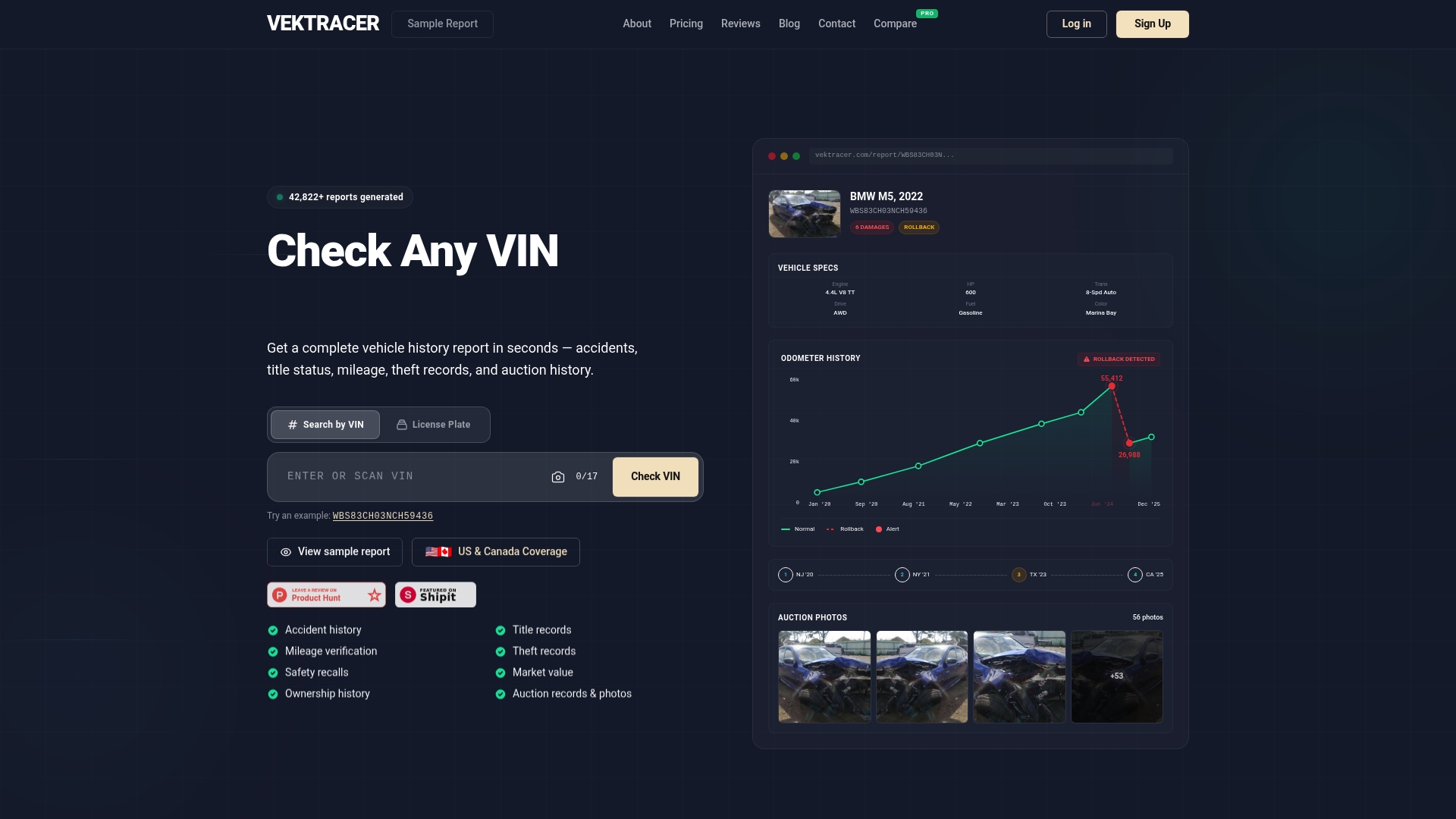
Vektracer makes that step straightforward and affordable. Our VIN-based reports cover accident history, title records, mileage verification, theft checks, safety recalls, and market value data, all pulled from NMVTIS-connected sources. Starting at just $19.99 per report, you get the same core data as competitors charging more than twice as much. Visit how VekTracer works to understand exactly what goes into every report, review VekTracer pricing to find the option that fits your needs, or view a sample vehicle report to see exactly what you’ll receive before you buy. Don’t finalize a purchase without it.
Frequently asked questions
Can I trust a used car without a vehicle history report?
Trusting a used car without a report is a significant risk, since 50% of buyers encountered undisclosed damage in Canada. A report gives you verified data that no seller, however trustworthy they seem, can replicate on their own.
Are vehicle history reports always accurate?
Reliable reports pull from multiple official sources, but accuracy depends on how promptly registries, insurers, and police agencies update their records. Using a multi-source report, rather than one tied to a single database, significantly improves completeness.
What’s the main difference between free and paid vehicle history reports?
Free reports typically only confirm basic vehicle specs like year, make, and model, while paid reports include the records that matter most, such as accident history, lien status, odometer verification, and theft records.
How do I read a vehicle history report for the first time?
Start with the title status and accident sections since those carry the highest financial and safety risk, then check odometer records and confirm the VIN on the report matches the one physically on the car.
When should I get a vehicle history report during the car buying process?
Run the report as soon as you are seriously considering a specific vehicle, before negotiating price, before a mechanical inspection, and well before any money changes hands.
Recommended
Ready to check a vehicle?
Enter any 17-character VIN for a free instant preview — no account needed.