Title record checklist: Avoid used car surprises
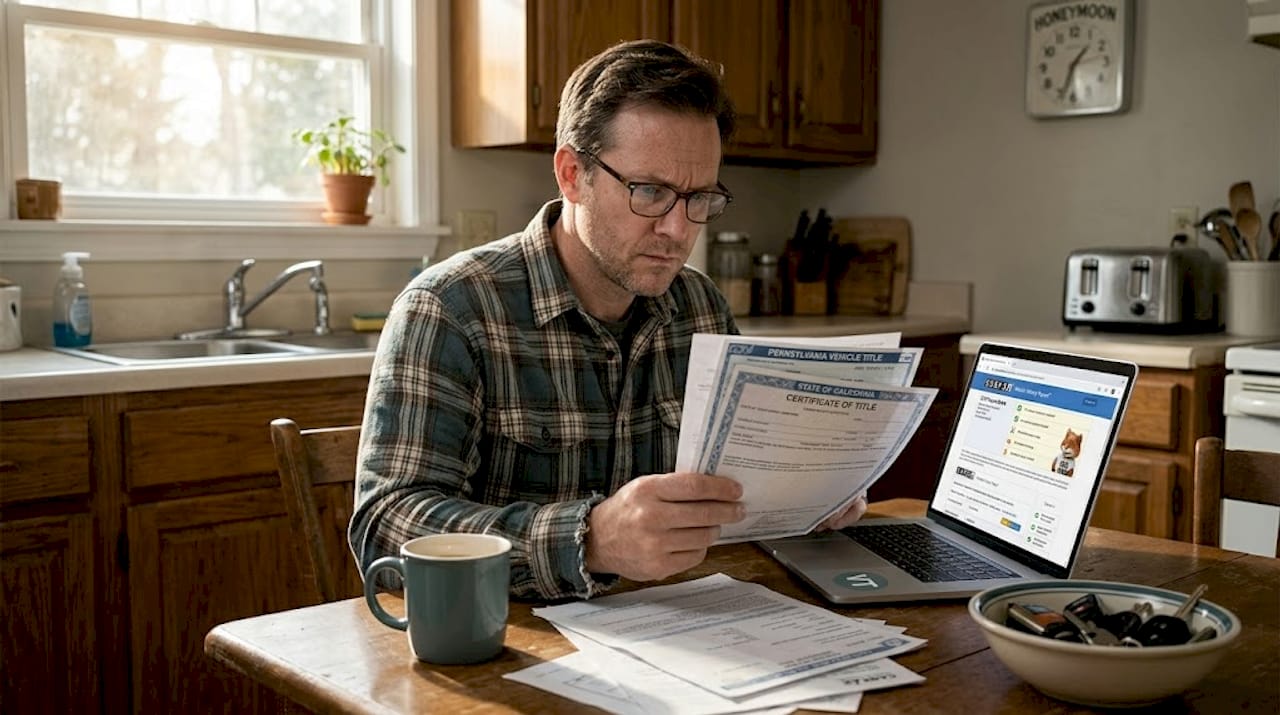
Check a vehicle before you buy
Enter a VIN for a free instant preview — accidents, title brands, mileage, liens & open recalls.
TL;DR:
- Verify a used car’s title status, lien information, and VIN to avoid hidden issues.
- Use multiple sources like NMVTIS and vehicle history reports for comprehensive checks.
- Cross-check mileage and ownership details across documents to prevent odometer fraud.
Buying a used car should feel exciting, not terrifying. But for thousands of buyers every year, the excitement fades fast when they discover their “great deal” comes with a hidden lien, a washed salvage title, or a rolled-back odometer. These problems aren’t visible from the outside, and sellers aren’t always upfront about them. That’s why title status and lien information are the first things you need to verify before handing over a single dollar. This checklist walks you through every step so you don’t get stuck holding the consequences of someone else’s problem.
Table of Contents
- What is a title record—and why does it matter?
- Title record checklist: Step-by-step
- Using NMVTIS and vehicle history reports
- VIN and mileage: The hidden deal-breakers
- Why most buyers overlook title record details—and what actually works
- Take the guesswork out of title checks with VekTracer
- Frequently asked questions
Key Takeaways
| Point | Details |
|---|---|
| Branded titles warn of major issues | Title brands like salvage or flood signal serious past problems and lower value. |
| Always cross-check with NMVTIS | NMVTIS and state DMV records protect against title fraud better than reports alone. |
| VIN and mileage must match | Consistent VINs and mileage on all records are essential for an honest deal. |
| Corroborate all title info | Never rely on a single document or database—verify ownership and history using multiple sources. |
What is a title record—and why does it matter?
A title record is the official legal document that tracks a vehicle’s ownership, status, and major life events. Think of it like the car’s legal biography. It tells you who owned it, what happened to it, and whether anything has permanently affected its value or safety.
When a car is declared a total loss by an insurance company, gets severely flooded, or fails to meet manufacturer standards, that event gets attached to the title. These are called title brands. Common brands include salvage, rebuilt, flood, lemon/buyback, and junk. Each one signals a serious past event that affects how much the car is worth, how easy it is to insure, and whether it’s safe to drive.
Here’s the problem: title brands and lien information don’t show up on the car’s paint job. A freshly detailed vehicle can look flawless while hiding a rebuilt frame underneath. This is exactly why documentation review is not optional. It’s essential.
Common title record risks to watch for:
- Title washing: Moving a vehicle through states with looser branding laws to obscure its branded status
- Hidden liens: Unpaid loans that make the seller legally unable to transfer clean ownership to you
- Temporary registrations: Used to delay or disguise title status issues during a sale
- Fraudulent transfers: Forged signatures or altered ownership dates on the physical document
Buying a car without checking the title record is like buying a house without a home inspection. What you can’t see can absolutely hurt you.
For a thorough walkthrough of all the documents involved, the comprehensive title check guide on our blog breaks down each step in detail.
Title record checklist: Step-by-step
Understanding the title record is key. Here’s your actionable checklist to cover all bases with any used car purchase.
-
Check title status first. Confirm whether the title is clean or branded. A clean title means no significant damage or legal issues. A branded title requires you to know exactly what brand it carries and why. Branded titles like salvage, flood, and lemon represent serious prior events. Avoid them unless you have expert-level knowledge of what you’re taking on.
-
Confirm the owner’s name matches the seller. The name on the title must match the person selling you the car. If it doesn’t, stop. You could be dealing with a curbstoner (an unlicensed dealer posing as a private seller) or worse, someone trying to sell a car they don’t legally own.
-
Verify lien and loan status. A lien is a legal claim on the vehicle by a lender. If the seller still owes money on the car and you buy it, that debt doesn’t disappear. The lienholder can legally repossess the vehicle from you. Always confirm the title status shows no outstanding loan before closing the deal.
-
Inspect the physical title for tampering or alterations. Look closely at the paper document. Check for white-out, erasure marks, uneven fonts, or misaligned text. Legitimate titles are printed by state DMV offices and have security features. Any alterations are a serious warning sign.
-
Confirm the VIN matches across all paperwork. The Vehicle Identification Number (VIN) is the car’s unique fingerprint. It must match on the title, registration, dashboard, door jamb, and any history reports you pull. Even a single digit off is a red flag worth walking away from.
-
Review the title issue and transfer dates. Look at how recently the title was issued and how many times ownership transferred. A car that changed hands three times in two years deserves extra scrutiny. Quick flips sometimes indicate problems being passed along.
-
Match the mileage on the title to the actual odometer and all records. Mileage should only go up over time. Any gap, sudden drop, or inconsistency across documents is a potential sign of odometer fraud.
Pro Tip: Cross-verify both paper documents and digital history reports. If the title says one thing and the report says another, treat the discrepancy as a red flag, not a clerical error. Small inconsistencies often point to bigger problems.
Important callout: More than 450,000 vehicles are estimated to have tampered odometers sold in the U.S. each year, costing buyers an estimated $1 billion annually. Mileage fraud is not rare. It’s systematic.
For a broader look at what to verify before any used car purchase, the key used car checks guide and the due diligence checklist on our blog are worth bookmarking. And if you want a focused walkthrough on just the title piece, the title status check guide covers that in full detail.
Using NMVTIS and vehicle history reports
Once you’ve started your checklist, you’ll want to use trusted databases to cross-reference the paperwork. Two key sources exist for this: the National Motor Vehicle Title Information System (NMVTIS) and private vehicle history report providers.
What is NMVTIS? It’s a federally mandated national database that collects title and branding data from all 50 states, insurance companies, and salvage yards. NMVTIS includes the current title status, the last title date, brand information such as salvage or flood, and the most recent odometer reading. Its purpose is specifically to help consumers and law enforcement identify title fraud, stolen vehicles, and unsafe cars before they change hands.
Private vehicle history report providers like Carfax, AutoCheck, and Vektracer pull from NMVTIS and other sources to add additional layers of data, including service records, past registrations, accident reports, and inspection history. But here’s the catch: reports can be incomplete or vary across states. Not every state reports the same data. Not every accident makes it into a database. So treat a vehicle history report as one strong input, not the final word.
Here’s how the three main sources compare:
| Data field | NMVTIS | Private VHR | State DMV |
|---|---|---|---|
| Title status (clean/branded) | Yes | Yes | Yes |
| Brand type (salvage/flood/lemon) | Yes | Yes | Varies |
| Odometer reading | Yes | Yes | Sometimes |
| Accident history | No | Yes (partial) | No |
| Service records | No | Yes (partial) | No |
| Theft indicators | Yes | Yes | Sometimes |
| Lien information | Sometimes | Sometimes | Yes |
| Past registrations | No | Yes | Yes |
Pro Tip: If something feels off in the paperwork or the seller’s story doesn’t add up, go directly to your state DMV or request an NMVTIS report. Don’t rely solely on a private report to resolve inconsistencies.
To understand how vehicle history reports are gathered and structured, the vehicle history report process article on our blog walks you through it clearly.
VIN and mileage: The hidden deal-breakers
Data from title records and reports isn’t always complete. VIN and mileage verification is your last line of defense against some of the most expensive mistakes a used car buyer can make.
The VIN is a 17-character code that serves as a vehicle’s unique identity across its entire lifespan. Every title, registration document, insurance policy, and history report ties back to this number. Cross-checking the VIN and mileage timeline is critical because odometer discrepancies are one of the most common fraud methods, and they often don’t appear clearly in any single document.
Here’s where to look for the VIN and what to verify:
- Dashboard (driver’s side): Visible through the windshield on a metal plate
- Driver’s door jamb: Printed on a sticker that also shows manufacturing date
- The physical title document: Should match exactly, character by character
- Registration paperwork: Should reflect the same VIN across all years
- Engine block: Sometimes stamped directly, though less accessible
- Vehicle history reports: Cross-reference the VIN to confirm it hasn’t been cloned
A cloned VIN is when a thief takes the identity of a legitimately registered vehicle and applies it to a stolen one. The clean VIN makes the stolen car look legitimate in database searches.
What should you do if the numbers don’t match? Walk away. Mismatched VINs are not typos. They indicate either a clerical error at a state level (which requires legal resolution before you buy) or outright fraud. Neither situation is something you want to inherit.
For mileage, look at every dated record you can find: the title, service records, inspection stickers, and history reports. The numbers should go up consistently over time. A car driven 12,000 miles per year should show roughly that progression. If you see a gap in the timeline or a sudden drop in reported mileage, that’s a rollback. Check the free odometer check guide to learn how to catch this using free VIN tools before you pay for anything.
Why most buyers overlook title record details—and what actually works
Here’s the uncomfortable truth: most buyers do pull a vehicle history report. They see a green checkmark or a “no accidents reported” line, feel relieved, and move forward. That single report becomes their entire safety net. And that’s exactly where things go wrong.
We’ve seen it repeatedly. A buyer gets a clean-looking report, skips the physical title inspection, skips the DMV verification, and later discovers the car had a branded title that was washed through a state with looser reporting laws. The history report didn’t catch it because reports can miss state-specific data and inconsistencies between providers.
What actually works is a two-source minimum approach. Every critical data point, title status, VIN, mileage, ownership history, should be confirmed through at least two independent sources before you commit. That means one digital source (a history report or NMVTIS check) AND one physical source (the actual title document, DMV records, or both).
The other trap buyers fall into is emotional momentum. Once you’ve test-driven a car you love, it becomes very hard to walk away over “paperwork stuff.” But the paperwork is the deal. A car with a hidden lien or a washed salvage title can cost you thousands in legal fees, unexpected repairs, or total loss of the vehicle with no recourse.
Our practical framework: verify every title, VIN, mileage entry, and seller identity against at least two sources. If anything feels inconsistent or the seller pushes back on document requests, treat that as your answer. The right seller will welcome your diligence. For more guidance on approaching the full process, the essential used car tips on our blog offer a grounded, buyer-first perspective.
Take the guesswork out of title checks with VekTracer
You now have the checklist. But gathering all this information manually from multiple sources takes time and requires knowing exactly where to look. That’s where VekTracer makes a real difference.
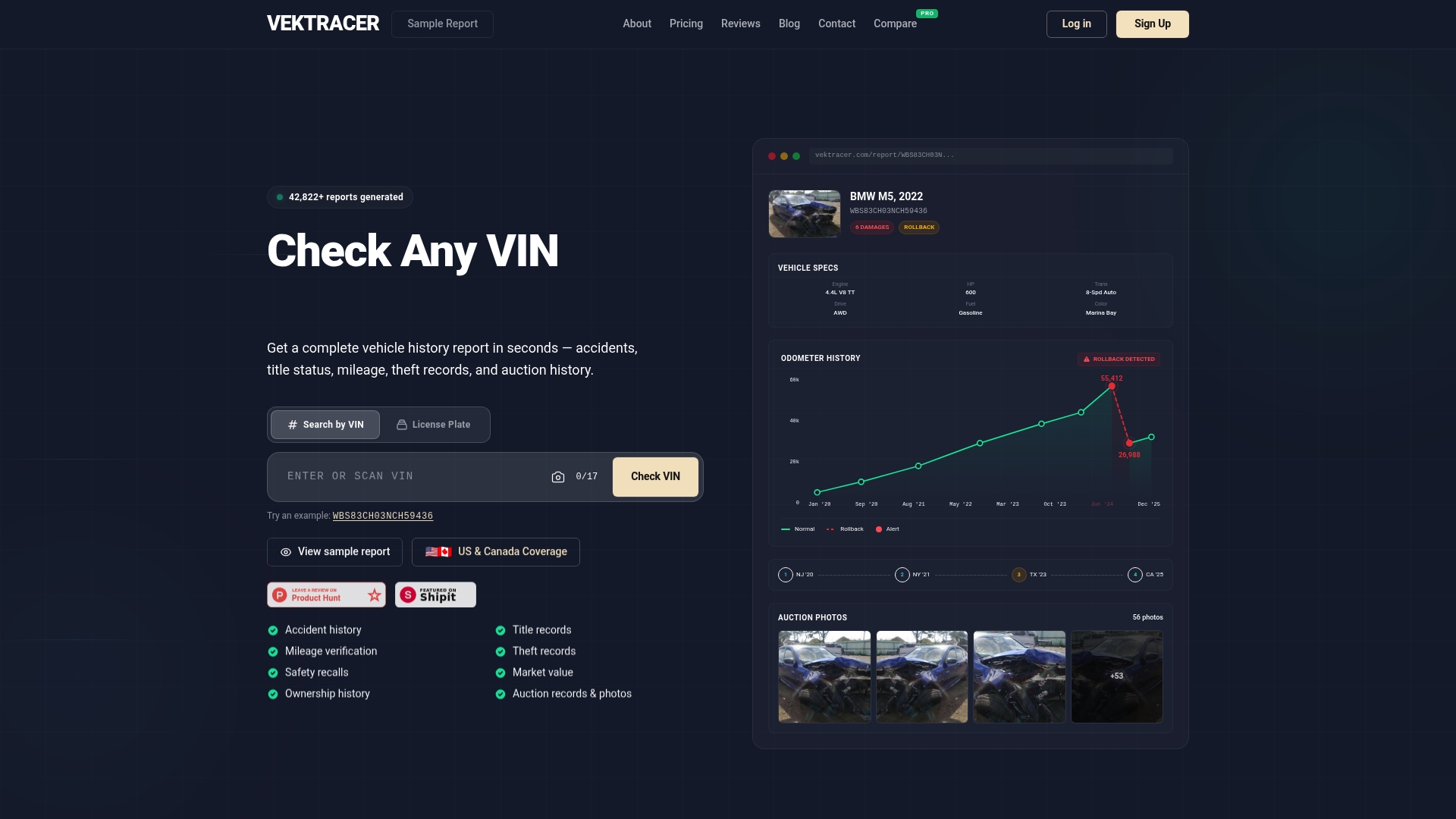
VekTracer provides NMVTIS-connected vehicle history reports that cover title records, accident history, mileage verification, theft checks, safety recalls, and market value data, all in one place. Reports start at just $19.99, compared to $44.99 for Carfax and $24.99 for AutoCheck, so you get the same core data without overpaying. You can see how VekTracer works before you commit, review available pricing plans to find the right fit, or take a look at a sample title report to see exactly what data you’ll receive. Smart buyers use the checklist AND the right tools. Let VekTracer handle the heavy lifting so you can focus on making a confident decision.
Frequently asked questions
What is a branded vehicle title?
A branded title means the car experienced a significant event, such as salvage, flood, or a lemon buyback, that permanently affects its value, insurability, and sometimes its safety. Always ask about the specific brand and what it means before moving forward.
Where can I check for title brands and past incidents?
NMVTIS includes title brand data like salvage and flood designations, along with odometer readings and theft indicators, making it one of the most authoritative sources available to buyers alongside private vehicle history reports.
How do I spot odometer fraud when buying a used car?
Cross-check VIN and mileage consistency across the title, service records, and history reports, since odometer fraud rarely leaves a single clean trail and inconsistencies often appear when you compare multiple dated documents.
Why isn’t one vehicle history report enough?
Reports can be incomplete or vary by state, which means a single report may miss a title brand or prior incident that only appears in DMV records or NMVTIS. Always use at least two independent sources to confirm what you find.
Recommended
Ready to check a vehicle?
Enter any 17-character VIN for a free instant preview — no account needed.