Theft checks in auto reports: Essential guide for used car buyers
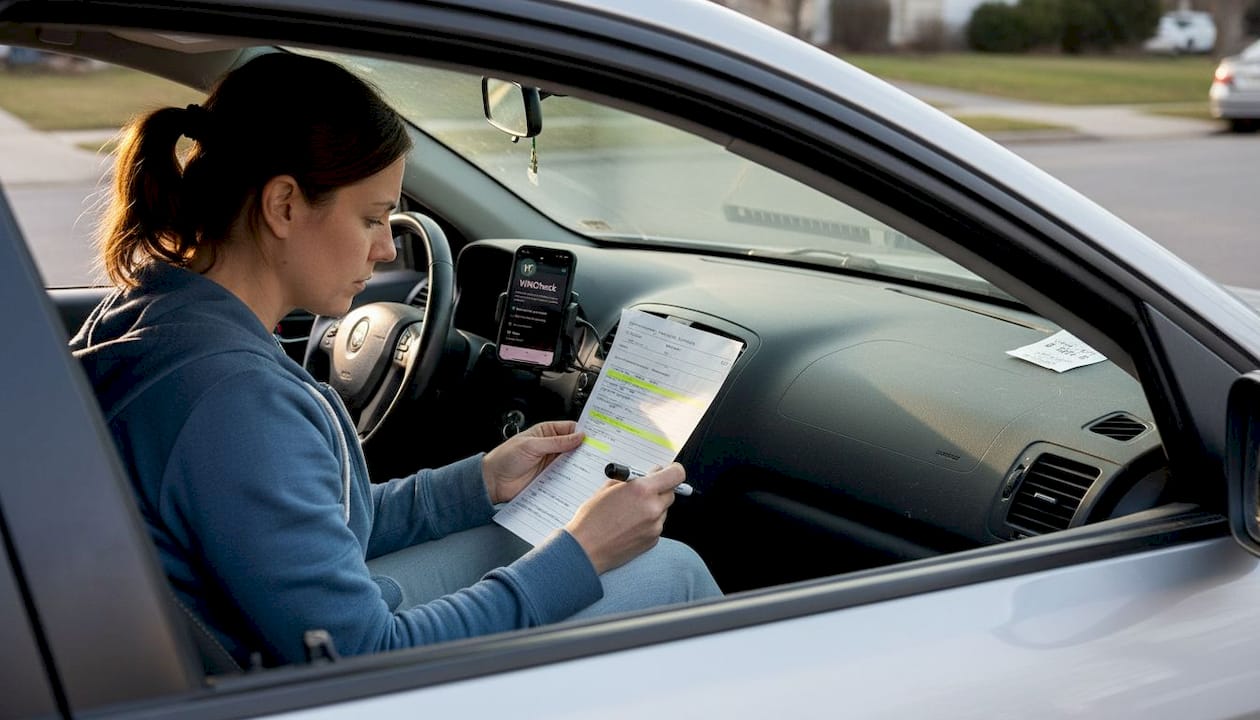
Check a vehicle before you buy
Enter a VIN for a free instant preview — accidents, title brands, mileage, liens & open recalls.
TL;DR:
- Vehicle theft checks verify stolen status by querying police, insurance, and government databases using the VIN.
- No single report is foolproof; databases can have gaps, purges, or delays, requiring physical VIN verification.
- Combining multiple sources and physical inspections provides the best protection when buying a used car.
Thousands of used cars change hands every year with hidden theft records that never surface in a casual inspection. A vehicle can look clean, drive well, and even come with paperwork that seems legitimate, yet still carry a stolen flag buried in a government database. Auto report theft checks verify whether a vehicle has been reported stolen by running its VIN against police, insurance, and government databases. This guide breaks down exactly how those checks work, where they fall short, and what you should do before handing over your money on a used car purchase in the US or Canada.
Table of Contents
- What is a theft check in auto reports?
- How theft checks work: US and Canada comparison
- Understanding the limits: Gaps and edge cases
- Beyond theft: Combining theft check with full vehicle history assessment
- The uncomfortable truth about theft checks: What most buyers miss
- Get a comprehensive vehicle report with VekTracer
- Frequently asked questions
Key Takeaways
| Point | Details |
|---|---|
| Multi-source theft check | Always run theft checks using multiple tools and databases to minimize risk of buying a stolen vehicle. |
| Canadian vs US databases | CARFAX and CPIC lead in Canada; NICB, NMVTIS, and state DMVs are primary in the US for theft verification. |
| Limits of auto reports | No single report is exhaustive—edge cases like purged stolen statuses and VIN cloning require physical and multi-source validation. |
| Comprehensive evaluation | Combine theft check with accident history, lien search, and mechanic inspection for optimal used car safety. |
| Proactive buyer steps | Physical VIN inspection and skepticism are essential—never rely solely on digital reports. |
What is a theft check in auto reports?
A theft check is one of the most critical sections you’ll find in any vehicle history report. It sounds simple, but the process behind it is more layered than most buyers realize.
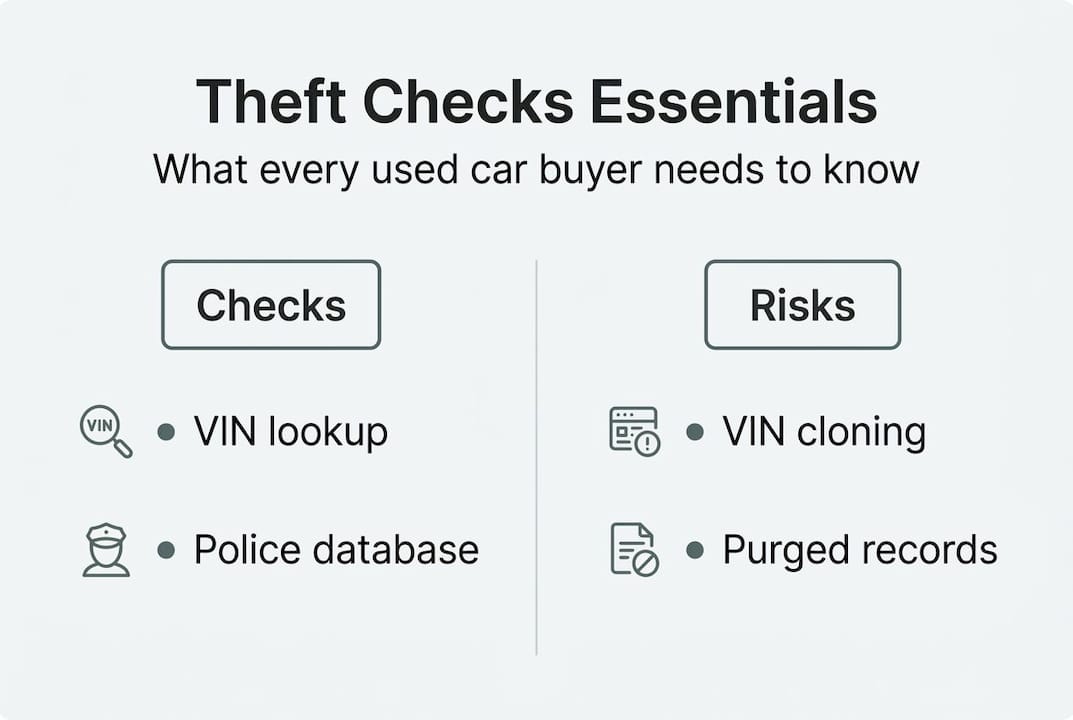
At its core, a theft check in auto reports is a verification process that checks whether a vehicle has been reported stolen. It does this by running the car’s VIN (Vehicle Identification Number) against police, insurance, and government databases. Think of the VIN as the vehicle’s fingerprint. Every car built since 1981 has a unique 17-character VIN that follows it through every title transfer, registration, and insurance claim.
Services like CARFAX, AutoCheck, and the National Insurance Crime Bureau (NICB) all perform this check as part of their standard reports. When you see a CARFAX theft check result, it means the system has queried multiple data sources to look for any stolen flag attached to that VIN.
Here’s what those databases typically include:
- National Crime Information Center (NCIC): The FBI-maintained database that law enforcement agencies use to report and look up stolen vehicles across the US
- Canadian Police Information Centre (CPIC): Canada’s equivalent, used by police agencies nationwide to track stolen vehicle reports
- NMVTIS (National Motor Vehicle Title Information System): A US federal system that collects title and brand data from state DMVs, including salvage and theft records
- Insurance databases: Reports from insurers who have paid out theft claims and flagged those vehicles accordingly
- Auction records: Data from auto auctions that often surface vehicles with questionable histories
Understanding finding stolen cars through these channels matters because no single database captures everything. A theft reported in one state may take days or weeks to propagate across all systems.
Key takeaway: A theft check in an auto report is only as good as the databases feeding it. Knowing which sources a report uses tells you how reliable that check really is.
The VIN lookup importance goes beyond theft. But when it comes to stolen vehicles specifically, the VIN is your first and most powerful tool. Always confirm the VIN on the dashboard matches the one on the door jamb and title before you run any report.
How theft checks work: US and Canada comparison
The mechanics of a theft check differ depending on which side of the border you’re on. Knowing these differences helps you choose the right tools and interpret your results correctly.
In Canada, CARFAX Vehicle History Reports include a dedicated stolen vehicle check sourced from CPIC, along with registration details from both Canada and the US, scanning billions of records for theft flags. CPIC is the backbone of Canadian stolen vehicle tracking, and any theft reported to a Canadian police agency feeds into it.
In the US, services like NICB VINCheck and NMVTIS provide theft checks by querying insurance crime bureaus and national title systems for stolen or salvage records. NMVTIS is federally mandated, meaning all states must report title brands to it, which makes it one of the most reliable sources available.
US vs. Canada theft check comparison
| Feature | United States | Canada |
|---|---|---|
| Primary database | NCIC, NMVTIS, NICB | CPIC |
| Reporting mandate | Federal (all states required) | National (all provinces) |
| Cross-border data | Limited | Includes US records |
| VIN fraud tools | NICB VINCheck | CARFAX Canada VIN Fraud Check |
| Report providers | CARFAX, AutoCheck, NMVTIS | CARFAX Canada, Vektracer |
Here’s a step-by-step process for running a theft check before you buy:
- Locate the VIN on the dashboard (driver’s side, visible through the windshield), the driver’s door jamb, and the title document. All three should match exactly.
- Run a free NICB VINCheck (US buyers) or use a CPIC-connected service (Canadian buyers) to get a baseline stolen status result.
- Pull a full vehicle history report from a provider that uses NMVTIS-connected sources for deeper title and brand history.
- Check the VIN check guide Canada if you’re buying in a Canadian province like Ontario or British Columbia to understand province-specific title brands.
- Compare results across sources. If one report shows clean and another flags a concern, treat the flag seriously.
One emerging tool worth noting: CARFAX Canada launched a VIN Fraud Check tool in 2025 specifically for dealers, designed to catch cloned VINs before they reach buyers. This kind of innovation shows how the industry is responding to increasingly sophisticated theft schemes.
Understanding the limits: Gaps and edge cases
Even with robust databases behind them, theft checks are not foolproof. Buyers who treat a clean theft check as a guarantee are taking a real risk.
One of the most significant gaps involves purged stolen records. In the US, the NCIC auto-purges stolen vehicle records after five years if they haven’t been updated. That means a vehicle stolen and never recovered could have its active stolen flag removed from the system, even though it was never legitimately returned. The NICB may still flag it, but the active NCIC record disappears.
VIN cloning is another serious threat. This is when a thief takes the VIN from a legally registered vehicle and applies it to a stolen car of the same make, model, and year. The stolen car then passes basic database checks because the VIN it’s wearing belongs to a legitimate vehicle. Reporting gaps and VIN cloning mean that even thorough checks can miss fraudulent vehicles if the theft hasn’t been reported or the clone is well-executed.

Common theft check gaps
| Gap type | What it means | Risk level |
|---|---|---|
| Purged stolen status | Record removed after 5 years in NCIC | Medium |
| VIN cloning | Stolen car wears a legitimate VIN | High |
| Unreported theft | Owner never filed a police report | Medium |
| International theft | Stolen abroad, not in US/Canada databases | High |
| Database update delay | Theft reported but not yet in system | Low to medium |
Here’s what you can do to protect yourself:
- Physically inspect the VIN on the dashboard, door jamb, engine block, and frame. Mismatched fonts, scratches, or rivets that look disturbed are red flags.
- Check the VIN protection explained to understand how legitimate VINs are formatted and what anomalies to look for.
- Cross-reference multiple reports rather than relying on a single source.
- Run a VIN odometer check alongside the theft check. Odometer fraud and VIN cloning often appear together.
- Ask the seller for the original title and verify the VIN on the title matches the car.
Pro Tip: If the price seems too good for the vehicle’s condition and year, that’s often a signal worth investigating. Stolen vehicles are frequently priced low to move quickly.
Beyond theft: Combining theft check with full vehicle history assessment
A theft check tells you one important thing. But buying a used car safely requires knowing much more.
No single report is exhaustive due to reporting gaps across insurers, states, and provinces. A vehicle can have a clean theft record and still carry a lien from a previous owner’s unpaid loan, undisclosed accident damage, or a flood title that was washed in another state. Each of these issues can cost you thousands after the sale.
AutoCheck reports include theft records in their history summary alongside salvage, flood, and other brands, using data from state DMVs, insurers, and auctions. That multi-source approach is exactly what you want. The more data points a report draws from, the more complete your picture becomes.
Here’s a practical checklist for a full used car assessment:
- Run a theft check using a report that queries NMVTIS, NICB, and CPIC (for Canadian vehicles).
- Check accident and damage history through a VIN lookup report that includes insurer-reported collisions.
- Verify title status for salvage, rebuilt, flood, or lemon law brands that signal serious past damage.
- Search for active liens before you buy. In Canada especially, checking VIN for accidents and lien history together is a critical step.
- Review the CARFAX vehicle history guide to understand what each section of a report actually means.
- Get a pre-purchase inspection from an independent mechanic. No report replaces eyes-on evaluation of the physical vehicle.
- Compare market value data in the report to confirm the asking price is reasonable for the vehicle’s documented history.
Pro Tip: Always run your report before scheduling a test drive. If the history comes back with red flags, you save yourself the trip and the pressure of an in-person negotiation.
Building this layered approach takes maybe 30 minutes and costs a fraction of what a bad purchase could set you back. It’s one of the smartest investments you can make in the used car buying process.
The uncomfortable truth about theft checks: What most buyers miss
Here’s something we’ve seen repeatedly: buyers run a single theft check, see a clean result, and feel completely safe. That confidence is understandable, but it’s not fully earned.
The reality is that no single report is exhaustive due to reporting gaps. Databases are only as current as the agencies feeding them. A theft reported last week may not appear in a report you pull today. A VIN clone executed carefully may never appear at all.
The buyers who get burned are almost always the ones who stopped at one check. The buyers who stay protected are the ones who treat every report as one piece of evidence, not the final verdict. They physically inspect the VIN. They cross-check multiple sources. They ask uncomfortable questions of the seller.
Skepticism isn’t paranoia here. It’s due diligence. Protecting your used car purchase means combining digital checks with real-world verification. A clean report is a green light to keep looking, not a reason to stop.
Get a comprehensive vehicle report with VekTracer
Now that you know how theft checks work and where they can fall short, the next step is putting that knowledge into action before your next purchase.
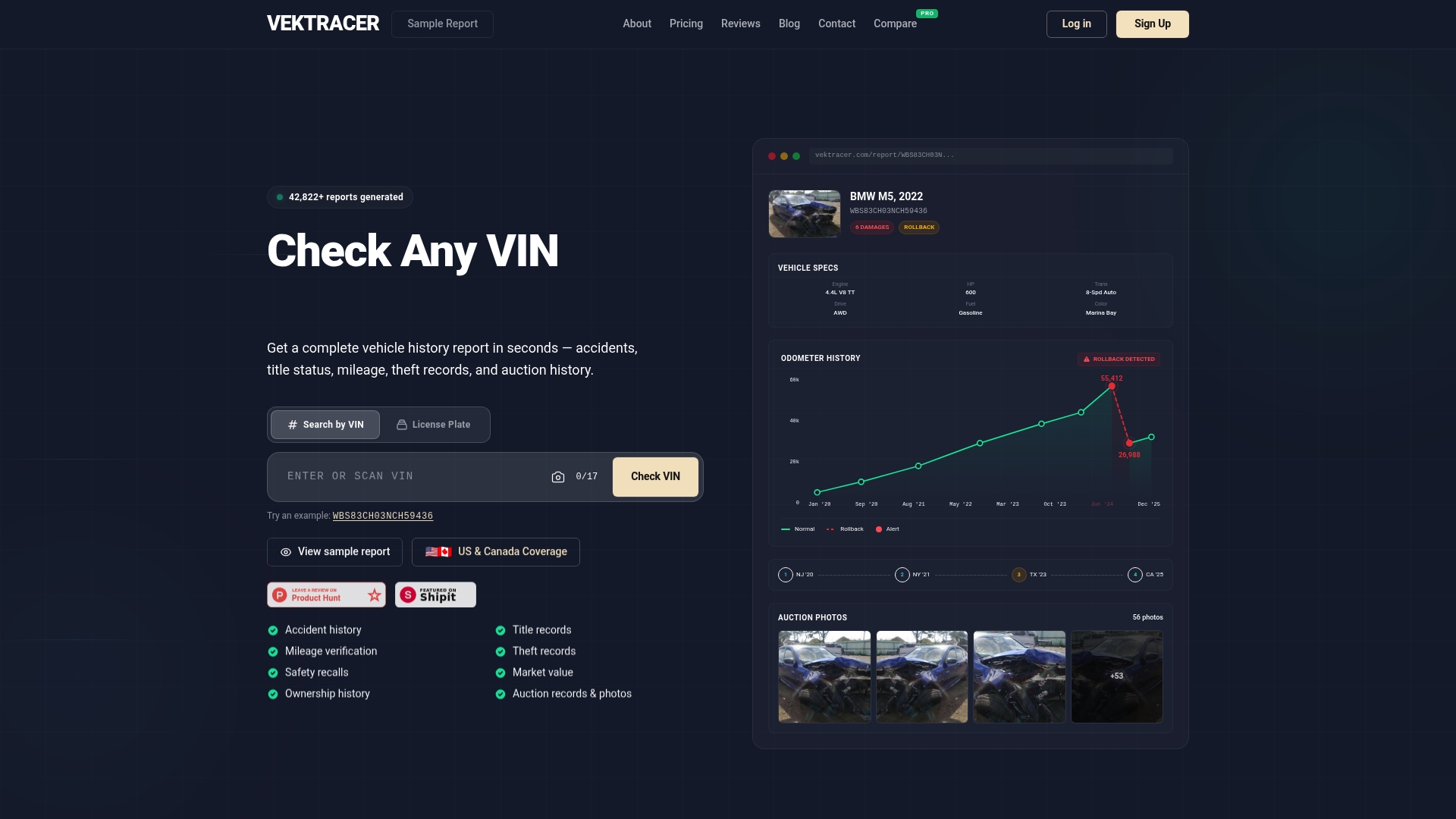
VekTracer’s vehicle history reports pull from NMVTIS-connected sources to give you theft status, accident history, title records, mileage verification, safety recalls, and market value data in one place. See how VekTracer works and check out the sample vehicle history report to understand exactly what you’ll receive. Reports start at $19.99, which is significantly less than Carfax at $44.99 or AutoCheck at $24.99 for the same core data. Review VekTracer pricing and run your VIN check today before you sign anything.
Frequently asked questions
How do I check if a used vehicle is stolen before buying?
Run a theft check using reputable auto history reports like CARFAX or AutoCheck, and cross-reference with police databases like NICB VINCheck in the US or CPIC-connected services in Canada.
Are theft checks in auto reports always accurate?
No. Purged stolen records and VIN cloning create gaps that even thorough reports can miss, so always verify the VIN physically and cross-check multiple sources before buying.
What databases do Canadian and US reports use for theft checks?
Canadian reports use CPIC for stolen status and registration data, while US reports query NICB, NMVTIS, and state DMVs for theft flags and salvage records.
Can a vehicle history report show if a car has been cloned?
Some tools, like CARFAX Canada’s VIN Fraud Check, flag cloned VINs by scanning billions of records for anomalies, but a physical VIN inspection is always the recommended final step.
Recommended
Ready to check a vehicle?
Enter any 17-character VIN for a free instant preview — no account needed.